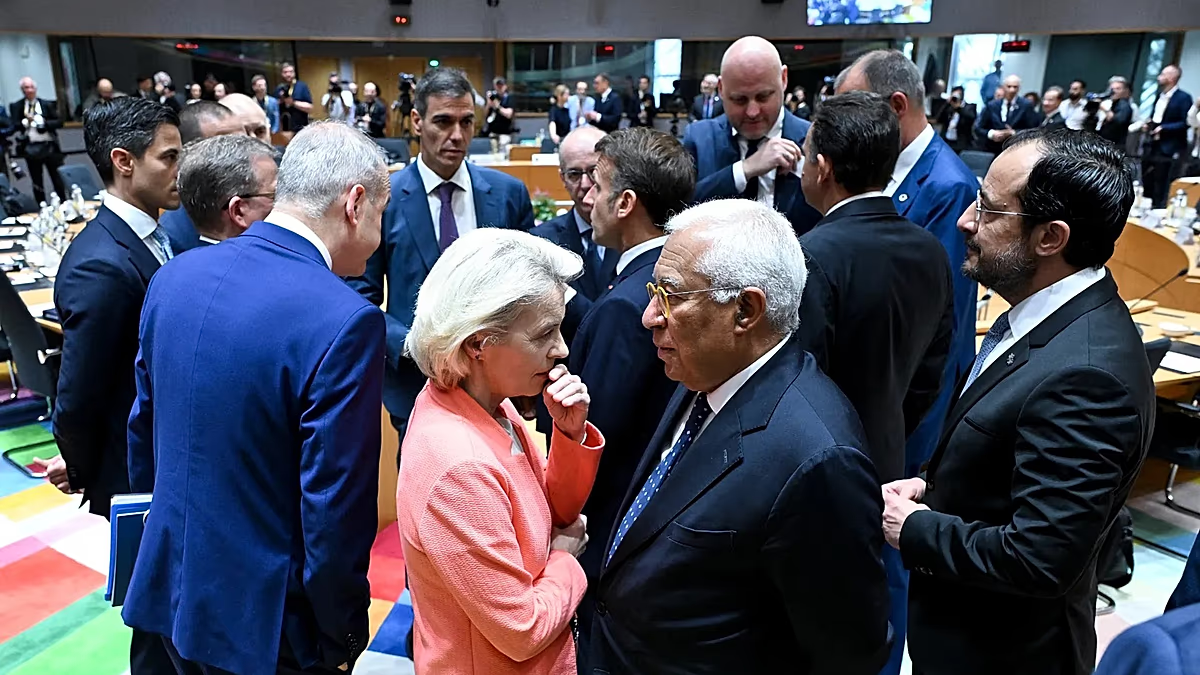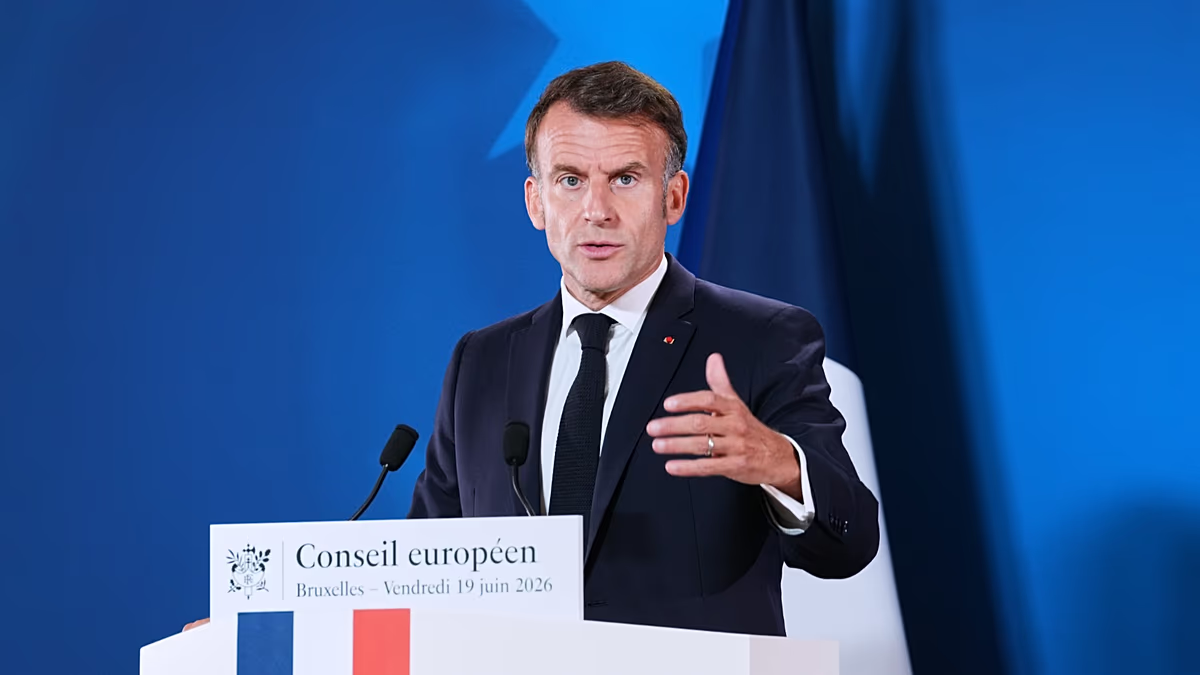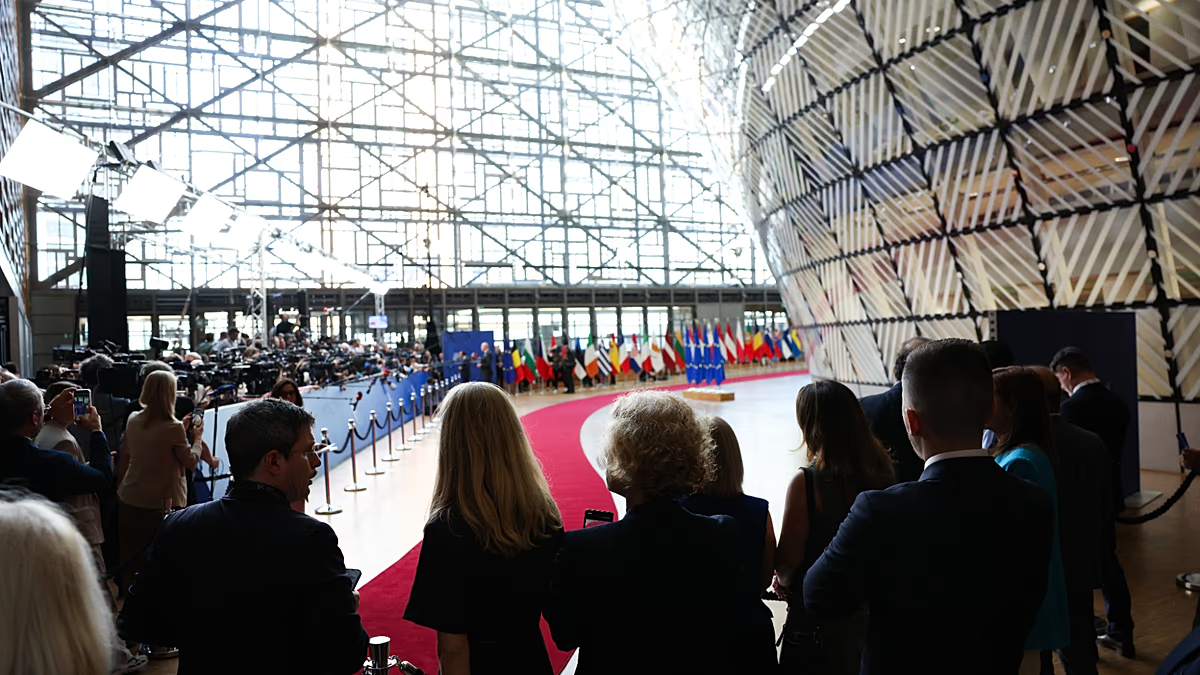



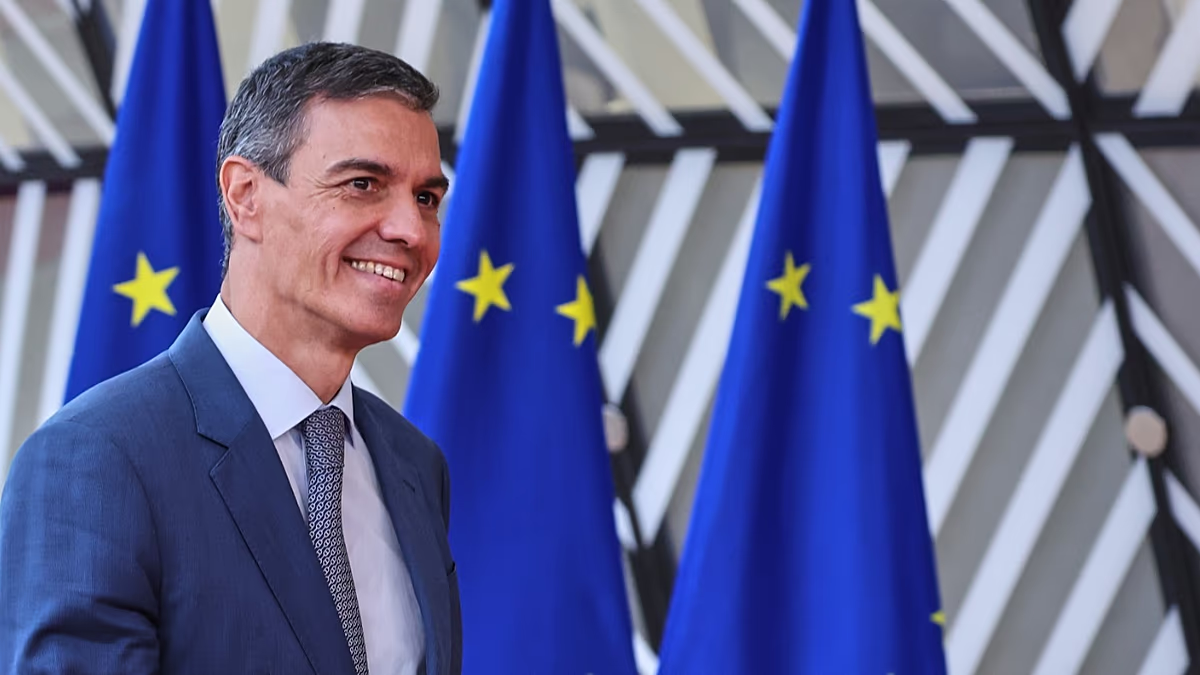
In a significant address from Brussels, Spain’s Prime Minister Pedro Sánchez has made a robust case for a more unified, assertive, and financially empowered European Union. Speaking during a European Council meeting focused on the EU’s future budget and global challenges, Sánchez argued that Europe must evolve into a true “geoeconomic power.” He emphasized that this status is unattainable without the necessary “financial firepower,” calling for a more ambitious Multiannual Financial Framework. This enhanced budget, he contends, is essential to boost the bloc’s competitiveness and secure greater strategic autonomy in an increasingly volatile world. Sánchez, whose own political future in Spain is clouded by domestic controversies, positioned this vision as an antidote to forces pushing for a smaller, less influential Europe, stating that the EU must not step back from its values but instead take a bold step forward in its integration.
Central to Sánchez’s vision is the deepening of the European single market. He advocates for the removal of internal barriers and the harmonization of rules to facilitate smoother economic activity across member states. This internal strengthening is paired with a strategy of external engagement through trade diversification. The Prime Minister highlighted recent and potential trade agreements with major economies like Mercosur, Mexico, and India as pillars of an open, global Europe. He carefully framed this outward-looking policy, asserting that engagement with the world does not necessitate a compromise of the EU’s founding principles. This stance reveals a nuanced position, particularly regarding China, with whom Sánchez secured numerous bilateral agreements in April. His call for open dialogue contrasts with the tougher line advocated by several member states, led by France, who view Chinese industrial overproduction as a threat to European economic stability.
Sánchez extended his integrationist argument beyond the purely economic, addressing one of Europe’s most divisive issues: migration. His government recently approved a measure to regularize the status of hundreds of thousands of foreign nationals, and he brought this perspective to the European debate. While acknowledging migration as a necessary topic of discussion across the continent, he firmly criticized the emerging EU policy of establishing migrant return centers in third countries. Dismissing this approach as a “smokescreen” that offers no real solution, Sánchez argued it sends a damaging message by wrongly suggesting the migration challenge belongs primarily to origin and transit nations. This position directly challenges the model promoted by Italian Prime Minister Giorgia Meloni, whose government has pioneered such centers in Albania under the new EU Return Regulation.
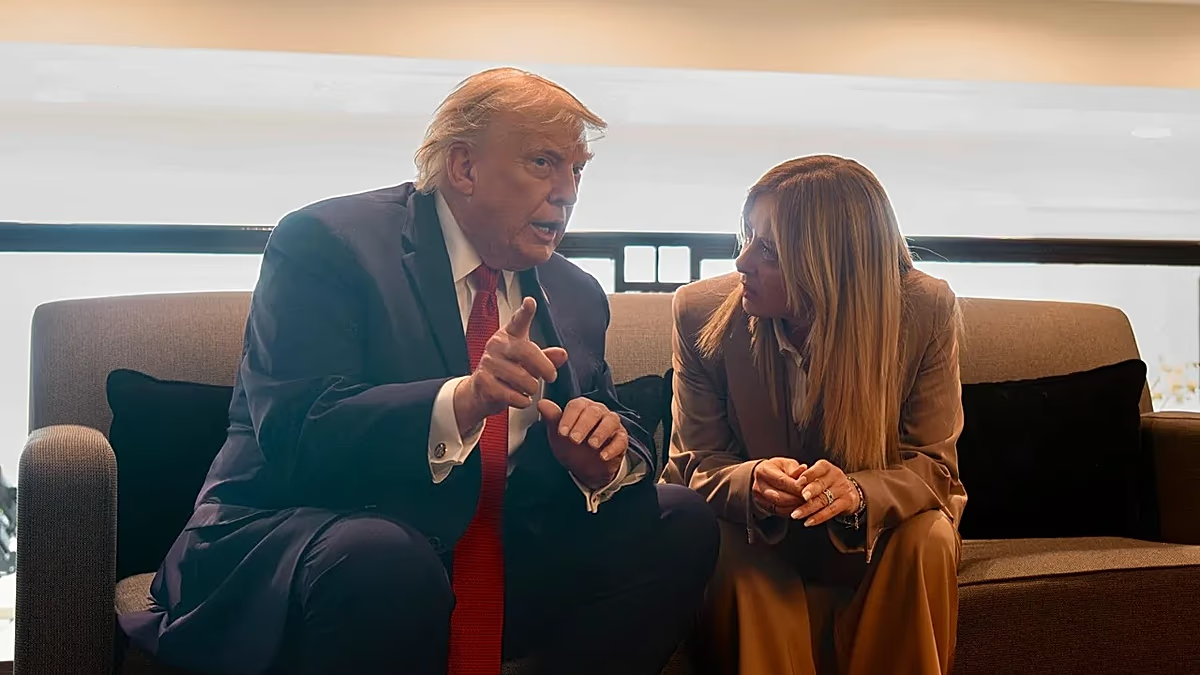
Despite this policy disagreement, Prime Minister Sánchez displayed a notable moment of European solidarity with his Italian counterpart concerning an unrelated diplomatic incident. He expressed his full support for Meloni following controversial remarks by former U.S. President Donald Trump. Trump claimed that Meloni had “begged” him for a photograph during the G7 summit, an assertion he framed as an act of pity. Sánchez denounced this as an unjust attack, stating his solidarity in the face of comments he struggled even to describe. This episode, which prompted Italy’s foreign minister to cancel a U.S. trip, allowed Sánchez to underscore a shared dignity among European leaders on the global stage, momentarily setting aside their political differences.
The Prime Minister’s comprehensive address ultimately paints a picture of a Europe at a crossroads. On one path lies a retreat into fragmentation and diminished global influence; on the other, the route Sánchez champions: deeper financial, economic, and social integration coupled with confident, value-driven engagement with the world. He positions strategic autonomy not as isolationism but as the strength required for meaningful global partnership. His warnings about financial capacity and competitiveness are framed as urgent prerequisites for this future, essential for the EU to navigate the pressures from major powers and a shifting geopolitical landscape.
In conclusion, Pedro Sánchez’s intervention from Brussels serves as a strategic blueprint for the European Union’s next chapter. By intertwining the need for robust internal investment with a commitment to fair social policies and principled external relations, he advocates for a union that is both powerful and progressive. His stance, balancing firm disagreement on policies like external migration centers with unwavering solidarity against external disrespect, reflects the complex, often contradictory, realities of European leadership. As the EU grapples with its budget, its borders, and its place in the world, Sánchez’s vision calls for unity and ambition, arguing that Europe’s future security and prosperity depend on its collective courage to integrate more deeply than ever before.