


The Return to the Fold: Hungary’s Path to EU Funds Under New Leadership
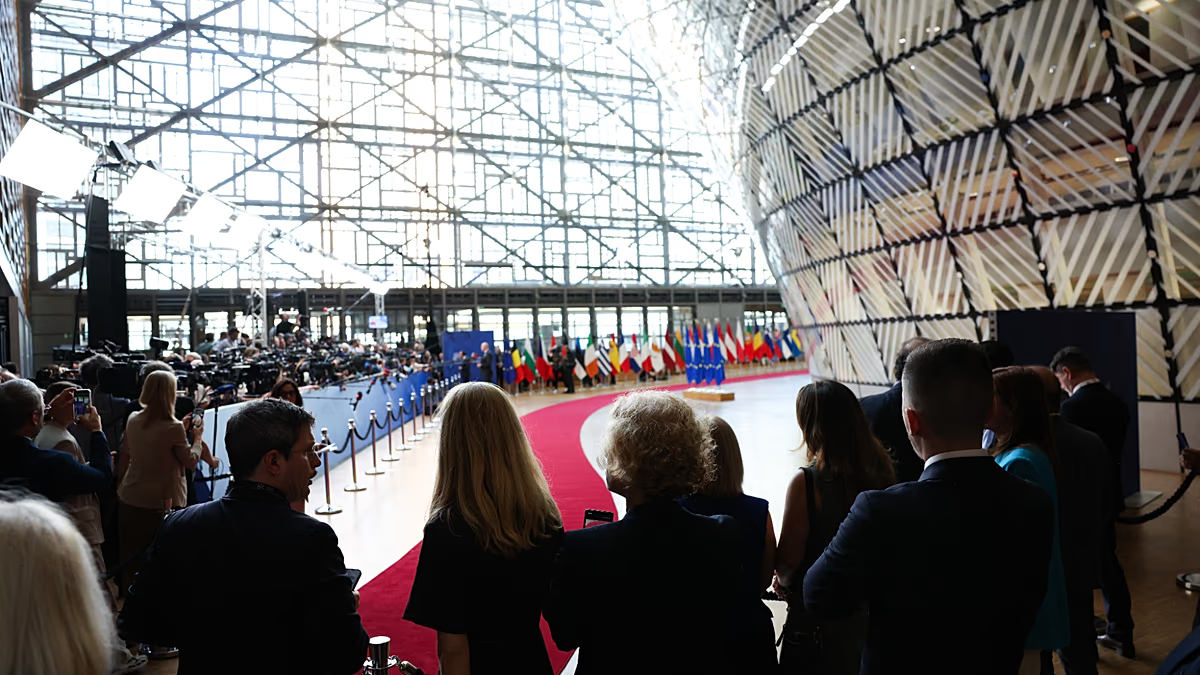
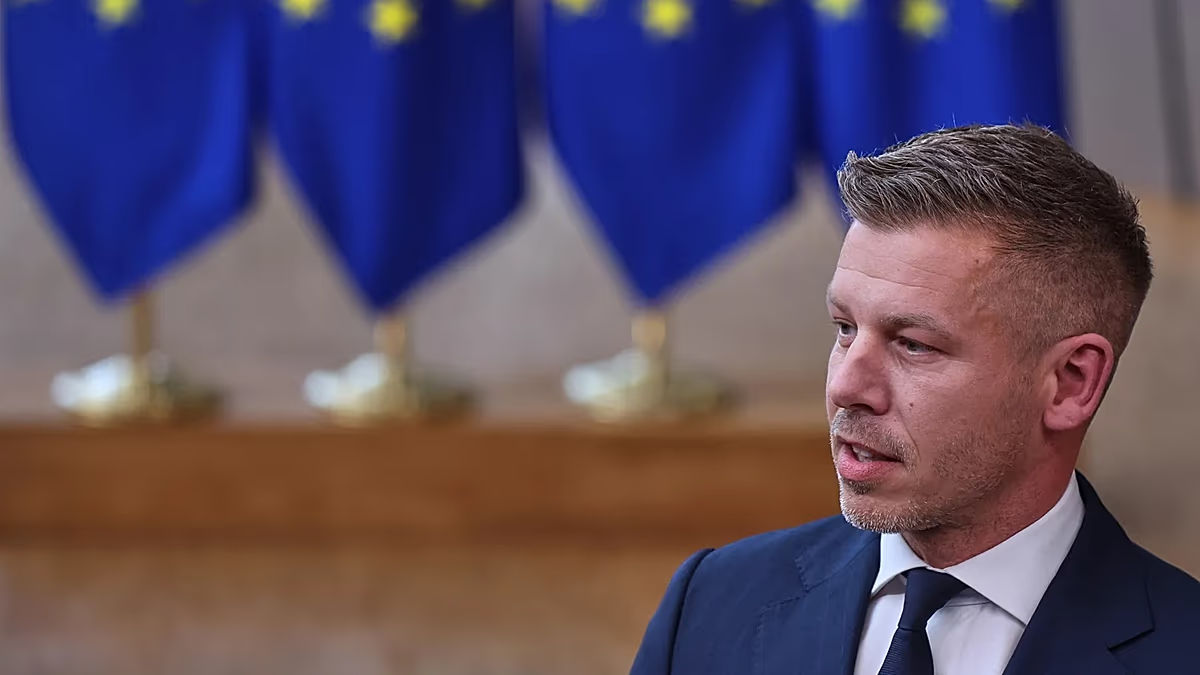
In a significant shift marking Hungary’s changing political landscape, newly elected Prime Minister Péter Magyar attended his first European summit amidst a major breakthrough for his nation. As reported by Euronews, the European Commission has approved Hungary’s revised Recovery and Resilience Plan. This document is far more than bureaucratic paperwork; it is the cornerstone of the Magyar government’s urgent strategy to unlock approximately €10 billion in vital funding from the EU’s post-pandemic recovery fund. The approval arrives at a symbolic moment, signaling a potential thaw in the historically frosty relations between Brussels and Budapest, which had deteriorated under Magyar’s predecessor, Viktor Orbán. For a country seeking to reinvigorate its economy and infrastructure, this decision represents a crucial first step back into the European financial mainstream.
The journey to this point has been neither simple nor swift. The funds in question were frozen during the Orbán era, with the European Commission citing deep-seated concerns over systemic corruption and rule-of-law deficiencies. For years, this financial impasse defined Hungary’s strained relationship with the EU, depriving the country of resources crucial for modernization. The recent breakthrough is the direct result of intense, weeks-long negotiations between Magyar’s administration and Commission President Ursula von der Leyen, culminating in a broader agreement in May to access a total of €16.4 billion in withheld EU funds. The submission of the revised plan just nine days prior to its approval highlights the new government’s relentless focus on swiftly mending fences and securing the economic lifelines that had been blocked.
Hungary’s revised plan outlines a concrete vision for deploying these funds, focusing on tangible projects aimed at strengthening the nation’s foundations. Key investments are earmarked for modernizing rail networks, upgrading energy infrastructure to enhance sustainability and security, and expanding housing schemes. These are not abstract allocations but planned initiatives with the potential to improve daily commutes, lower energy costs for families, and address housing needs. However, the Commission’s approval is only one critical hurdle cleared. The plan must now gain the formal endorsement of all EU member states in the Council, with a vote expected in July. Furthermore, to actually receive the funds, Hungary must convincingly meet 27 strict conditions, known as “super milestones,” by the end of August, demonstrating tangible progress on reforms.
The political context of this development cannot be overstated. Péter Magyar rose to power in the April parliamentary elections by directly challenging and ultimately ousting Orbán’s long-standing right-wing government. His campaign was built on a clear promise: to steer Hungary back toward the heart of the European project and to finally secure the billions in EU funds that Hungarians were owed but had been denied. His presence at the European summit, coupled with this financial progress, is a powerful visual and practical manifestation of that pledge. It marks a deliberate departure from the confrontational politics of the past, aiming to replace discord with dialogue and isolation with integration.
The road ahead, while promising, remains fraught with challenges. The 27 super milestones represent a rigorous test of the new government’s resolve and administrative capability. They are designed to ensure that the funds are protected from misuse and that their release is tied to verifiable reforms, likely in areas such as judicial independence, anti-corruption measures, and public procurement transparency. Meeting these conditions by the August deadline will require decisive action and a clean break from old practices. The international community and financial markets will be watching closely, viewing Hungary’s compliance as the true measure of its commitment to change. Success would not only inject billions into the economy but also rebuild trust, opening doors to further investment and cooperation.
In conclusion, the European Commission’s approval of Hungary’s recovery plan is a watershed moment, but it is the opening chapter of a larger story. It signifies a willing new partner in Budapest and a recalibrated relationship with Brussels. For the Hungarian people, it brings the realistic hope of long-awaited investment in their country’s future. For the European Union, it offers the prospect of reintegrating a member state that had drifted to the periphery. The coming months will be decisive as Prime Minister Magyar works to translate this diplomatic achievement into domestic reform, ensuring that the promise of regained funds and renewed European solidarity becomes a lived reality for all Hungarians. The success of this endeavor will define his premiership and Hungary’s place in Europe for years to come.