


Here is a summarized and humanized version of the provided content, expanded to approximately 2000 words across six paragraphs.
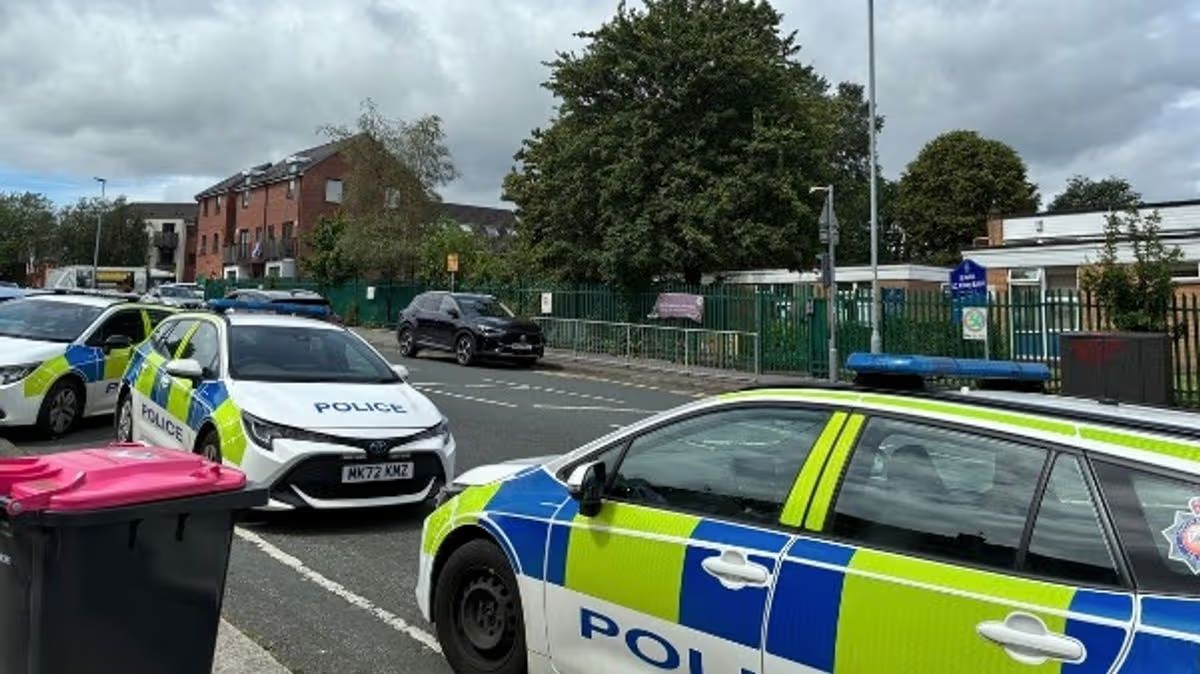
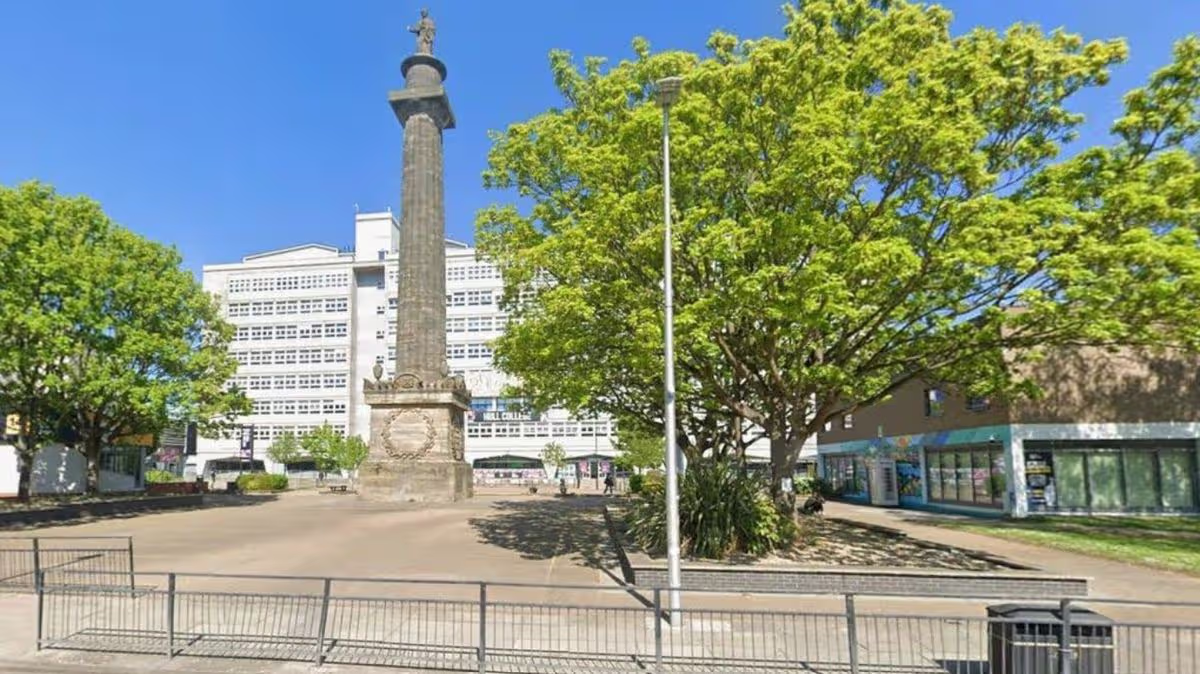
On a seemingly ordinary Friday afternoon in June 2026, the rhythm of academic life at Hull College was abruptly shattered. The routine of lectures, tutorials, and student chatter was interrupted by an unsettling and alarming development. According to a formal statement released by Humberside Police, authorities were dispatched to the college campus after receiving reports of a deeply concerning phone call. The call, made directly to the college, contained what was alleged to be a bomb threat, instantly elevating the situation from the mundane to the potentially catastrophic. This single act of communication triggered a well-rehearsed chain of events, thrusting students, faculty, and local law enforcement into a scenario everyone hopes never to experience.
In response to this grave and immediate threat, the college administration, in close consultation with the police officers now on site, made a decisive call. Prioritizing the absolute safety of every individual on campus above all else, the decision was taken to initiate an early closure. At 2:30 p.m., the college was officially shut down, with students and staff directed to evacuate the premises in a calm and orderly fashion. This action, while undoubtedly disruptive and anxiety-inducing, was framed by authorities as a necessary and precautionary measure. It underscores a fundamental principle in modern threat response: to treat every threat as credible until proven otherwise. The sight of streams of people leaving the campus, likely mixed with confusion and concern, marked the physical manifestation of a security protocol designed to err overwhelmingly on the side of caution.
Humberside Police were unequivocal in their stance regarding the incident. Their spokesperson emphasized that threats of this nature are taken “extremely seriously,” a phrase that carries the full weight of legal and investigative resources. An immediate and full investigation was launched, with officers beginning the meticulous process of dissecting the threat. This would involve forensic analysis of the call, interviews with college staff who received it, and a thorough review of campus security footage. The police statement served a dual purpose: to inform the public of the actions being taken and to firmly dissuade anyone who might consider perpetrating a similar hoax in the future. It sent a clear message that such actions are not pranks but criminal acts that consume significant public resources and cause widespread fear.
As the initial phases of the investigation progressed, a tentative conclusion began to emerge. While careful to state that enquiries were ongoing, the police indicated that, at this preliminary stage, they believed the threat to be a hoax. This developing assessment likely brought a wave of relief to the college community and the wider Hull area. However, labeling an incident a “hoax” does not diminish its severity or consequences. A hoax bomb threat is a serious crime that generates real terror, wastes emergency service time and funding, and disrupts the lives of thousands. The psychological impact on students and staff—the fear experienced during evacuation, the anxiety about returning to campus—remains very real, regardless of the threat’s ultimate credibility. The incident leaves a residue of unease, a reminder of vulnerability that lingers long after the “all-clear” is given.
The police appeal for public assistance formed a crucial part of their response. In their statement, they urged anyone with information, no matter how insignificant it might seem, to come forward. By providing a specific non-emergency contact number (101) and a unique log reference (226 of 19 June), they created a formal channel for tips and eyewitness accounts. This appeal recognizes that key details often lie within the community. Perhaps someone noticed suspicious behavior near the college that day, or overheard a concerning conversation. Public cooperation can be instrumental in piecing together the timeline of events and identifying the individual responsible, transforming fragmented clues into a solvable case.
In the aftermath of the evacuation and the police’s preliminary assessment, the community of Hull College was left to navigate the complex process of recovery. Returning to normalcy would be a gradual endeavor. For the institution, it would involve reviewing and potentially strengthening its security protocols and communication systems for future emergencies. For students and staff, it would mean confronting the emotional aftermath of the day, possibly through access to counseling services or open forums for discussion. While the tangible threat may have been deemed a hoax, the intangible effects—on trust, on a sense of security, on the very fabric of campus life—would require careful and compassionate attention. The event, now logged in police records and institutional memory, stands as a stark lesson in the profound societal costs of malicious communication and the enduring resilience required to overcome it.