
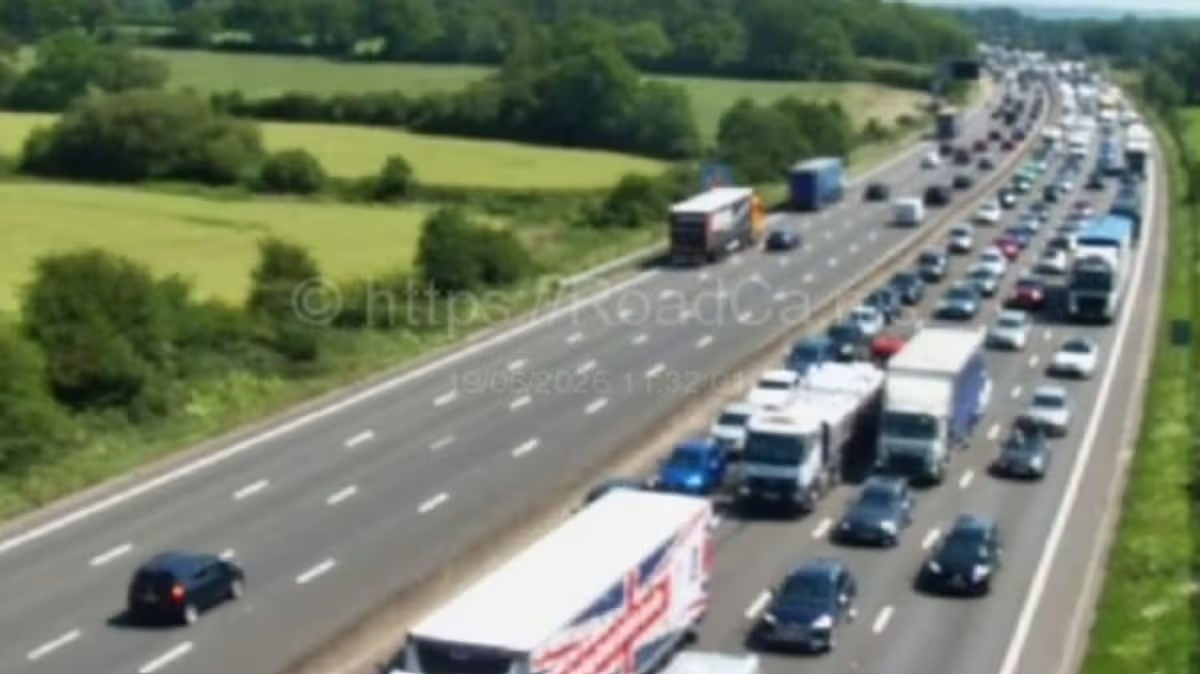


A significant disruption is currently unfolding on one of the United Kingdom’s most critical and heavily trafficked motorways. The M25, London’s orbital motorway and a vital artery for commuters, commercial hauliers, and travellers in the Southeast, is experiencing severe delays. Specifically, the clockwise carriageway in Kent, between junctions 5 and 6, is at a near standstill. The cause is a serious collision that has resulted in an overturned caravan, a scenario that presents considerable danger and complexity for emergency services. National Highways, the government company responsible for England’s motorways and major A-roads, has confirmed that the incident is causing severe delays estimated at approximately 90 minutes. This is not a minor shunt but a major incident with a cascading impact on the wider road network and the plans of thousands of individuals.
The physical blockage on the motorway is substantial. To safely manage the overturned vehicle, conduct necessary recovery operations, and allow emergency services to work unimpeded, three out of the four available lanes have been closed. Only lane four remains open, creating a severe bottleneck. This drastic reduction in capacity means traffic is backing up rapidly for miles. National Highways Traffic Officers are on the scene, working alongside police, fire, and ambulance services. Their primary roles are to implement traffic management, ensure the safety of all personnel involved in the clear-up, and to protect queuing traffic. They will be deploying cones, signs, and likely using their vehicles to create a safe working zone, a process that itself takes time but is essential to prevent further accidents.
For anyone with travel plans that involve this section of the M25, the advice from the authorities is unequivocal: this closure should be a primary factor in your decision-making. The standard recommendation to “allow extra time” is, in this case, a significant understatement. With 90-minute delays already in effect and the potential for the recovery operation to extend that time, simply sitting in the queue may not be the wisest course of action. National Highways is actively advising the public to consider more proactive steps. This includes re-routing their entire journey using alternative A-roads or even making the decision to delay their travel until later in the day, if possible. The key message is to plan ahead rather than react when already ensnared in the congestion.
To empower drivers to make these informed decisions, National Highways provides multiple, real-time information channels. The primary digital resource is the Traffic England website, which offers live traffic maps, camera feeds, and detailed breakdowns of current incidents and roadworks. This same information is accessible through official travel apps on smartphones, allowing for updates while on the move. For those who use social media, the regional X (formerly Twitter) feed for National Highways in this area offers concise, immediate updates and can be an excellent source for the latest on lane re-openings or changes in delay times. In the age of digital information, these tools are invaluable for navigating around major disruptions.
Understanding that not everyone has instant access to the internet or is comfortable using apps, National Highways maintains a more traditional, yet equally vital, service: a 24/7 customer contact centre. By calling 0300 123 5000, any driver can speak directly to a team member who has access to the very latest information. This service is particularly important for those who may have started their journey before the incident occurred, or for passengers in vehicles who can safely make a call to check conditions ahead. It represents a human touchpoint in what can otherwise be a frustrating and impersonal experience, ensuring that critical travel information is democratically available to all.
In conclusion, this incident on the M25 clockwise in Kent is a stark reminder of the fragility of our major transport networks. A single collision, resulting in an overturned caravan, has triggered a chain reaction of delay, inconvenience, and potential economic cost. The response, however, highlights a structured approach to crisis management on the roads. From the physical traffic management by officers on the ground to the dissemination of advice through multiple platforms, the system is designed to prioritize safety and inform the public. The ultimate responsibility, however, rests with each driver to heed these warnings, seek out the available information, and make sensible, safe choices to avoid the worst of the disruption, for their own benefit and for the smoother operation of the network as a whole.