


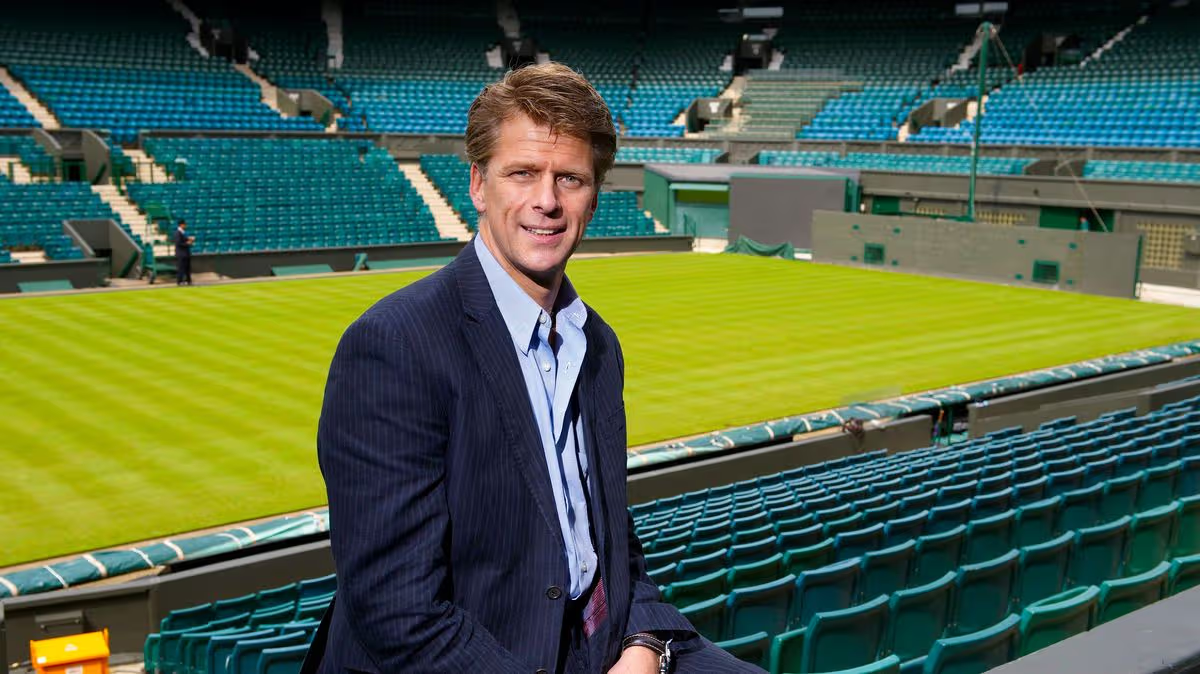
The hallowed lawns of Wimbledon are not only a stage for tennis history but also for the evolving narrative of how that history is broadcast to the world. This year, the BBC, the tournament’s long-standing home in the UK, is unveiling a significant refresh of its presentation team, blending revered stalwarts with dynamic new voices. This shift follows the impending departure of Andrew Castle, a lead commentator for over two decades, marking the end of an era. While the BBC expressed a desire for Castle to continue in a reduced role beyond the 2026 Championships, he has chosen to make this summer his final bow with the corporation. His exit has undoubtedly created space for a strategic reorganization, one that appears focused on deepening analytical insight and broadening the range of expert perspectives for the audience.
Stepping into this new landscape is a trio of fresh faces poised to become familiar to viewers. In a notable coup, former world doubles number one Jamie Murray joins as a dedicated analysis expert. The BBC promises he will utilize enhanced match data, advanced technology, and tactical breakdowns from a brand-new high-tech studio, offering an unprecedented technical perspective on the game’s nuances. Alongside him, Laura Robson, already a seasoned presence on Sky and TNT Sports, will provide immediate courtside reaction and expert analysis. They are joined by 2014 finalist Genie Bouchard, who brings recent playing experience and a successful track record in American broadcasting. This new cadre represents a conscious infusion of contemporary playing insight into the BBC’s storied coverage.
Nevertheless, the comforting pillars of the BBC’s Wimbledon coverage remain firmly in place. Clare Balding and Isa Guha will continue to helm the presentation throughout the day, guiding viewers with their authoritative yet warm delivery. The studio will still feature the iconic voices and legendary wisdom of Tim Henman, John McEnroe, Martina Navratilova, Billie Jean King, and Tracy Austin. Furthermore, the popular return of eight-time Grand Slam champion Andre Agassi for the tournament’s climax is confirmed, ensuring his uniquely candid and thoughtful dissection of the modern game. This balance of new and old suggests an evolution rather than a revolution, aiming to preserve tradition while invigorating the broadcast with fresh energy.
The changes extend beyond television, with BBC Radio 5 Live also bolstering its lineup. Gigi Salmon and Clare McDonnell will front the radio coverage, which will be enriched by the addition of former champions Pat Cash and Marion Bartoli to its expert team. They join a deep bench of analysts including Kim Clijsters, Annabel Croft, and others, ensuring comprehensive auditory coverage. This multi-platform expansion underscores the BBC’s commitment to what it heralds as “the most comprehensive coverage in BBC history,” with every match from all 18 courts streamed live on BBC iPlayer, ensuring no point of drama is missed.
Behind these on-air adjustments lies a clear directive to modernize. It is reported that the All England Club itself encouraged the BBC to refresh its approach, a move that ultimately precipitated Andrew Castle’s diminished role and his decision to depart. The corporation’s strategy, as articulated by BBC Sport director Alex Kay-Jelski, is to marry the “heritage and prestige audiences expect” with “exciting new voices” and “advanced analytics and tech.” The goal is to bring viewers closer to the story, whether they are watching on a large screen or following on their phones. This acknowledges the changing media landscape while striving to uphold Wimbledon’s unique status as a premier sporting and cultural event.
As the tennis world turns its attention to SW19, the narrative will be as much about the battles on court as the new voices explaining them from the sidelines and studio. The BBC’s refreshed team, led by the steady hands of Balding and Guha but energized by the analytical prowess of Jamie Murray and the immediacy of Robson and Bouchard, seeks to capture every facet of the Wimbledon spectacle. It is a transition that respectfully acknowledges the contributions of past stalwarts like Castle while confidently setting a course for the future, aiming to ensure that the BBC’s coverage remains as compelling and authoritative as the tournament it so famously celebrates.