



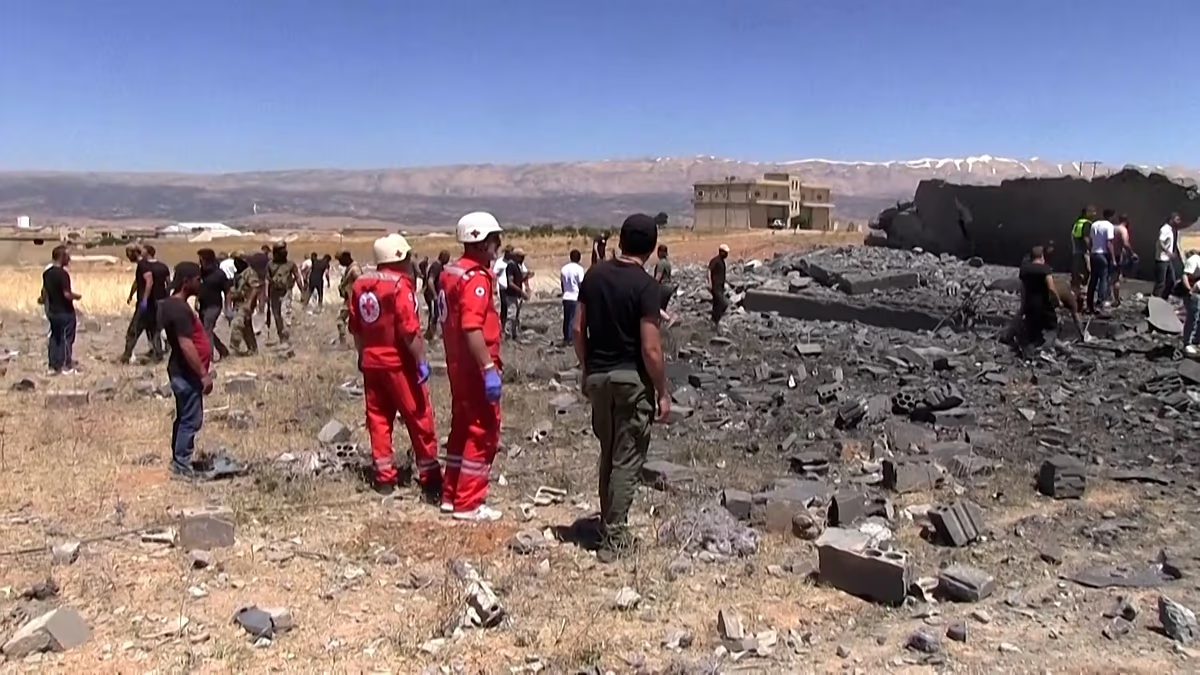
Smoke once again darkened the Lebanese sky on a tense June day, thick plumes rising above the villages of Nabatiyeh al-Faouqa, Choukine, and Kfar Sir. Further north, near the storied city of Baalbek, the echoes of additional strikes reverberated through the Bekaa Valley. This fresh wave of violence arrived with a particularly sharp irony, striking just days after the United States and Iran publicly cemented a framework agreement designed to de-escalate conflicts across multiple fronts, including the precarious situation in Lebanon. The timing underscored a brutal reality: despite high-level diplomatic maneuvering, the ground beneath the feet of civilians remained terrifyingly unstable. This fragility was further emphasized as Israeli forces reported the deaths of soldiers in southern Lebanon—the first such losses since the deal was announced, serving as a grim testament to the agreement’s immediate limitations.
On the ground in the Baalbek district, the human cost of the escalation became starkly visible. Ambulances, civil defence crews, and army units scrambled to deploy across strike locations, their sirens cutting through the dust and chaos as rescue operations continued into the day. The scenes were ones of visceral destruction: damaged vehicles and burned-out cars sat abandoned near impact sites, silent witnesses to the sudden violence that had shattered the relative calm. These images of emergency response and twisted metal told a story far removed from the diplomatic parlors where agreements are drafted, a story of urgent, perilous work to save lives amidst the rubble.
Meanwhile, in the south, a different kind of survival instinct took hold. A steady stream of traffic flowed across the vital Qasmieh Bridge, connecting Tyre and Sidon, as residents made the difficult decision to flee the affected areas. This exodus, often undertaken with few possessions and immense anxiety, represented the predictable human consequence of renewed military action. Families sought safer ground, their journeys adding to the long history of displacement in a region weary from conflict. The bridge became a symbol not of connection, but of escape, its lanes carrying the collective worry of people caught between warring parties.
The juxtaposition of this violence against the backdrop of the newly signed U.S.-Iran agreement creates a complex and troubling paradox. While the framework opened a critical 60-day window for negotiation, aiming to halt fighting across various regional flashpoints, it possesses a fundamental structural gap: Israel and Hezbollah are not direct parties to the arrangement. This absence places the most volatile flashpoint—the Lebanese-Israeli border—in a precarious limbo. The agreement, therefore, exists as an external framework hoping to influence a conflict driven by its own entrenched dynamics and deep-seated grievances, a challenge that now seems more daunting than ever.
Consequently, each continued clash and retaliatory strike does more than cause immediate casualties and damage; it actively undermines the fragile diplomatic efforts struggling to take root. With every explosion, trust erodes, hardline positions strengthen, and the space for dialogue shrinks. The violence injects a profound uncertainty into hopes for achieving a broader, sustainable ceasefire across the region. Diplomacy requires a measure of stability to succeed, but the ongoing fighting creates a vicious cycle where escalation begets escalation, leaving negotiators with a shifting and increasingly hostile landscape.
Ultimately, the events of that day paint a sobering picture of the gap between diplomatic aspiration and on-the-ground reality. While world powers engage in high-stakes talks, the people of southern Lebanon and the Bekaa Valley continue to live with the immediate threats of smoke, sirens, and sudden flight. The burned-out cars, the frantic rescues, and the lines of traffic fleeing across bridges are the tangible outcomes of this disconnect. For any agreement to hold and bring lasting peace, it must find a way to directly bridge the chasm between the signatories in distant capitals and the rival forces with fingers on the triggers along the border. Until then, the clouds over Lebanese villages will continue to rise, a dark signal of promises not yet fulfilled.