


A Fractured Europe: Macron and Sánchez Stand Against the Tide of Offshoring Migration
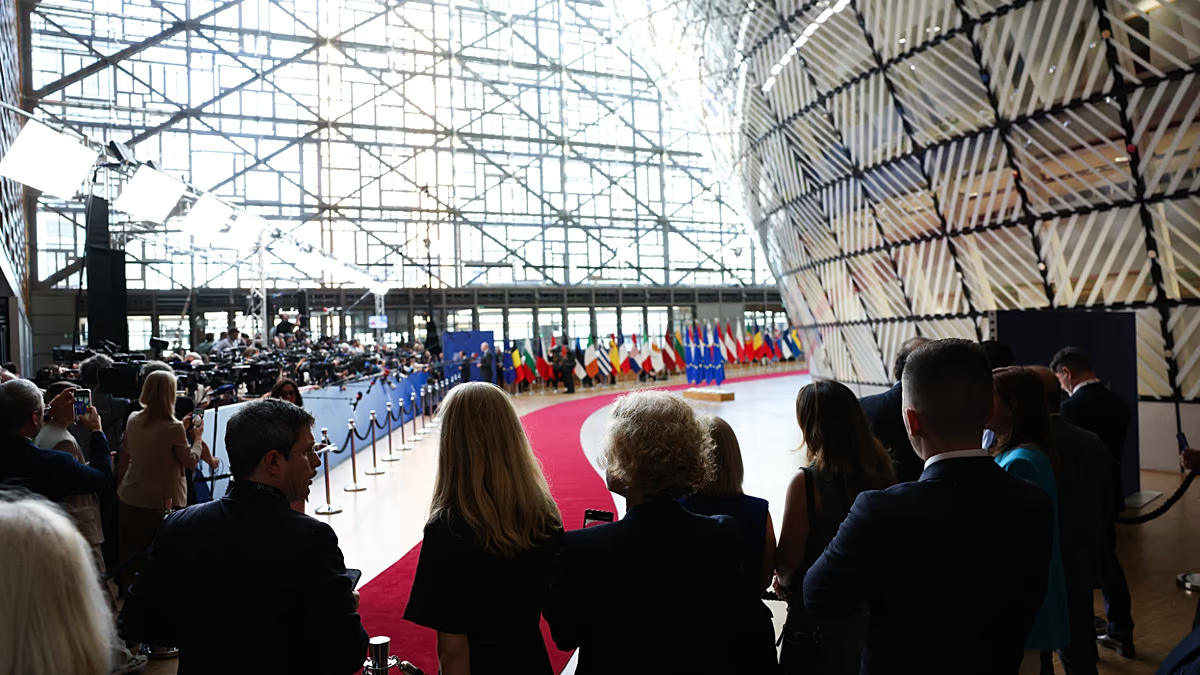
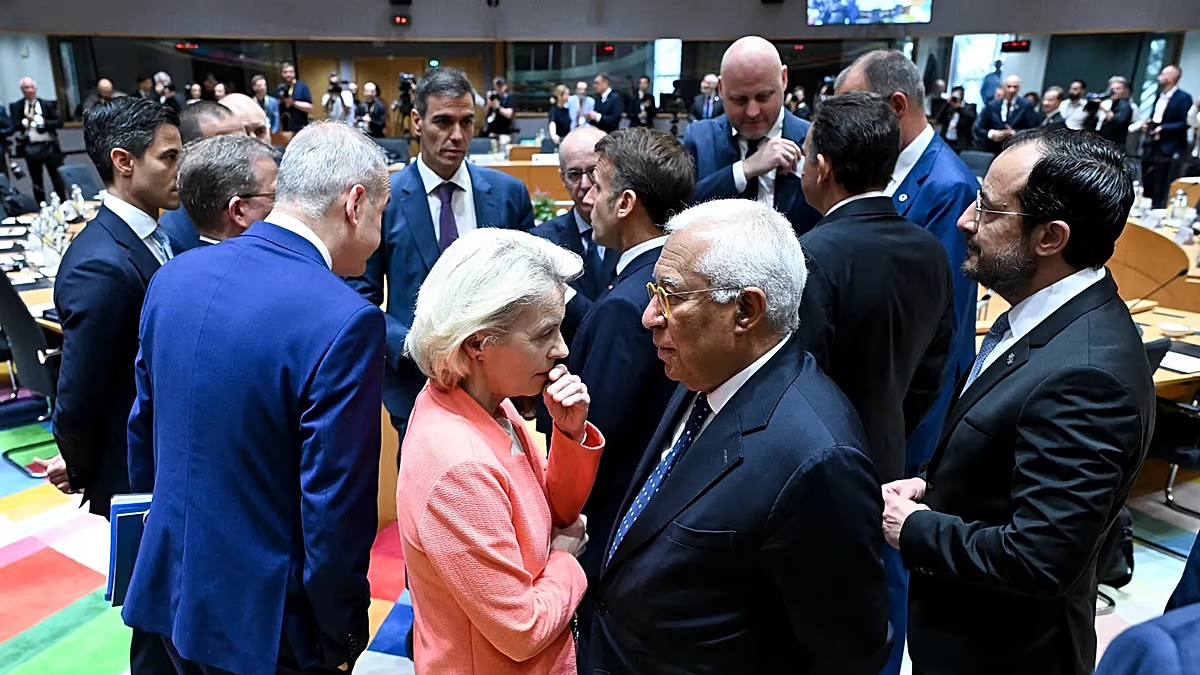
The European Union, a bloc founded on principles of solidarity and human dignity, finds itself confronting a profound internal rift over one of its most persistent and divisive challenges: migration. At a recent summit in Brussels, a coalition of 19 member states, spearheaded by Denmark and Italy, pushed aggressively to implement a controversial new strategy. They advocated for the “full use” of a freshly minted EU law to construct “return hubs” or deportation camps in countries outside the Union’s borders. This plan, aimed at outsourcing the management of migrants whose asylum claims have been rejected, seeks to physically transfer individuals to third countries. However, this move towards offshoring has ignited a fierce and principled opposition led by French President Emmanuel Macron and Spanish Prime Minister Pedro Sánchez, placing them on a direct collision course with a growing political majority within the bloc.
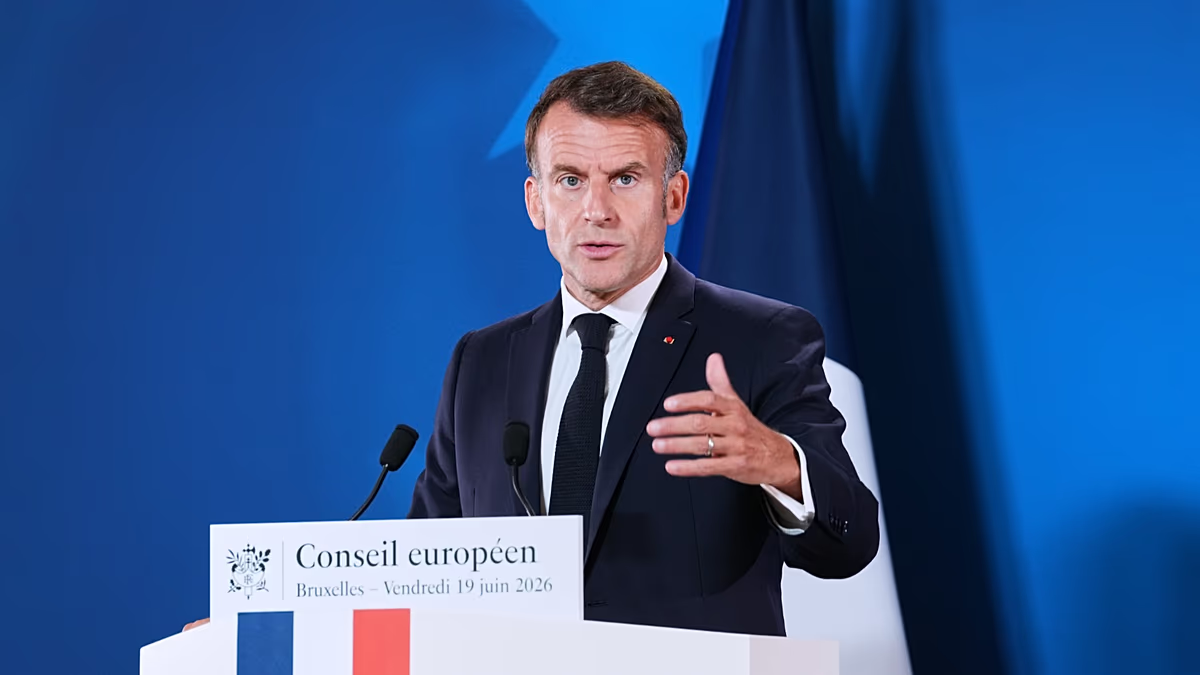
The proposal, often cloaked in the jargon of “innovative solutions,” represents a significant hardening of Europe’s migration posture. Proponents argue it is a necessary and pragmatic response to irregular arrivals, offering a way to enforce deportations more efficiently through agreements with cooperating nations. Yet, for Macron and Sánchez, this path is a dangerous departure from foundational European values. In a blistering rebuke, Macron framed the issue in stark moral terms, questioning whether such camps are compatible with the Europe he knows. “I am not sure that this is our Europe,” he declared, expressing both pragmatic and fundamental disagreement. He dismissed the concept as ineffective, noting that despite talk, no workable model has yet been proven. His skepticism cuts to the core of the policy, challenging the very premise that human rights can be securely upheld in such extraterritorial arrangements, especially when brokered through financial incentives.
Beyond principles, both leaders launched a trenchant critique of the plan’s practical folly and diplomatic recklessness. Sánchez condemned the idea as an “absolutely inefficient” and “worthless” mirage that would squander precious European financial resources. He warned it sends precisely the wrong message to African nations of origin and transit, undermining the collaboration and empathy essential for sustainable, long-term partnerships. Macron amplified this concern with palpable frustration, questioning the credibility of European nations that simultaneously advocate for investment in Africa while proposing to use funds to build deportation camps on the continent. “What world do we live in?” he asked, highlighting the profound contradiction. He vowed that France would not allow EU funds to be used for such camps, which he sees as neither effective nor aligned with European principles.
The personal conviction driving this opposition is unmistakable. Macron, with characteristic rhetorical flair, contrasted the technological innovation celebrated at events like Paris’s Vivatech festival with what he sees as a perilous “innovation in values and human rights.” He dissected the cold reality behind the policy, explaining that it means pushing individuals, who may fear returning to their homeland, into a third country willing to accept them “in return for money.” This, for him, is a line Europe must not cross. Sánchez, equally resolute, framed the approach as a strategic error that forfeits moral authority and damages vital international relationships. Their united front presents a significant barrier to the coalition’s ambitions, insisting that efficiency cannot be pursued at the expense of the Union’s soul and its strategic interests in Africa.
This standoff leaves the European Union at a critical juncture. The coalition, including Italy—which has already begun a pilot project with Albania, albeit with reported shortcomings—views offshoring as an essential tool for managing migratory pressures. Yet the impassioned resistance from two of the EU’s major southern frontline states exposes a deep ideological fault line. It is a clash between a vision of Europe that prioritizes assertive, externalized border control and one that insists on upholding human rights and nurturing cooperative ties with neighbouring regions, even within a framework of stricter asylum laws. Macron explicitly stated support for tougher returns, but drew a red line at the physical transfer of migrants to distant lands they have never known.
Ultimately, the debate over deportation camps transcends migration policy; it is a struggle over the European Union’s identity and its future direction. The coalition led by Denmark and Italy reflects a potent political sentiment favouring a harder line. However, the powerful dissent voiced by Macron and Sánchez serves as a crucial reminder of the other values at stake: human dignity, international cooperation, and principled consistency. Their argument suggests that building walls—whether physical or legal—far from Europe’s shores may come at a cost greater than mere euros, risking the very credibility and cohesion of the Union itself. As this debate unfolds, Europe must reconcile its need for orderly migration management with the fundamental principles upon which it was built.