


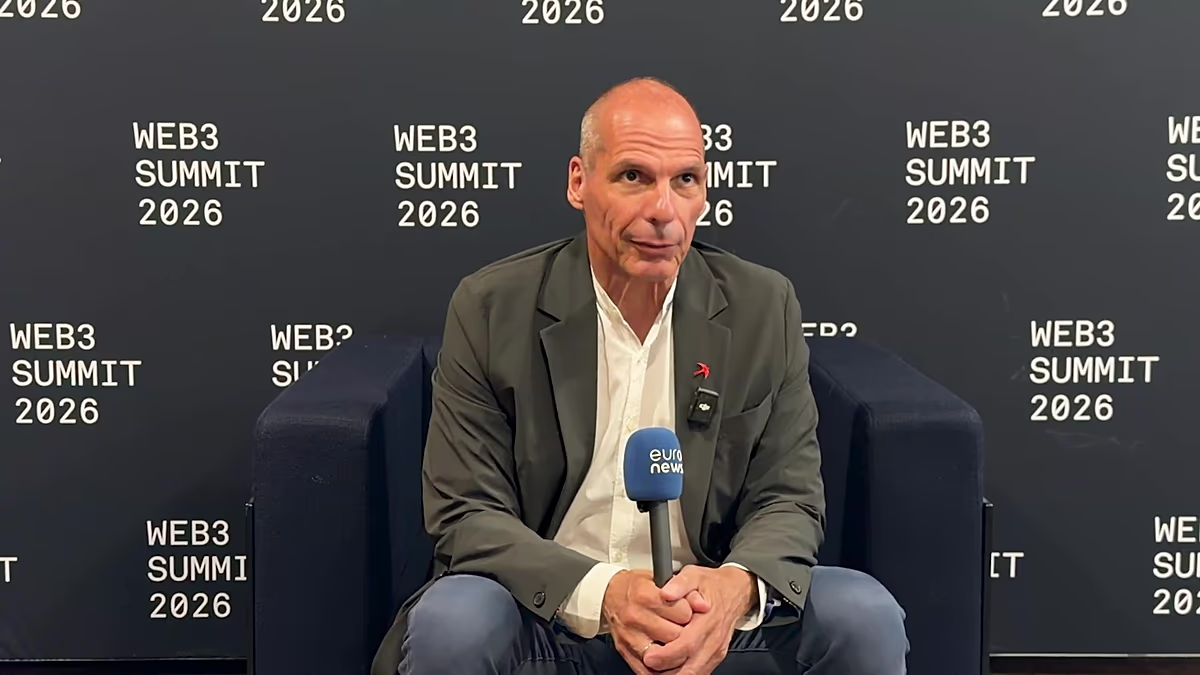
The digital age has ushered in an era of profound convenience and connection, yet it has come at a significant cost: the centralization of immense power in the hands of a few technology giants. At the fifth edition of a festival dedicated to digital freedom, the conversation matured, moving beyond the noisy speculation around cryptocurrencies to grapple with a more fundamental question. Can decentralized technologies, primarily blockchain, truly challenge the growing dominance of Big Tech over our data, our artificial intelligence, and the very architecture of the digital economy? The core promise of Web3—an internet where users reclaim ownership and control of their digital identities, assets, and interactions—was placed under a critical microscope. This was not a rallying cry for a simple technological fix, but a serious inquiry into whether these tools could foster a more equitable digital landscape, encapsulated in the event’s poignant theme: “Less trust, but more truth.”
A central concern driving this debate is the immense, often invisible, economic value extracted from our personal data. As highlighted by Bill Laboon of the Web3 Foundation, an individual unwittingly generates an estimated $162,000 in value for corporations over their digital lifetime. The explosive rise of AI has only intensified this issue, turning personal data into the essential fuel for increasingly powerful and opaque algorithms. The danger, as Laboon notes, lies in AI systems that intimately know your information, preferences, and behaviors, potentially using that knowledge in ways you cannot foresee or control. This reality frames the battle over digital power not merely as a matter of privacy, but as a fundamental economic and political struggle. It begs the question: in a world where data is the new oil, who rightfully owns the wellspring?
This question finds a powerful echo in the analysis of economist Yanis Varoufakis, who frames the current dynamic as “technofeudalism.” In this modern paradigm, Big Tech companies are not just service providers but the new lords of the digital manor, controlling the essential infrastructure—the cloud estates, social media platforms, and app stores—upon which our digital lives are built. For Varoufakis, this concentration of power creates an unsustainable clash between the interests of the many and the interests of the powerful few. While he sees potential utility in Web3 applications, he remains deeply skeptical that technology alone can dismantle these entrenched systems. His argument suggests that any meaningful change must be rooted in deliberate democratic action and political will, not just lines of code. Technology can be a tool for liberation, but without a conscious framework for justice, it risks simply building new castles on the same unequal foundations.
Yet, amidst this skepticism, a more pragmatic and community-focused vision of blockchain’s potential is emerging. Moving past the hype of financial speculation, advocates like Joshua Davila of The Blockchain Socialist are exploring how decentralized systems can empower local communities and foster alternative economic models. Inspired by longstanding solidarity economies—such as cooperative banks and credit unions—these projects aim to harness blockchain for the collective good. The vision is to create transparent, member-governed platforms where local currencies can thrive and where the interest generated from community savings is reinvested into projects the community itself supports. This represents a shift from blockchain as a vehicle for individual wealth accumulation to blockchain as infrastructure for communal stewardship and resilience, offering a tangible alternative to the extractive models of traditional finance and Big Tech.
As artificial intelligence accelerates, the race to control the underlying digital infrastructure becomes only more critical. Both supporters and critics of Web3 seem to agree on one pivotal point: decentralization, in principle, represents a crucial opportunity to redistribute power. The central tension lies in execution. Can these technologies genuinely democratize access and control, or will they inadvertently create new hierarchies, new technical elites, and novel forms of inequality? The path forward is fraught with challenges, from user-unfriendly interfaces to massive energy consumption and regulatory uncertainty. The dream of a user-owned internet is compelling, but its realization demands more than just technological innovation; it requires careful design, inclusive governance, and a relentless focus on the human outcomes these systems are meant to serve.
Ultimately, the festival for digital freedom underscored that the future of the internet is not a foregone conclusion. It is a contest of ideas and power, being fought in code, in policy debates, and in community gatherings. The conversation has evolved from “What can blockchain do?” to “What kind of digital world do we want to build, and for whom?” Whether through verifiable systems that promote truth over blind trust, through cooperative models that return economic agency to communities, or through political movements that regulate concentrated power, the goal remains shared: to envision and fight for an internet that serves as a true digital commons. The tools of Web3 offer a new set of blueprints, but the construction of a more equitable digital society will depend on the wisdom, ethics, and collective action of the people who use them.