



Summary and Humanized Report: Post-Incident Highway Recovery
(Paragraph 1)
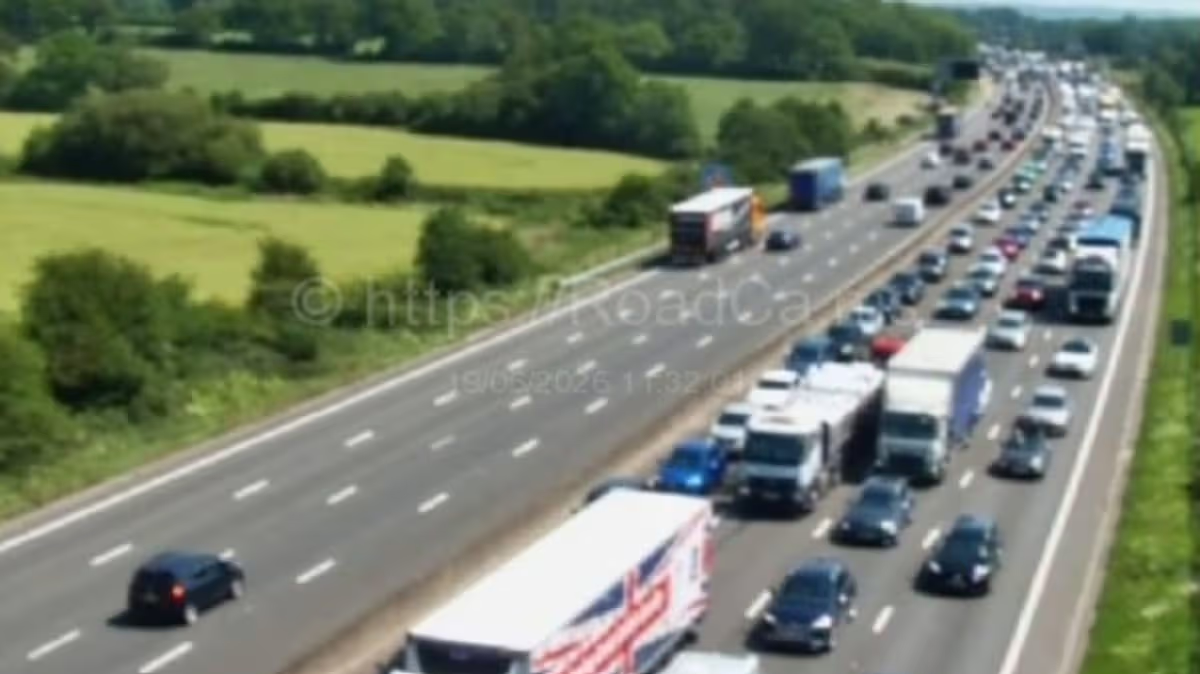
Traffic authorities have provided a detailed update on the ongoing recovery efforts following a significant incident on the motorway. On the side of the road traveling in the clockwise direction, reduced speed limits are being actively maintained. This measure is crucial not just for the safety of drivers navigating this stretch, but equally for the protection of the emergency and recovery crews who are still operating on the opposite side of the carriageway. Their work, often conducted perilously close to live traffic, necessitates a slower, more cautious pace from passing motorists to ensure everyone’s well-being.
(Paragraph 2)
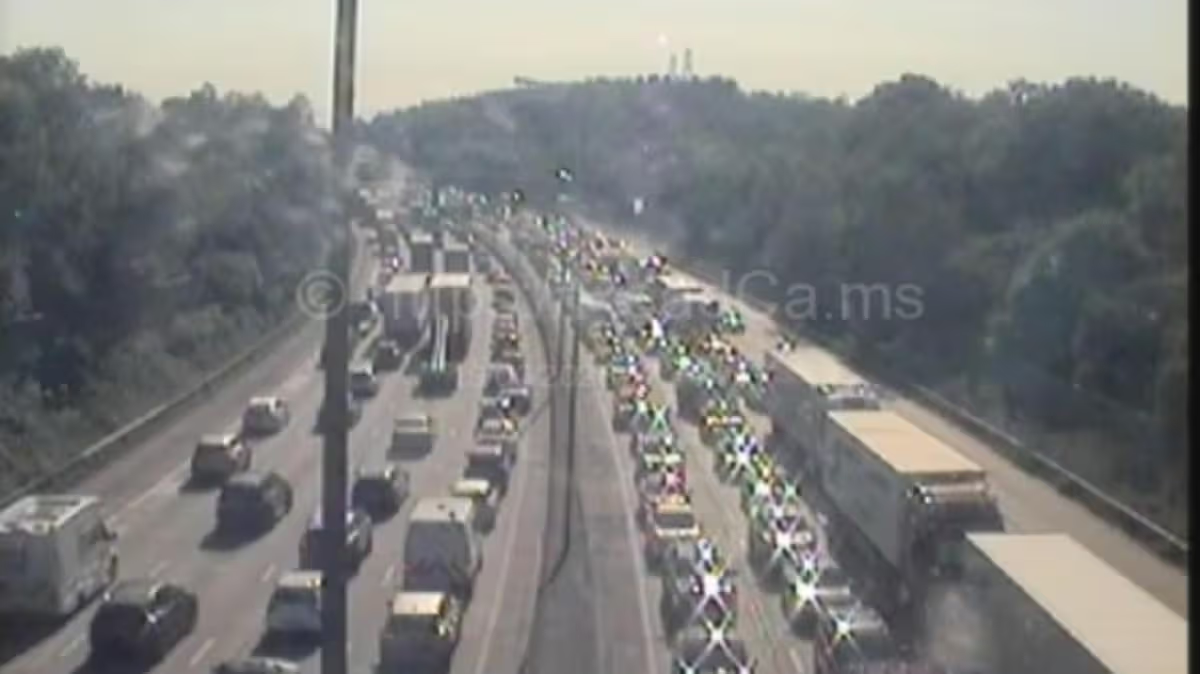
Turning to the anticlockwise carriageway, where traffic has been held stationary, officials are in the final stages of preparation to begin releasing the extensive queues. However, they emphasize that this process must be gradual and methodical. The two lanes closest to the incident site—Lanes 1 and 2—will remain closed for the time being, with this closure extending a considerable distance beyond the immediate scene. This is a standard but critical safety protocol to create a sterile work zone, allowing for the safe removal of vehicles, equipment, and any remaining debris without endangering workers or the returning traffic flow.
(Paragraph 3)
The reopening will commence with Lanes 3 and 4, but here the agency is asking for the public’s continued patience. They are conducting final, comprehensive safety sweeps. These last checks are non-negotiable, ensuring that every piece of equipment is clear, every road surface hazard is identified, and every traffic sign and cone is correctly positioned before a single car is allowed through. It is a deliberate pause, taken to guarantee that the resumption of travel is not just prompt, but fundamentally safe for all involved.
(Paragraph 4)
Once the signal is given and traffic begins to inch forward, drivers should have realistic expectations. The system will not reset instantaneously. If you are at the very back of a several-mile-long queue, it will take considerable time for the wave of movement to reach you. Consequently, some delays will persist even after the initial release, as the congested mass of vehicles slowly dilutes and resumes normal speed. This is a natural part of the recovery process, not an indication of further problems.
(Paragraph 5)
Furthermore, the agency has pointed out an important contextual factor: this incident occurred during the evening rush hour. Therefore, once drivers are beyond the immediate bottleneck created by the closure, they should anticipate encountering the typical heavy congestion associated with peak travel times. The pre-existing volume of traffic on the network means that journey times will likely remain slower than usual even after escaping the incident queue, blending seamlessly into the standard patterns of evening travel.
(Paragraph 6)
In essence, the message from authorities is one of cautious optimism mixed with pragmatic advice. The end of the standstill is in sight, but the path to normal traffic flow is a multi-stage operation. It involves protected work zones, meticulous safety verifications, and the inevitable time lag required for congestion to dissolve. They acknowledge the frustration of the delay but underscore that every step—from the ongoing speed restrictions on one side to the staggered lane openings on the other—is guided by a paramount commitment to safety over speed. Their request is for drivers to remain alert, patient, and understanding as these final, critical procedures are completed.