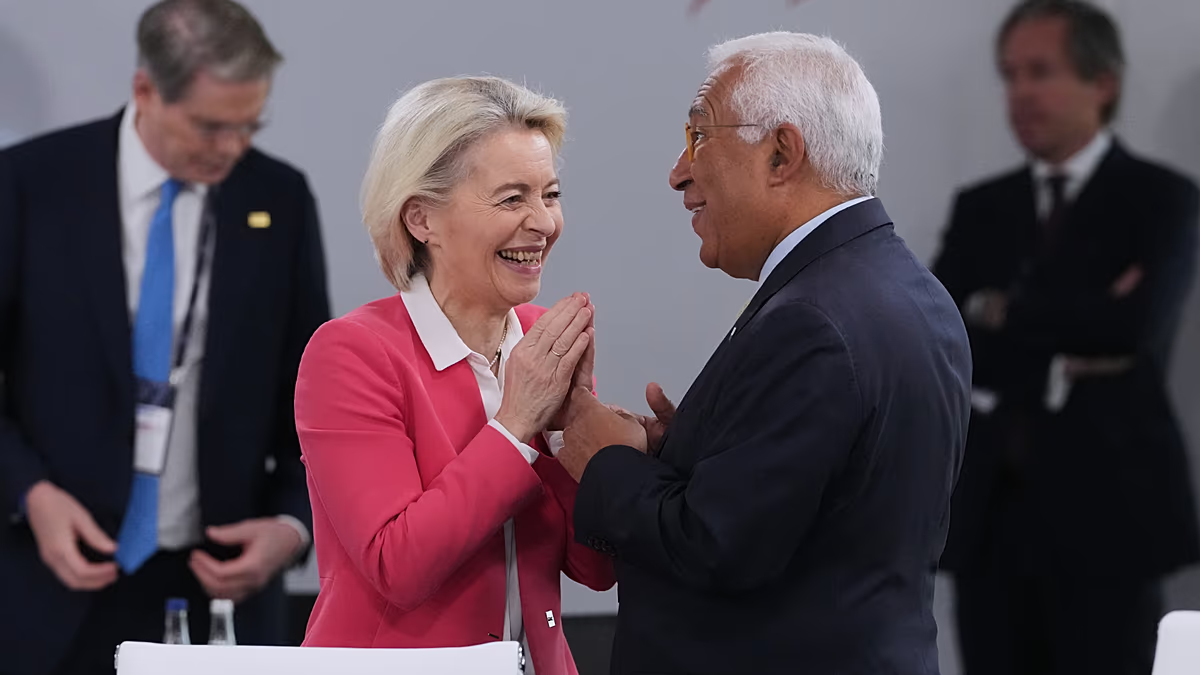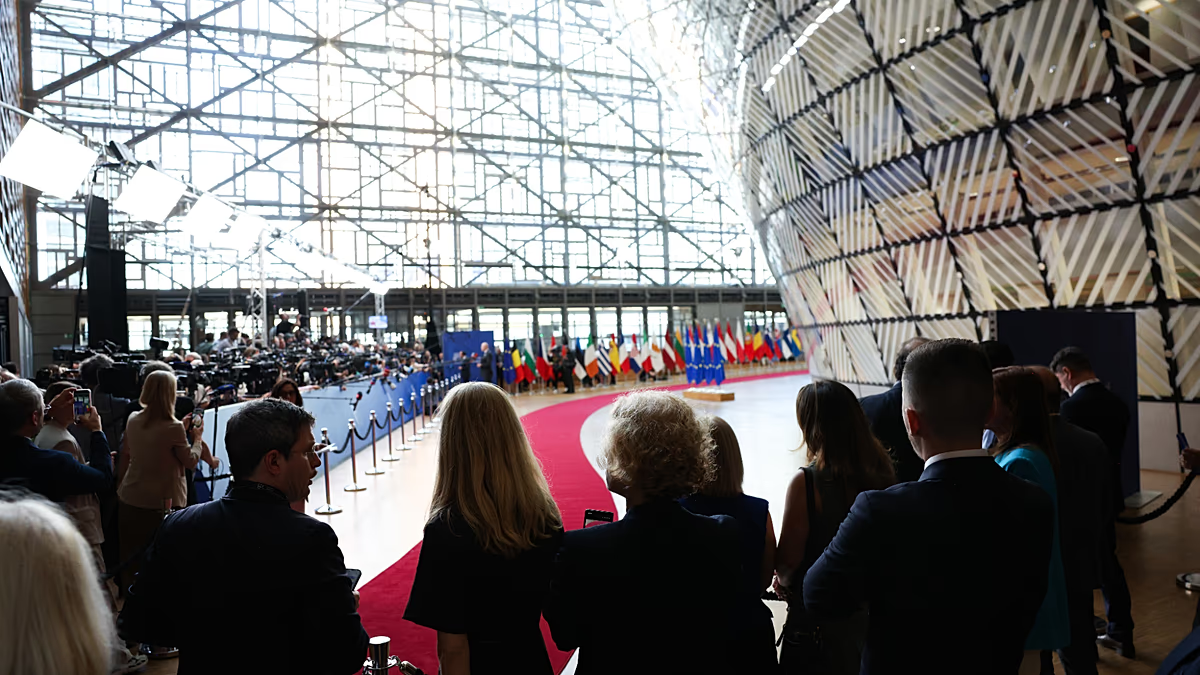


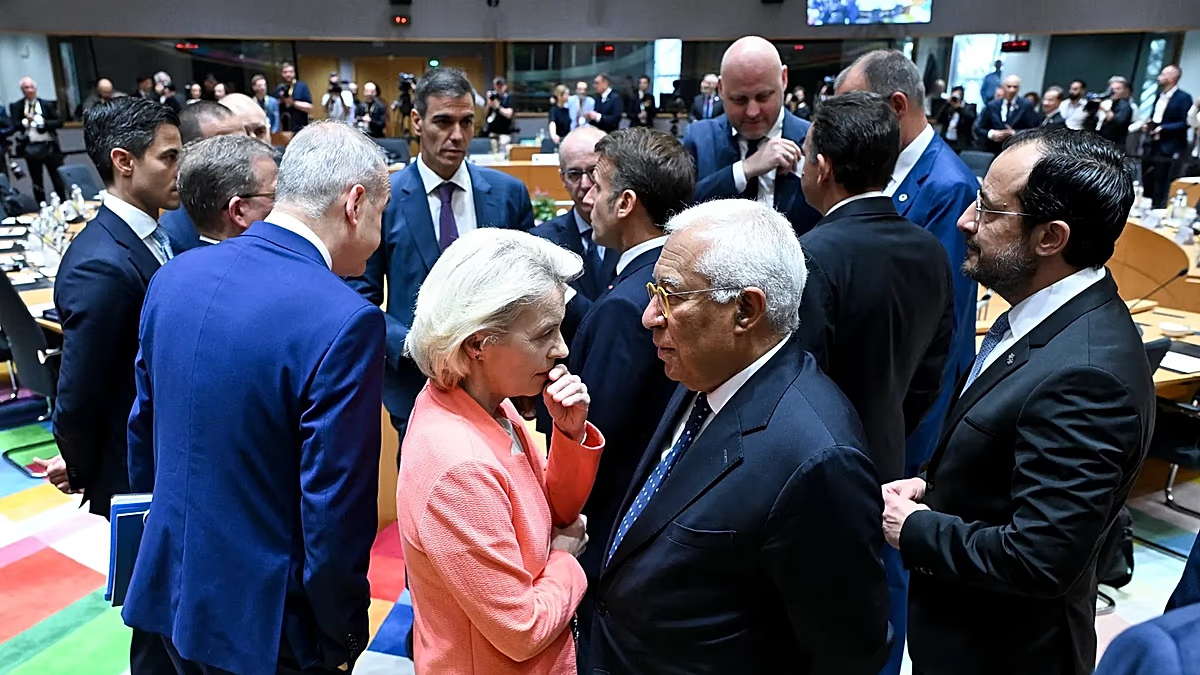
In a decisive move to address growing economic vulnerabilities, the European Commission has announced plans to develop new defensive tools aimed at countering significant macroeconomic imbalances, with a particular focus on what it describes as an “unsustainable” daily trade deficit with China. Commission President Ursula von der Leyen, speaking at the close of a European Council summit, framed this as a necessary evolution in strategy, stating that Europe must now use its existing economic toolbox “more proactively and more strategically to defend our European interests.” The centerpiece of this initiative is a proposed “diversification instrument” designed to help European companies reduce their dependency on single sources for critical components, thereby accelerating what has so far been a slow process of supply chain de-risking. While emphasizing that dialogue with Beijing remains crucial, EU leaders united around the message that the current trade relationship, marked by a deficit approaching one billion euros per day, is untenable and demands a concrete response.
The political rationale for this shift is rooted in a stark economic reality underscored by European Council President António Costa, who declared plainly that “the status quo cannot continue.” The official strategy, as articulated by EU leadership, is one of “de-risking, not decoupling,” aiming to build economic resilience without severing ties. However, the sheer scale of the imbalance has forced a more assertive posture. The proposed instrument would operate in a country-agnostic manner, theoretically avoiding the appearance of targeting China specifically, though the context makes the primary objective clear. Early reports suggest it could involve requirements for companies to diversify suppliers for critical goods to avoid “chokepoints that can be weaponised,” a clear reference to concerns over economic coercion. While the exact timeline remains unspecified, officials hint that formal proposals may be unveiled during President von der Leyen’s annual State of the Union address in September.
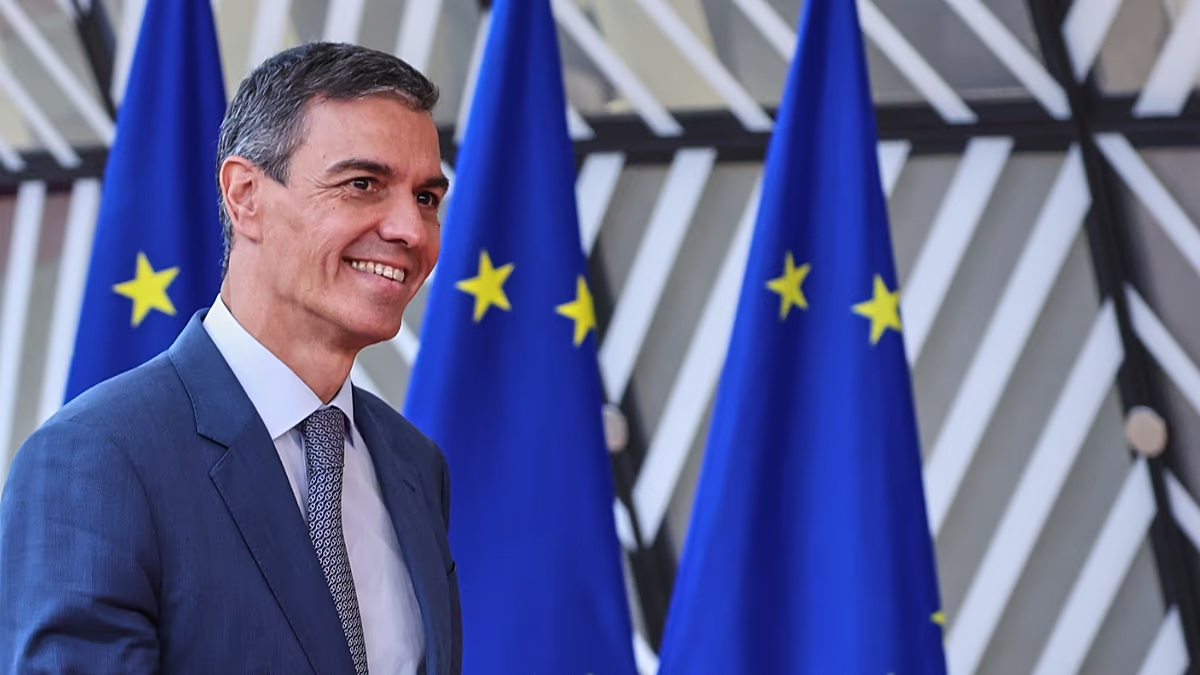
However, this show of unity at the summit level masks significant underlying fractures among the 27 member states, which will test the EU’s resolve when concrete measures are tabled. Nations like Germany, with its massive automotive and industrial exports to China, and Spain, which has actively courted Chinese investment, are traditionally wary of policies that might provoke retaliation from Beijing and disrupt their economies. Their preference leans heavily toward maintaining open diplomatic and commercial channels, a stance reinforced by concerns over the “erratic behaviour” of the United States and its own assertive trade agenda. For these countries, the economic partnership with China is a vital counterbalance and a source of stability, making the prospect of a tough EU-wide trade defense policy a source of considerable anxiety.
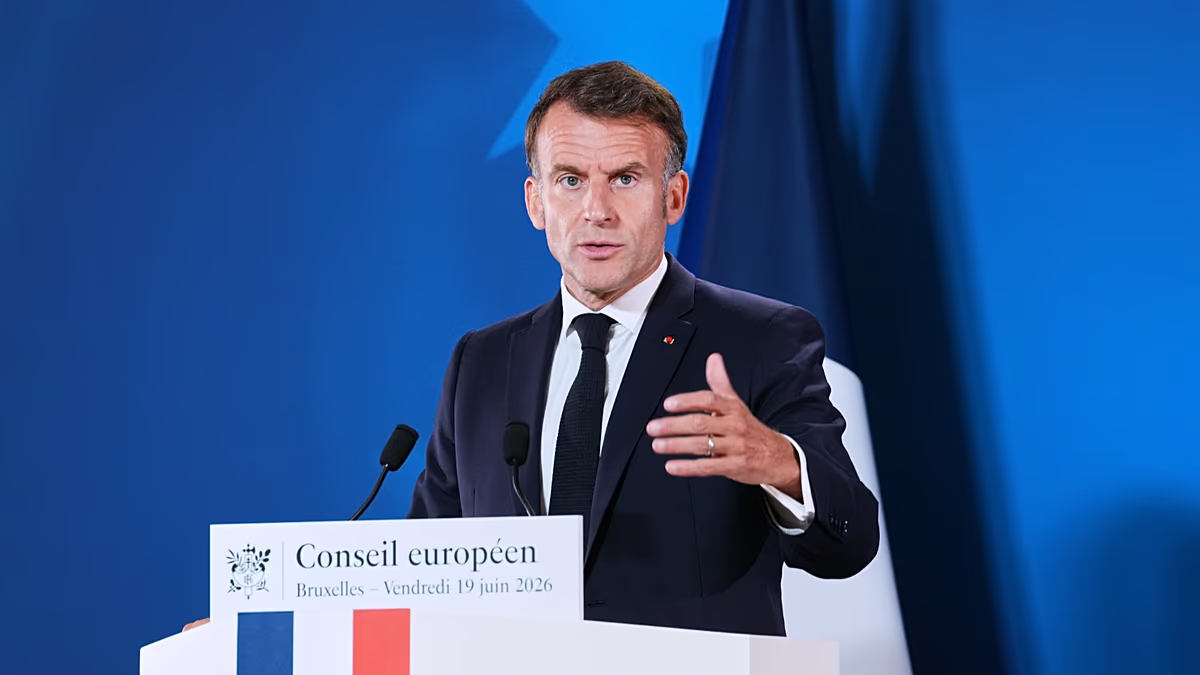
In contrast, France has emerged as the leading voice for a tougher line, advocating for stronger tools to combat China’s industrial overcapacity and state subsidies that distort global markets. French President Emmanuel Macron welcomed the summit’s conclusions as evidence that Brussels is finally adopting a more robust stance, emphasizing the need to modernize trade instruments to allow quicker reactions to “unfair competition.” This north-south, or rather export-led versus security-focused, divide within the EU is the central battleground on which this policy will be forged. Other leaders added that any serious countermeasures must be paired with efforts to bolster Europe’s own economic competitiveness through internal market reforms and a preparedness to absorb the inevitable retaliatory actions from China.
Beyond the internal debate, the success of this strategy hinges on its practical implementation and the delicate dance of diplomacy that must accompany it. The Commission’s challenge is to design measures that are effective enough to meaningfully reduce critical dependencies and rebalance trade, yet pragmatic enough to retain the support of wary member states and avoid a full-scale trade war. The “diversification instrument” must incentivize companies to build more resilient, multi-sourced supply chains without imposing crippling short-term costs. Furthermore, as diplomatic sources stressed, keeping a channel for dialogue open with Beijing is not just a nicety but a strategic necessity, providing a potential off-ramp if tensions escalate and ensuring that commercial relations are not wholly sacrificed on the altar of de-risking.
Ultimately, the EU is attempting to chart a precarious middle course in an era of great power competition and economic uncertainty. As President von der Leyen noted, “The pressure is high… The figures speak for themselves, and we have to rebalance them.” This move represents a significant, if cautious, step toward a more sovereign and assertive European economic policy. It acknowledges that reliance on a single strategic competitor for essential goods represents a fundamental vulnerability. Whether this fledgling policy can translate summit rhetoric into effective action, maintain the fragile consensus among member states, and navigate China’s certain response will determine if Europe can truly secure its economic foundations for a more turbulent future.