

A Human Face on the Picket Line: Hilton Workers Bring Fight for Dignity to the World Cup’s Doorstep
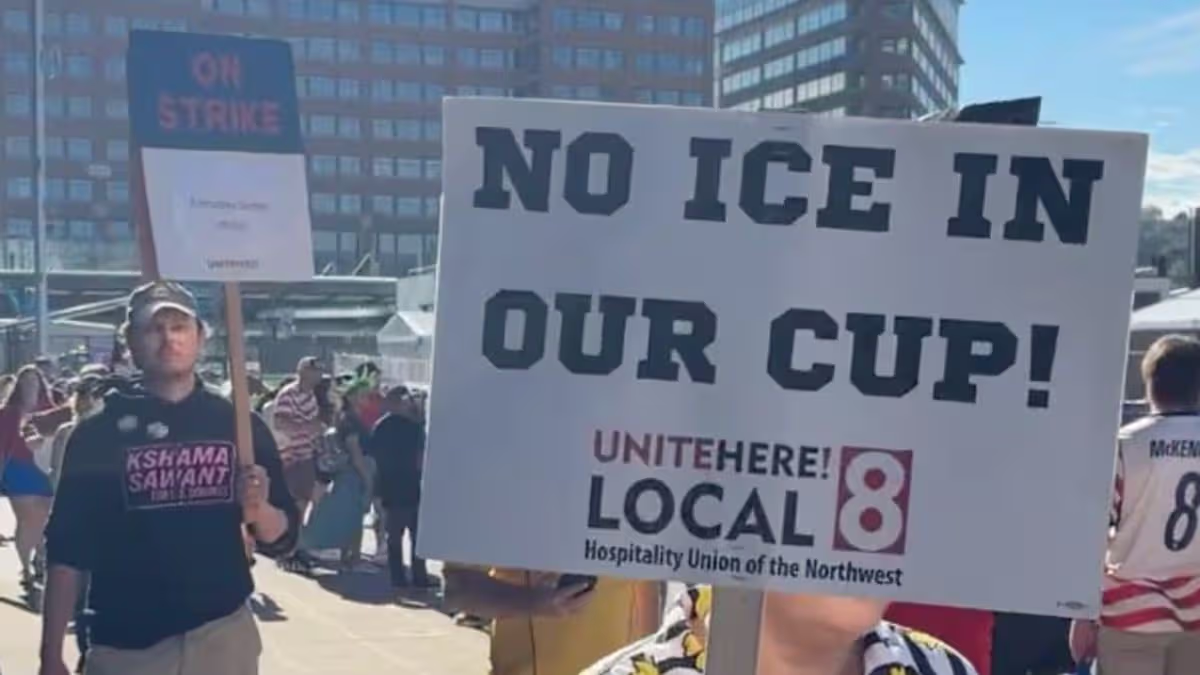
As tens of thousands of soccer fans draped in the red, white, and blue of the United States and the green and gold of Australia converged on Seattle Stadium for a pivotal World Cup match, another gathering demanded attention just outside the gates. On a Friday morning buzzing with pre-game anticipation, a line of striking Hilton hotel workers, holding signs and chanting, painted a starkly different picture of the global spectacle. Their picket line, a quiet but determined counterpoint to the festive chaos, brought a local struggle for economic justice directly to the doorstep of an international event, ensuring their cries for fair wages and basic protections would not be drowned out by the roar of the crowd.
The workers, members of Unite Here Local 8, represent the often-invisible backbone of the hospitality industry. Their strike, involving approximately 7,000 workers across Washington and Oregon, had begun the day before at the Embassy Suites by Hilton Seattle Downtown Pioneer Square, a mere five-minute walk from the stadium. By carrying their protest to the venue itself on match day, they executed a powerful strategy of maximum visibility. Among them was Aspen Demare, a bartender at the hotel’s Zephyr restaurant, who stood at the front of the picket line not as a statistic, but as a human voice. She explained the stark reality of earning a sub-minimum tipped wage in a role where tips fell short, framing the strike not as a mere negotiation tactic, but as a fight for survival and dignity. For her and her colleagues, the issue was simple and non-negotiable: the strike would end only when a fair contract was signed.
The demands at the heart of this conflict extend beyond a simple raise. The 117 unionized workers at the Embassy Suites are seeking a return to pre-pandemic staffing levels, year-round healthcare coverage instead of the precarious month-to-month plans they currently endure, and meaningful wage increases. Perhaps most poignant is their call for a protocol requiring management to notify employees if Immigration and Customs Enforcement (ICE) or Department of Homeland Security personnel are on the property. This provision, critically important for a workforce composed largely of immigrants, is about more than contracts; it’s about safety, respect, and allowing workers to protect their families without fear of workplace reprisal. The hotel’s outright rejection of this request, alongside what the union termed unsatisfactory wage offers, led to an overwhelming strike authorization vote on June 5, following the expiration of their contract at the end of May.
Anita Seth, president of Unite Here Local 8, encapsulated the workers’ plight with clear moral clarity. She argued that the very individuals tasked with welcoming visitors from across the globe to Seattle for events like the World Cup should not be forced to work second or third jobs to support their families, or live in anxiety over losing healthcare during the slower winter months. Their protest highlighted the deep irony of an industry celebrating global unity while failing to provide stability for its own workforce. The timing against the backdrop of the USA vs. Australia match—a top-of-the-table clash in one of the tournament’s most-watched groups—was no accident. It was a calculated move to leverage the world’s gaze, turning the international spotlight onto a very local injustice.
In response to the disruption, Hilton stated that contingency plans were in place and reaffirmed its commitment to negotiating in good faith. However, for the union and the striking workers, actions speak louder than words. Their direct appeal to the public—urging visitors not to sleep, eat, or meet at the struck hotel until a resolution is found—transforms every tourist and soccer fan into a potential ally. This strategy personalizes the boycott, making it a conscious choice for consumers about where their money goes and which values they support. The image of workers marching as fans streamed past serves as a powerful, real-world reminder that the glamour of major sporting events is built upon the labor of countless individuals whose fair treatment should not be an afterthought.
Ultimately, the scene outside Seattle Stadium was about more than a labor dispute; it was a vivid demonstration of community and perseverance. While the world watched athletes compete on the field, these workers championed a different kind of contest: the ongoing fight for a living wage, safe working conditions, and year-round security. Their presence ensured that the narrative of the 2026 World Cup in Seattle would include not just goals and victories, but also a compelling chapter on the demand for economic fairness. As the cheers eventually faded inside the stadium, the resolve on the picket line promised to endure, a quiet testament to the belief that those who serve the global community deserve to share in its prosperity.