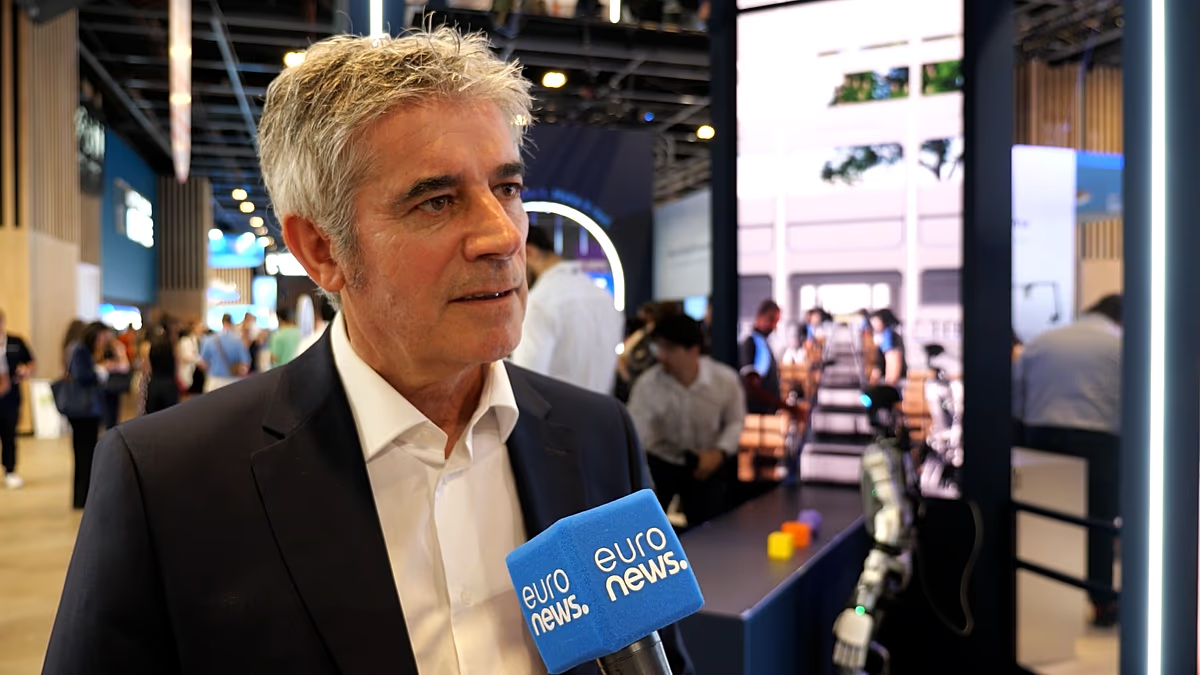



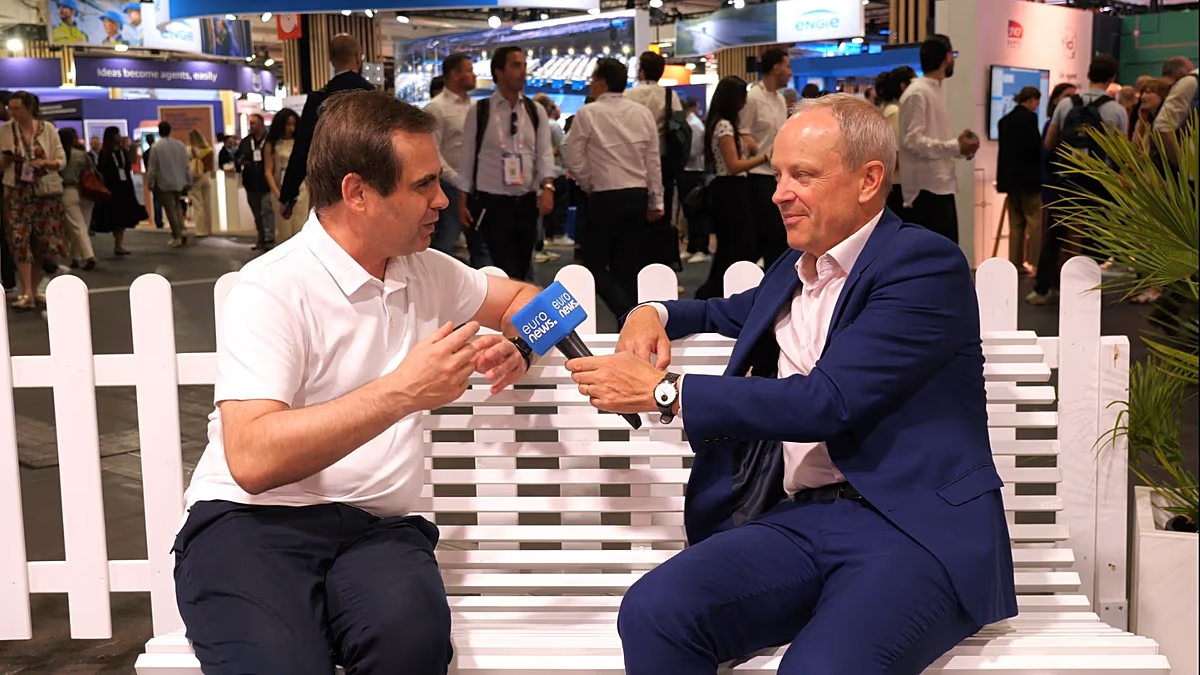
In a bustling meeting room, colleagues from Greece, Russia, Egypt, and Germany engage in lively discussion, each speaking in their native tongue, yet each understanding the others perfectly. This is not a scene from a distant science fiction novel, but a tangible vision of the near future as described by Jarek Kutylowski, the co-founder and CEO of DeepL. He believes this world of seamless, real-time multilingual communication is within our grasp, particularly within the sphere of international business. Kutylowski’s goal transcends simple text translation; he envisions a realm where conversations flow naturally and confidently, with all participants rooted in the comfort and precision of their own language. He illustrates this by imagining an interview in Portugal where both parties speak their respective languages, fostering not only mutual understanding but also a profound sense of safety and clarity. This ambition is fundamentally human-centric, aiming to remove the cognitive burden and potential misunderstandings of speaking a second language, thereby levelling the professional playing field.
To realize this vision, DeepL is focusing its technology on the platforms that now underpin global commerce: video conferencing tools like Microsoft Teams and Zoom. Kutylowski notes that most multilingual conversations today occur virtually, making these applications the ideal starting point. The concept is designed to be elegantly simple for the user—a process he describes as inviting DeepL into the meeting. Participants would merely select the language in which they wish to hear everyone else, and advanced artificial intelligence works its magic in the background, handling the complex translation in real-time through existing microphones and speakers. The efficacy of this approach is not merely theoretical. An independent 2026 assessment by Slator crowned DeepL Voice, the company’s AI-powered voice translation product, as the leader in accuracy, fluency, and reliability, outperforming competing features from tech giants like Microsoft, Zoom, and Google. This validation underscores DeepL’s position at the cutting edge of making cross-lingual dialogue as effortless as turning on a camera.
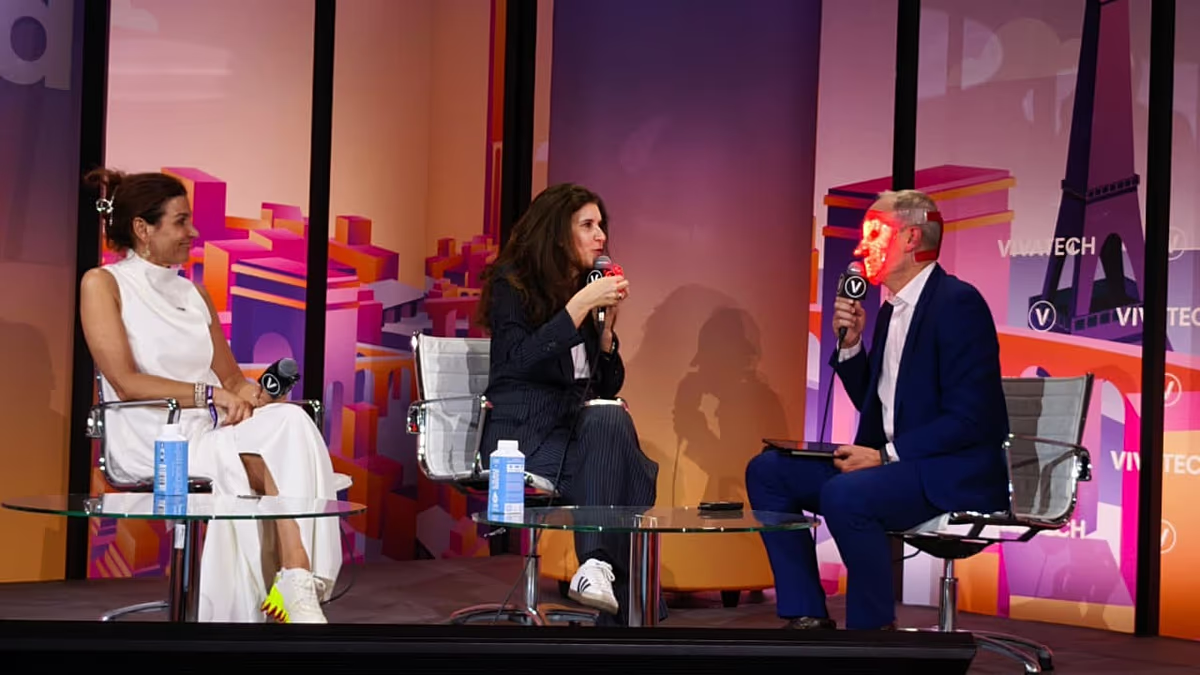
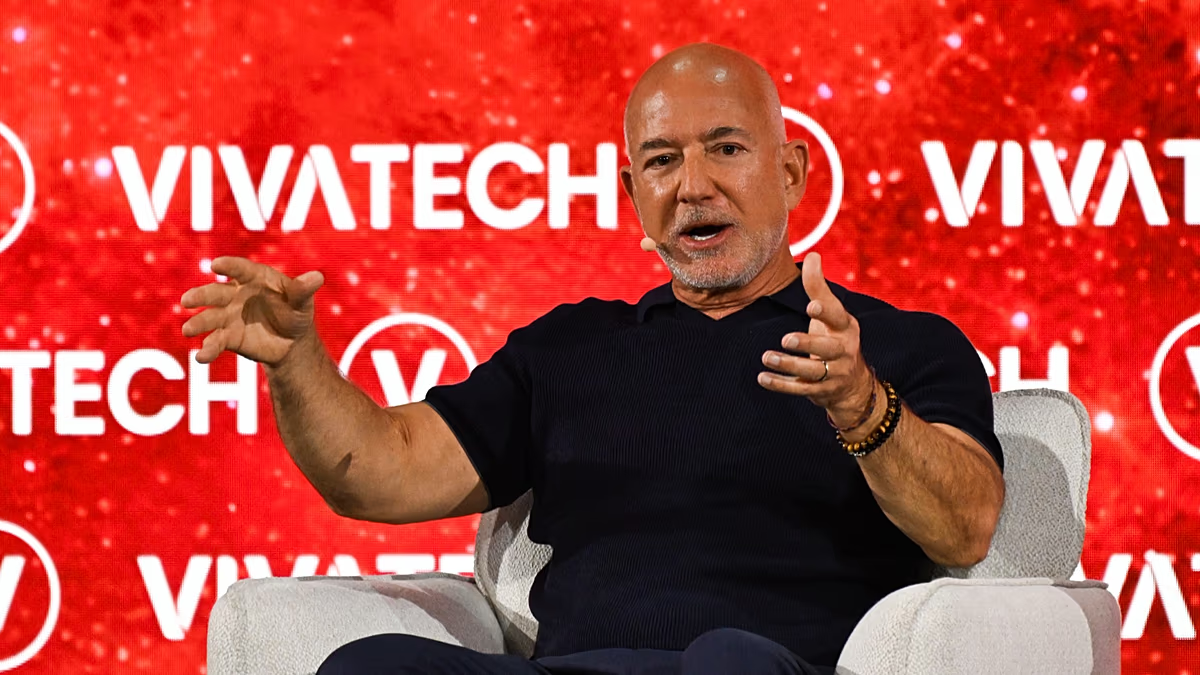
Kutylowski’s ambitions, however, extend far beyond the virtual boardroom. To conquer more demanding physical environments, DeepL recently acquired Mixhalo, a San Francisco-based pioneer in ultra-low-latency audio technology. This strategic move is aimed at deploying seamless translation at large-scale international events, such as the VivaTech conference where Kutylowski was speaking, as well as in customer support centers and other complex business workflows. He expresses deep admiration for the Mixhalo team’s solution to one of live audio’s hardest problems: delivering crystal-clear sound to thousands of people simultaneously with virtually no delay. The ultimate objective is to make language disappear entirely as a barrier to commerce and collaboration. Kutylowski paints a compelling picture: a French company could decide to start selling in Germany the very next day without expending a single moment worrying about language proficiency. The challenge would be solved transparently in the background, unlocking global opportunity with unprecedented ease.
Despite this bold confidence in technology’s trajectory, Kutylowski remains strikingly lucid about its inherent limits. He openly acknowledges that perfect translation, especially across vastly different cultures, may be an impossible ideal. Some concepts are so deeply woven into a culture’s unique historical experience that they defy direct explanation to outsiders. This insight is born from his own personal history; having been born in Poland and raised between Poland and Germany, he experienced firsthand how divergent national narratives shape distinct worldviews. He credits this bicultural upbringing with giving him an invaluable understanding of two different ways of living and thinking. This intrinsic gap between language and lived experience is precisely why, in his view, the traditional learning of languages retains immense value even in an age of advanced AI. It is a journey into another culture’s soul.
Consequently, Kutylowski is a firm advocate for continued language education, drawing a poignant parallel to mathematics. We still teach children to add and subtract by hand, even though computers can perform these calculations infinitely faster and more accurately, because the process is essential for our cognitive development and understanding of logical structures. Similarly, learning a language is about far more than utility; it is an exercise in empathy and intellectual growth. It forces the learner to engage with another culture’s idioms, humor, and historical references, fostering a deeper connection that pure translation cannot replicate. This respectful balance between embracing technological tools and honoring human learning encapsulates DeepL’s philosophy: using AI to break down practical barriers while acknowledging that true understanding often requires a more profound, personal investment.
Looking forward, Kutylowski leads a company that is relentlessly pushing the boundaries of what machine translation can achieve in real-world settings, from video calls to conference halls. Yet, in a telling reflection of his own beliefs, he personally looks toward a formidable linguistic challenge: learning Japanese. He describes it as a fascinating, complicated, and beautiful language, so structurally different from his own that it represents a “really big, nice challenge.” This duality is perhaps the core of his vision—a future where AI gracefully handles the practical demands of global communication, freeing humans to pursue the richer, more nuanced understanding that comes from engaging directly with the world’s stunning tapestry of languages and cultures. The goal is not to render language learning obsolete, but to use technology to foster more authentic and ambitious human connection.