


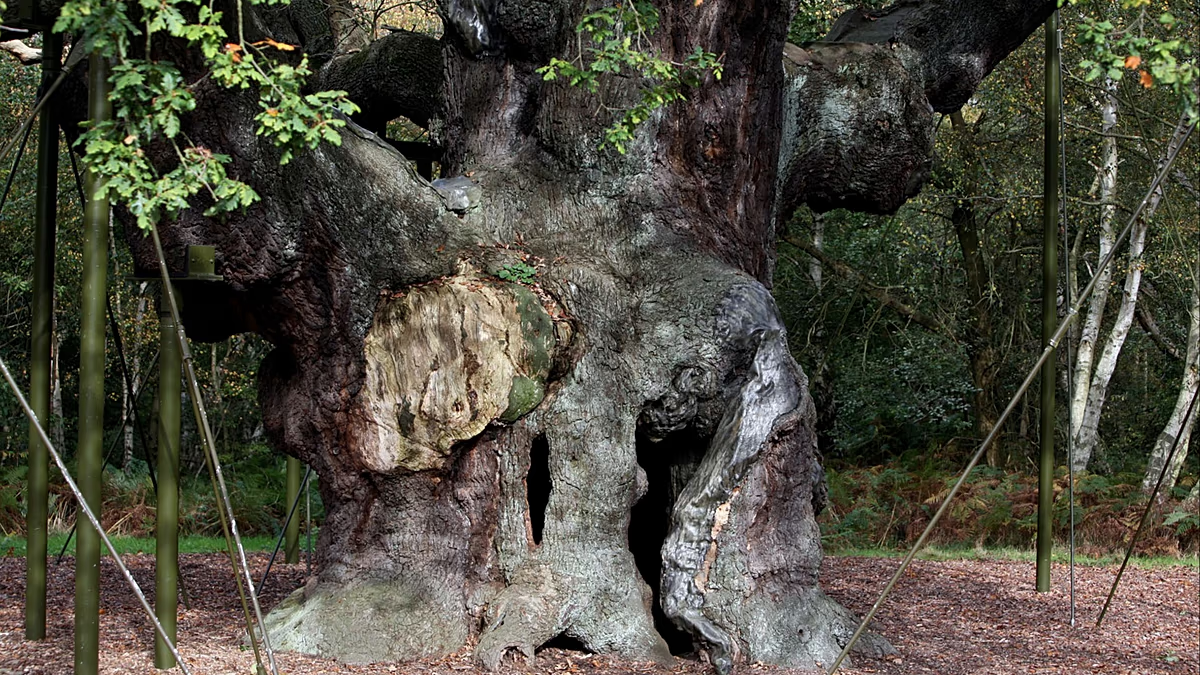
The Heart of Sherwood Has Stopped Beating
In a quiet, devastating announcement from the Royal Society for the Protection of Birds, one of England’s most beloved natural landmarks has officially passed. The Major Oak of Sherwood Forest, the ancient, sprawling tree intrinsically linked to the legend of Robin Hood, will not see another summer. Its failure to sprout leaves this spring confirmed the fears of conservationists: a life that spanned an estimated millennium, a silent witness to history and myth, has finally come to an end. This is not merely the loss of a single tree, but the closing of a living chapter in the nation’s cultural and ecological story, a poignant symbol of nature’s endurance finally succumbing to the cumulative pressures of the modern world.
The legend is woven deep into its gnarled bark. For centuries, stories have held that beneath this very canopy, the 13th-century outlaw Robin Hood and his Merry Men found refuge, plotting their adventures of stealing from the rich to give to the poor, always one step ahead of the Sheriff of Nottingham. This powerful narrative transformed the oak from a biological wonder into a cultural icon, a living set-piece from folklore that drew millions of pilgrims seeking a tangible connection to a timeless tale. Yet, its significance stretched far beyond legend. Its wood, and that of its forest kin, built the ships of Admiral Nelson’s navy and framed the roof of St. Paul’s Cathedral, silently supporting the very fabric of British history.
There is no single villain to blame for this loss, no lightning strike or sudden disease. Instead, as Chloe Ryder of the RSPB explains, the tree fell to a slow, insidious conspiracy of contemporary stresses. Decades of increasingly severe droughts, a direct symptom of our changing climate, left even healthy trees gasping for water. But the Major Oak bore the unique burden of its own fame. The weight of countless footsteps from generations of visitors compacted the soil around its mighty base, creating a hardpan that prevented life-giving rainwater from percolating down to its vast, thirsty root system. It was a death by a thousand cuts—ecological strain compounded by human adoration.
The tree’s passing resonates on a profound, personal level for many. British acting legend and Woodland Trust ambassador Dame Judi Dench gave voice to this collective sense of mourning. She reflected on the oak’s dual legacy as both a muse for art and poetry for over a thousand years and a vital, bustling habitat for countless species of wildlife. Her response, however, was a call to action, urging the public to channel their grief into advocacy, to demand stronger legal protections for the UK’s remaining ancient trees so that they might withstand the challenges that ultimately felled this titan. It is a plea to honor its memory not just with sorrow, but with a renewed commitment to stewardship.
Even as the physical tree dies, the legend it anchored shows no sign of fading. In a poignant twist of timing, a new film titled The Death of Robin Hood, starring Hugh Jackman as an aged version of the folk hero, prepares for release. The parallel is unmistakable: art imitates life, and the end of the mythic figure is mirrored in the fate of his legendary hideout. Yet, the RSPB assures us the Major Oak’s story is not over. Saplings grown from its acorns have been planted worldwide, a living diaspora of its genetic legacy. Furthermore, the colossal, weathered trunk will remain standing in Sherwood as a “natural monument,” as Hollie Drake of the RSPB stated, continuing to provide crucial habitat for forest life and serving as a powerful, somber landmark for visitors—a stark and beautiful reminder of both endurance and fragility.
Ultimately, the death of the Major Oak is a multifaceted elegy. It is a cultural loss, severing a direct, living link to one of the world’s most enduring stories. It is an ecological warning, a stark case study of how climate change and unsustainable human interaction can combine to fell even the mightiest symbols of nature’s resilience. And yet, it is also a story of continuation—through its global saplings, through its enduring physical presence, and through the timeless legend of the outlaw who, in our collective imagination, will forever find shelter in its shade. The Major Oak has ceased to live, but it has not ceased to matter, its legacy challenging us to protect what remains of our natural and mythical heritage.