

In a heartening display of national unity that transcends typical political divisions, members of Norway’s parliament briefly traded legislative debate for coordinated rhythm. On a Thursday in June 2026, the hallowed chamber echoed not with policy disputes, but with the sound of a gavel dictating the beat for a full-chamber performance of the now-famous “Viking row.” Led by Speaker Masud Gharahkhani, who expertly used his ceremonial tool to set the pace, politicians from across the aisle leaned into the synchronised motion, pulling imaginary oars in unison. The sight of suited officials engaging in this playful fan ritual created a moment of disarming levity, culminating in self-congratulatory applause. This was not merely a quirky photo opportunity; it was a deliberate and powerful gesture of support for the national football team, which had just secured a thrilling 4-1 victory over Iraq in its World Cup opener and was preparing to face Senegal.
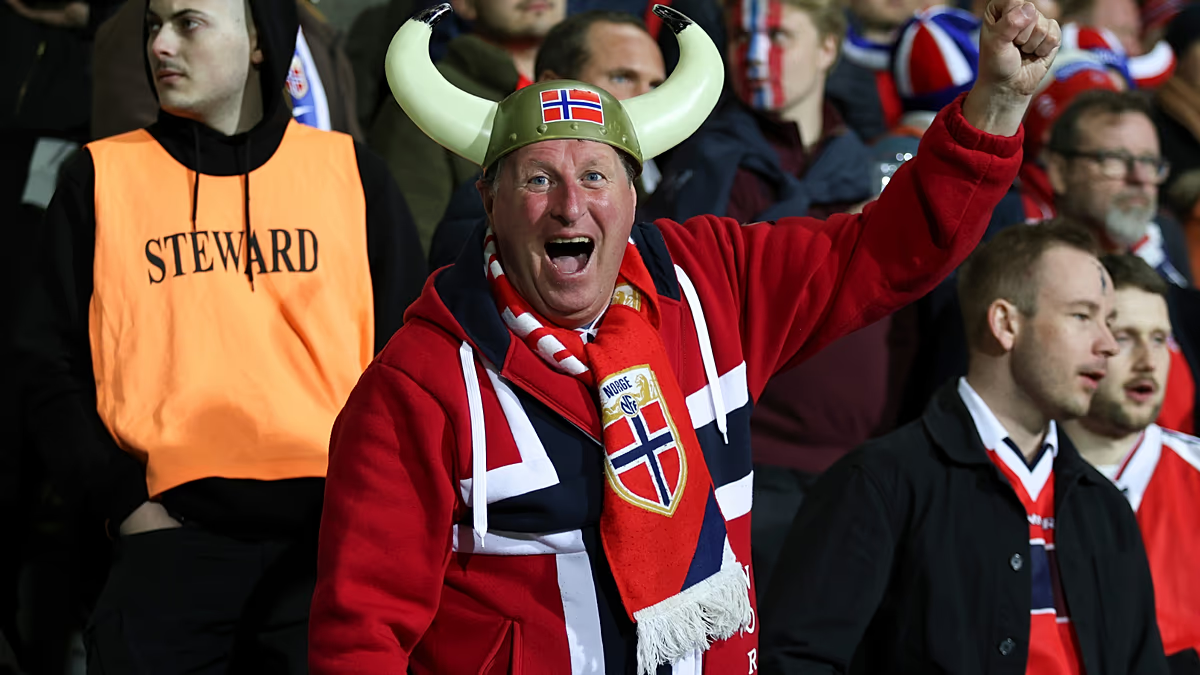
The act resonated deeply because it placed the country’s leaders squarely within a viral cultural phenomenon sweeping the nation. The “Viking row,” a synchronised rowing motion inspired by the oarsmen of historic longships, had become the defining fan tradition for Norway at the 2026 FIFA World Cup, hosted across the United States. Norwegian supporters had been captured on camera performing the row everywhere—in bustling city streets, in official fan zones, and even while riding escalators. It was a spontaneous, physical expression of collective identity that required no language, only participation. By adopting this very public ritual, the parliamentarians demonstrated that their support was not a distant, official stance, but an empathetic connection to the shared joy and anticipation pulsing through their constituents at home and abroad.
This gesture also underscored a broader and poignant national narrative. The 2026 tournament marked Norway’s first appearance in the men’s FIFA World Cup since 1998, ending a 28-year wait that had become a source of longing for Norwegian football fans. The national team itself had already leaned into the Viking theme, forgoing the conventional team photo on airplane steps for a dramatic photoshoot by renowned British photographer David Yarrow. Titled “The Vikings Are Coming,” the imagery presented the squad as modern-day warriors, channeling a spirit of determination and adventure. The parliament’s rowing performance served as a powerful echo of that sentiment, framing the team’s journey not just as a sporting campaign, but as a national expedition worthy of historic symbolism.
The choice of Viking imagery is particularly significant, reflecting a contemporary embrace of Norse heritage as a symbol of positive national values. In this context, the Viking archetype is stripped of any historical baggage and repurposed to represent unity, strength, resilience, and communal effort—the very essence of a rowing crew pulling together. The parliament, often a theatre of disagreement, became a living metaphor for that ideal, showing a nation “rowing together” toward a common goal. It highlighted how sports can serve as a unique social glue, allowing cultural heritage to be celebrated in a fun, inclusive, and powerfully unifying way that few other arenas can provide.
Ultimately, the viral charm of the event lies in its humanising contrast. We are accustomed to seeing politicians in rigid, formal settings, engaged in serious debate. To witness them participate in a fan-driven meme—and do so with genuine synchronisation and enthusiasm—breaks down barriers between institutions and the public. It reveals a shared vulnerability and a collective hope. The image of Speaker Gharahkhani, wielding his gavel not to call order but to choreograph joy, perfectly encapsulates this spirit. The performance was a brief but vivid reminder that beneath the titles and the policies, those in charge are also fans, neighbors, and citizens, riding the same emotional wave as the rest of the country.
In summary, the Norwegian parliament’s Viking row was far more than a whimsical stunt. It was a multifaceted event: a celebration of a long-awaited World Cup return, a participation in a grassroots fan tradition, and a symbolic act of national solidarity. By stepping into the rhythm of the crowd, Norway’s leaders beautifully illustrated how shared passion can simplify complex identities, forging a moment where politics, sports, and culture converged into a simple, joyful, and universally understandable statement: we are one team, pulling together. As Norway progressed in the tournament, this moment in parliament would stand as a lasting testament to the unifying power of the beautiful game.