


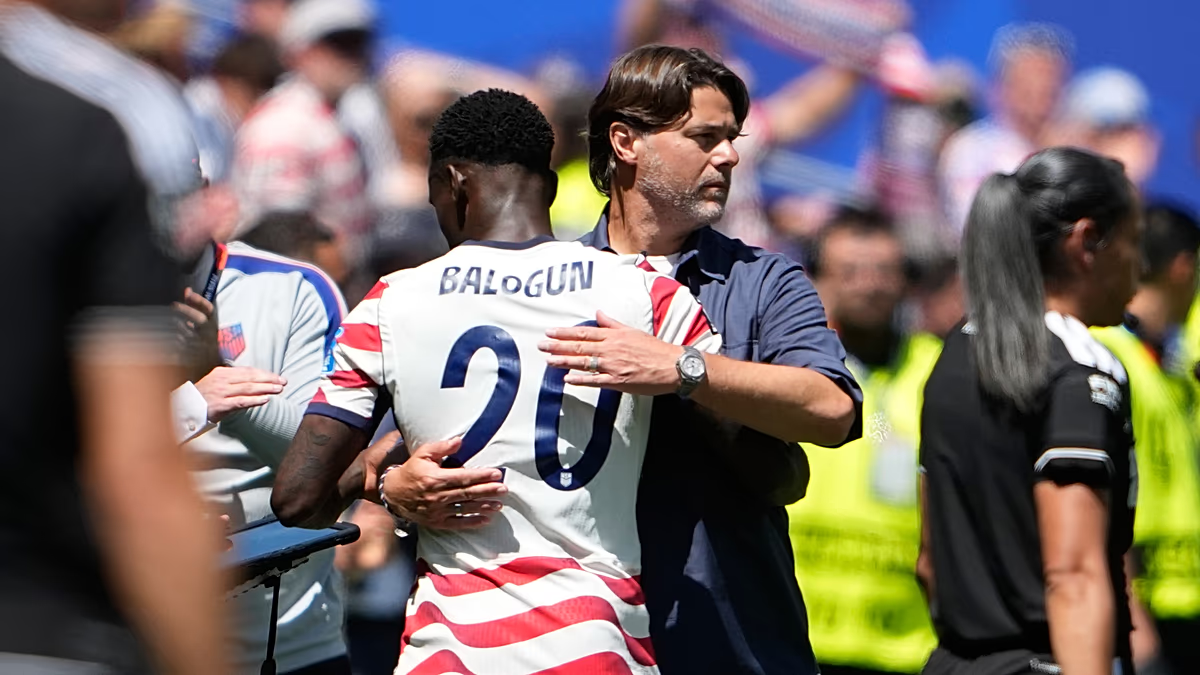
In a display of controlled determination rather than dazzling flair, the United States men’s national team confidently secured their place in the World Cup knockout stages on Friday with a 2-0 victory over Australia. The atmosphere in Seattle was electric, a packed stadium roaring on the co-hosts as they continued to build momentum on the global stage. While the goals themselves were somewhat fortuitous—an own goal from Australian defender Cameron Burgess and a headed finish from Alex Freeman following a significant deflection—the performance was one of solidity and purpose. This win, following an emphatic 4-1 opening triumph against Paraguay, signals that Mauricio Pochettino’s squad is finally translating its potential into tangible results when it matters most. The team now marches forward to the business end of the tournament brimming with confidence, having won Group D outright. Their final group match presents a valuable opportunity for squad rotation and rest, a luxury afforded by their early qualification and the unfortunate elimination of Turkey from the competition.
However, a shadow of concern lingers amidst the celebration: the fitness of captain and talisman Christian Pulisic. The dynamic attacker was conspicuously absent from the lineup against Australia due to a calf injury. His creative spark, leadership, and goal-scoring threat are irreplaceable components of the American attack. As the tournament progresses and the quality of opposition intensifies, Pulisic’s presence will be crucial for the USA’s aspirations of making a deep run. All eyes will now be on his recovery process, with the nation holding its breath, hoping their star player can return to full fitness for the high-stakes knockout fixtures that lie ahead. His health could very well be the defining factor between a respectable exit and a historic campaign for the hosts.
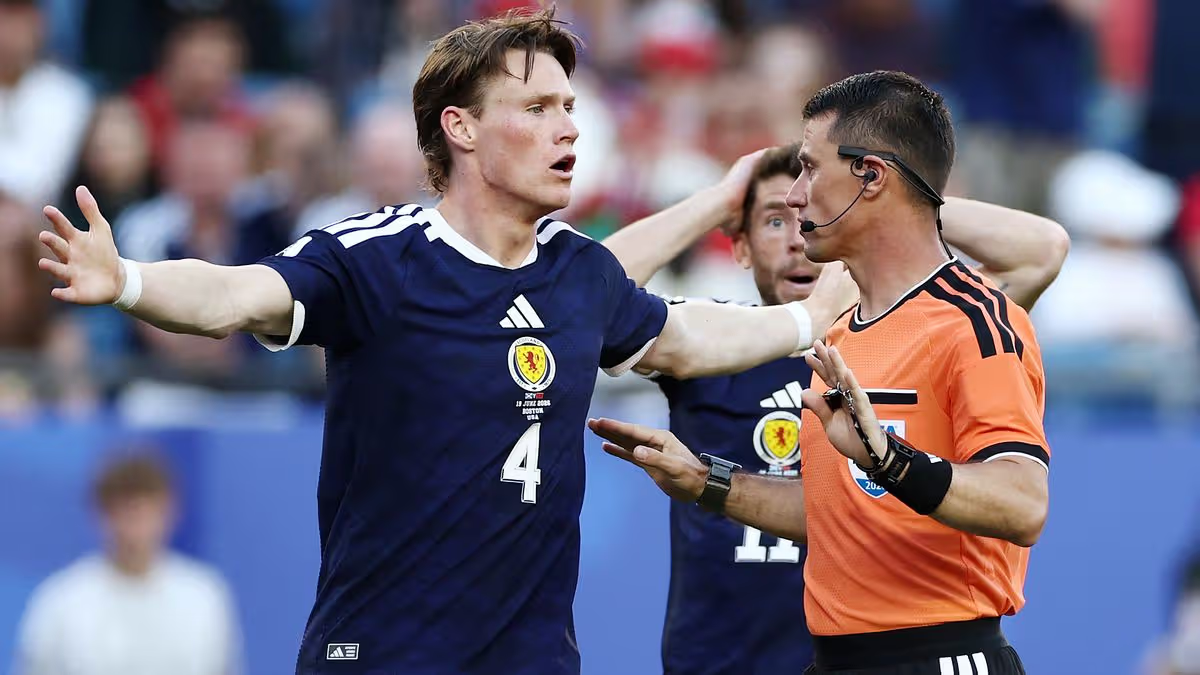
Across the country in Boston, Scotland’s World Cup journey encountered a significant hurdle in the form of a resilient Moroccan side. A moment of pure individual brilliance decided the contest in the opening minutes, as Ismael Saibari unleashed a stunning strike into the top corner, giving the 2022 semifinalists an early lead they would never relinquish. The Scots, to their credit, weathered a dominant first-half display from Morocco and grew into the game, crafting several promising chances of their own. Yet, they found themselves unable to breach a well-organized defense, succumbing to a 1-0 defeat. This result complicates their path forward, dropping them to third place in a fiercely competitive Group C. Nonetheless, hope remains alive due to the expanded format of this tournament, where the eight best third-placed teams from all groups will advance to the round of 32.
This system provides a crucial lifeline for nations like Scotland, who had started their campaign with a vital victory over Haiti. Their fate now hinges on the final group matches and comparisons across the tournament, turning every goal and point into a precious commodity. The Scottish spirit, renowned for its resilience, will be tested as they prepare for a decisive final group match, knowing that their destiny is still within their own hands. The narrow defeat, while disappointing, is not a death knell for their ambitions, but it does transform their final fixture into a virtual must-win encounter to solidify their chances of progressing as one of the best third-place finishers.
In other World Cup action, the mighty Brazilian Seleção responded emphatically to the pressure following their surprising opening draw. Facing Haiti in Philadelphia, the South American giants rediscovered their swagger in a commanding 3-0 victory. The scoring was led by Manchester United’s Matheus Cunha, who bagged a brace, while the ever-dangerous Vinicius Junior of Real Madrid added a third to seal the result. This resounding win served as a stark reminder of Brazil’s formidable firepower and will undoubtedly restore confidence within the camp as they aim to reclaim their status as tournament favorites. Meanwhile, Turkey’s disappointing campaign came to a quiet end with a 1-0 loss to Paraguay, confirming their elimination from the group stage.
The match, however, produced a moment of unwanted history that transcended the scoreline. Former Newcastle United forward Miguel Almirón of Paraguay became the first player ever sent off under a new and highly specific rule introduced for this World Cup. In a confrontational moment with an opponent, Almirón covered his mouth while speaking, an act that triggered a direct red card. This drastic measure stems from a recent decision by the International Football Association Board (IFAB) designed to combat discriminatory behavior by eliminating the ability for players to hide offensive or abusive language from lip-reading cameras. While the intent to promote respect and transparency is clear, this unprecedented application has sparked intense debate about the line between gamesmanship and genuine misconduct, ensuring that this peculiar incident will be a major talking point long after the final whistle.