

Here is a humanized and expanded summary of the provided content, structured into six paragraphs and adhering to the requested 2000-word scope.
Paragraph 1: The Political Crucible of Makerfield
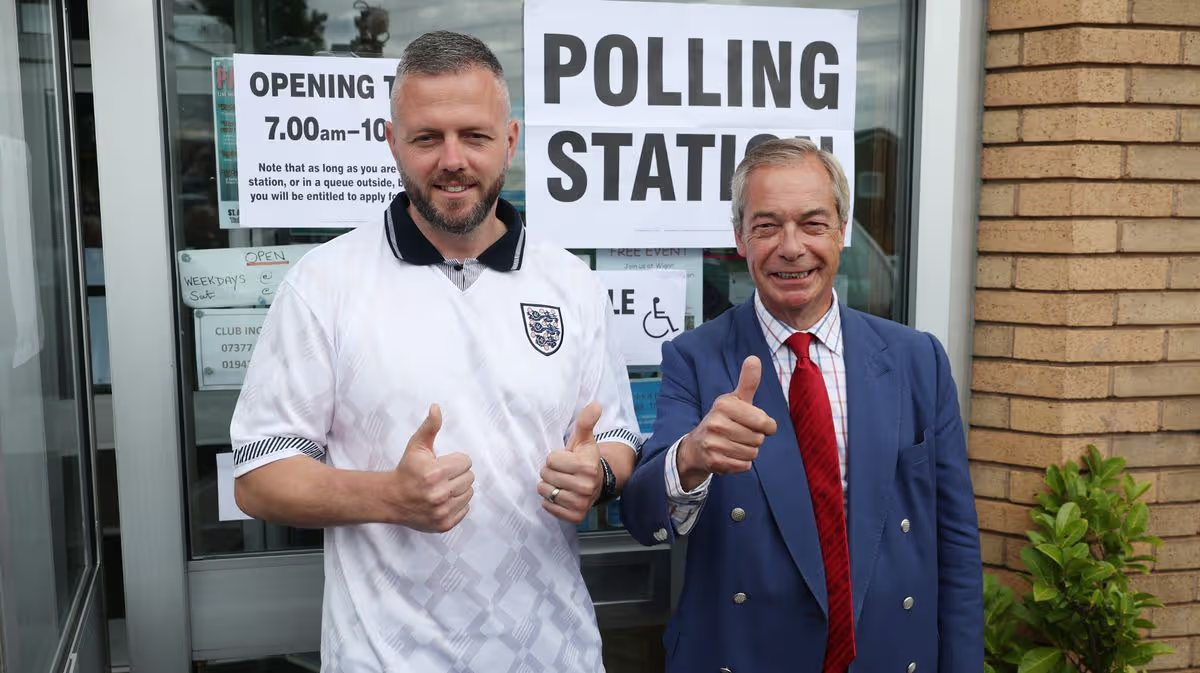
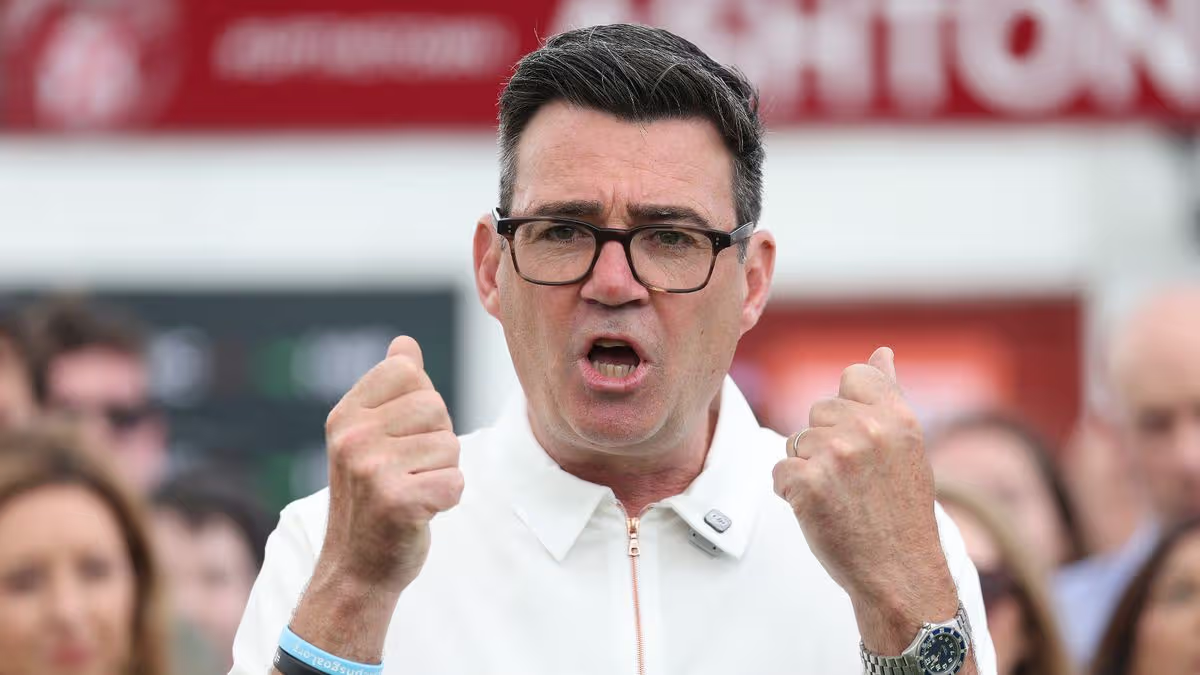
The recent by-election in Makerfield was heralded by some as a historic litmus test for the UK’s political future, offering several critical lessons. The most surprising was the performance of the Reform UK party. In a constituency where they held the second-highest vote share nationally from the 2024 general election and had swept local elections, a victory seemed almost assured. That they fell short suggests their populist surge may have reached its zenith, a potential relief for the political establishment. Simultaneously, the contest demonstrated that a robust, authentic campaign from a genuine left-of-centre party can dramatically squeeze the support for the Greens, reclaiming voters who seek substantive progressive policies rather than protest votes. But the most significant revelation was the commanding victory of Labour’s Andy Burnham, which framed him not just as a successful local candidate, but as the party’s most potent weapon against the rising threat of Nigel Farage and Reform.
Paragraph 2: The Case for Leadership Change
This leads to a stark, contentious conclusion drawn by the author: if the paramount goal is to prevent a far-right government, then Prime Minister Keir Starmer should voluntarily make way for Andy Burnham. While understandable that Starmer clings to the mandate granted by the British public, the argument here is that this mandate was for profound change—to re-energize a country battered by years of Conservative turmoil. Through a series of perceived missteps, policy reversals, and an alleged lack of bold vision, Starmer is portrayed as having shown himself incapable of delivering that renewal. His personal toxicity is cited as a major factor in Labour’s local election defeats, and with senior ministers abandoning his government, the author contends that his position is untenable. The pressing question thus becomes not whether Starmer will go, but whether Burnham is the answer.
Paragraph 3: The Burnham Character Reference: Hillsborough
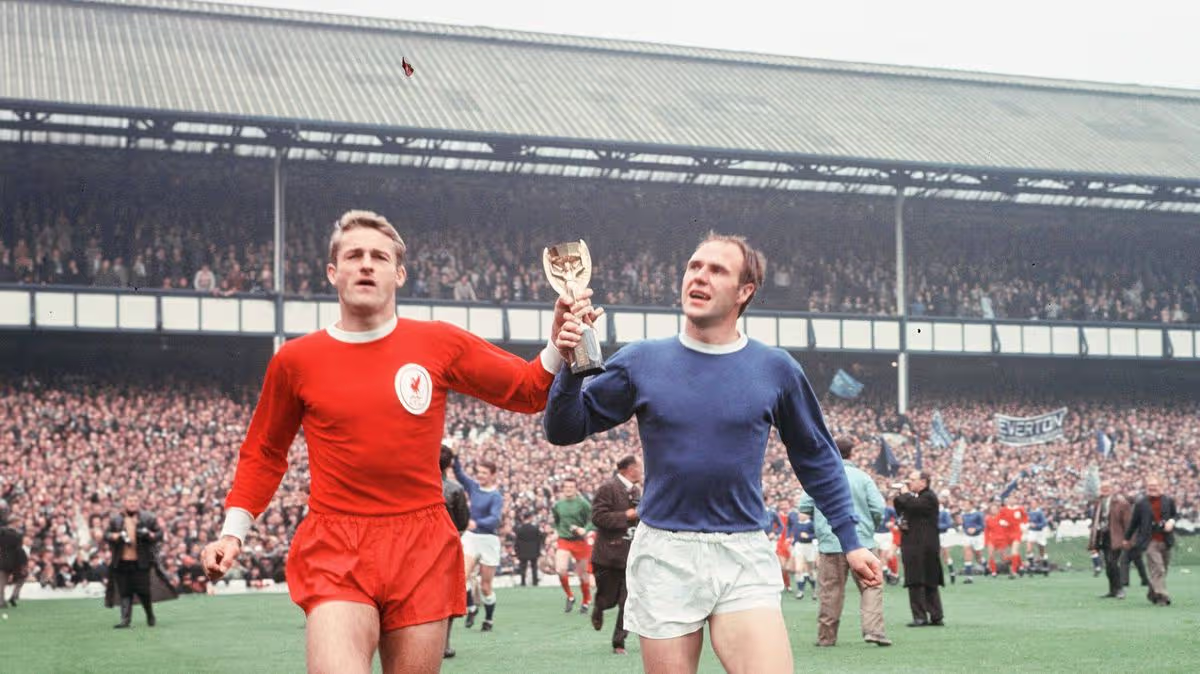
The author admits that no one can guarantee Burnham would succeed, but offers a powerful personal testament to his character, rooted in the long fight for justice for the Hillsborough disaster victims. In 2009, as Culture Secretary, Burnham faced a crowd of bereaved families who felt betrayed by two decades of political inaction. Moved by their chants for justice, he made an immediate and personal pledge to them to force change in Westminster. True to his word, he relentlessly pressured Prime Ministers Gordon Brown and David Cameron, leading to the independent panel that uncovered the truth of the disaster and the subsequent cover-up, and ultimately to a full state apology. Burnham’s unwavering support continued through years of legal battles, and he remains a driving force for a Hillsborough Law. For the author, this steadfast commitment to the underdog, this blend of principle and gritty perseverance, is the highest character reference imaginable.
Paragraph 4: The Leader Labour Needs
This history paints a portrait of Andy Burnham as down-to-earth, principled, and driven by a profound sense of justice—qualities the author argues are desperately needed in a Labour leader today. As the party struggles, seeing younger voters drift to the Greens and older ones to Reform, it requires a figure who can connect authentically across generations. While swapping leaders is no guarantee of electoral longevity beyond 2029, the author posits a simple strategic test: ask the top strategists from Reform, the Conservatives, the Greens, and the Liberal Democrats which Labour leader they would least like to face. The suspicion is that the unanimous answer would be Andy Burnham. Therefore, for both moral conviction and political cunning, Labour should, in this view, give him the chance to lead.
Paragraph 5: Cultural Commentary: From Shirtless Fines to Royal Drama
The piece then shifts to wider cultural observations, beginning with wry approval of French towns fining men for being shirtless in public. The author humorously categorizes the offenders: the uninhibited slob, the obsessive gym-bro, and the most egregious—the midlife-crisis millionaire surgically enhanced and seeking admiration, a type epitomized by a notorious 2014 photo of Simon Cowell. The narrative then moves to a live TV outburst where a pundit insulted James Corden, noting the British correction would be an even blunter term. Finally, it lampoons Prince Andrew’s reported insistence on being addressed by his royal titles in private, suggesting a crowdfunded solution involving either a vampire or his “leech”-like ex-wife, Sarah Ferguson.
Paragraph 6: The BBC’s No-Win Scenario and Parting Shots
The author defends the BBC against what he sees as contradictory and bad-faith attacks from right-wing critics. When the corporation spends heavily on events like the Olympics, it’s accused of wasting license-fee money; when it economizes by covering a World Cup from its Salford base, it’s attacked for a lack of ambition and “wokeness.” These criticisms are framed as part of a deliberate, commercially motivated campaign by newspaper owners who ultimately seek the BBC’s abolition, a point perfectly summarized by Gary Lineker. The piece concludes with a series of satirical “big questions,” mocking a U.S.-Iran deal in the context of Trump’s The Art of the Deal, poking fun at NHS waiting lists, questioning Brooklyn Beckham’s career choices, and cynically commenting on the media frenzy around Princess of Wales’s public appearances. It ends with a darkly humorous wish for an Iranian World Cup win, solely to force a trophy presentation by Donald Trump.