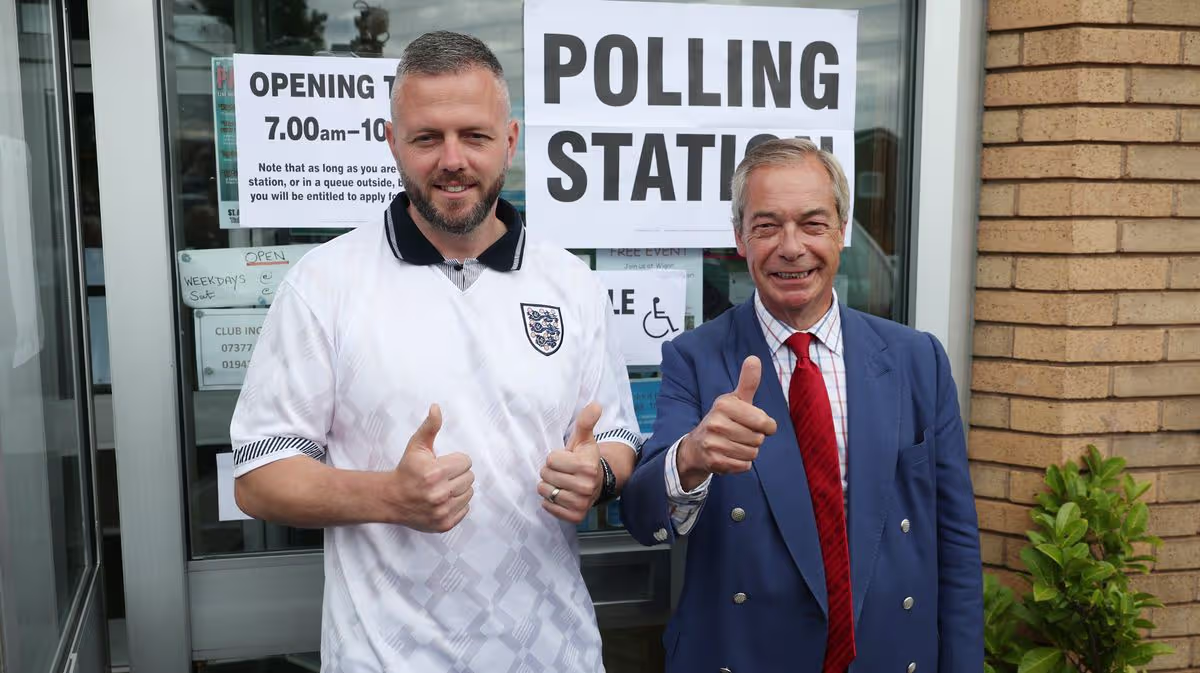



The recent electoral humiliation of Reform UK candidate Robert Kenyon in Makerfield has transcended mere political defeat, becoming a pointed lesson in accountability. His campaign was overwhelmingly overshadowed by the resurfacing of a litany of derogatory and sexist social media posts he had authored, one of which targeted broadcaster and writer Carol Vorderman. Rather than a simple political loss, the event has been framed by Vorderman and others as a decisive public rejection of a toxic culture that often excuses misogyny as “laddish banter.” The episode raises serious questions for Reform UK leader Nigel Farage about the standards expected of his candidates and the party’s electoral appeal to the wider public, particularly women.
Carol Vorderman, directly impacted by Kenyon’s online abuse, articulated the broader sentiment felt by many. She described Kenyon as a “cowardly man” for his offensive posts and highlighted his refusal to apologise as a sign of entrenched disrespect. For Vorderman, his behaviour exemplified a “low-level, grinding sexism” that women universally recognise and endure, whether in the public eye or not. She argued that Farage’s dismissive defence of Kenyon’s comments as inconsequential “laddish behaviour” fundamentally misjudged the mood of the electorate. In her view, the result in Makerfield was a conscious reaction from voters, especially women, who were no longer willing to tolerate such attitudes from prospective representatives.
The mechanism of this reaction, according to Vorderman, was not passive disapproval but active mobilization. She revealed a targeted campaign where she personally sent over 13,000 letters to the women of Makerfield, warning them about Kenyon’s documented views and the threat they represented. This grassroots, direct communication bypassed the traditional “Westminster village” discourse and connected on a human level. Vorderman believes this effort tapped into a fundamental sense of decency within the community, motivating people not just to vote for an alternative, but to consciously vote against a candidate whose values they found abhorrent. This shift from positive to negative voting signifies a deeper, values-based engagement from the electorate.
The aftermath of the election was brutal for Kenyon, whose confidence of a “big vote” for Reform dissolved into a crushing defeat. The online ridicule was swift and merciless, reflecting a public unwilling to offer sympathy. From sarcastic suggestions that he return to fixing boilers to cruel jibes about his political oblivion, the response mirrored the harshness he had once dished out online. Even the unofficial Twitter account for Larry the Downing Street cat joined in the mockery. This schadenfreude underscored a collective judgment: a man who traded in humiliation and derogatory remarks was now receiving his own bitter medicine, seen by many as a form of poetic justice.
The implications of this incident extend far beyond one constituency. It presents a stark challenge to Nigel Farage and Reform UK. Will the party stand by candidates like Kenyon, dismissing criticism as oversensitivity, or will it reassess its vetting processes and the public behaviour it deems acceptable? The “Makerfield humiliation” suggests that a significant portion of the British public, galvanized by a growing intolerance for sexism and a desire for basic decency in their politicians, is willing to act as a check on such behaviour. It proves that a candidate’s digital history is now a central part of their public record, and that past comments can actively derail a political campaign in the present.
Ultimately, this story is less about one plumber’s failed political ambitions and more about a potential turning point in public discourse. Carol Vorderman’s intervention highlights the power of targeted, personal political engagement, while the result itself signals that voters are increasingly weighing character alongside policy. The episode serves as a warning to all parties that the electorate is watching more closely than ever, and that a disregard for respect and dignity can carry a severe electoral cost. In the end, the people of Makerfield did not just choose a different MP; they delivered a verdict on the kind of conduct they will accept from anyone seeking to represent them.