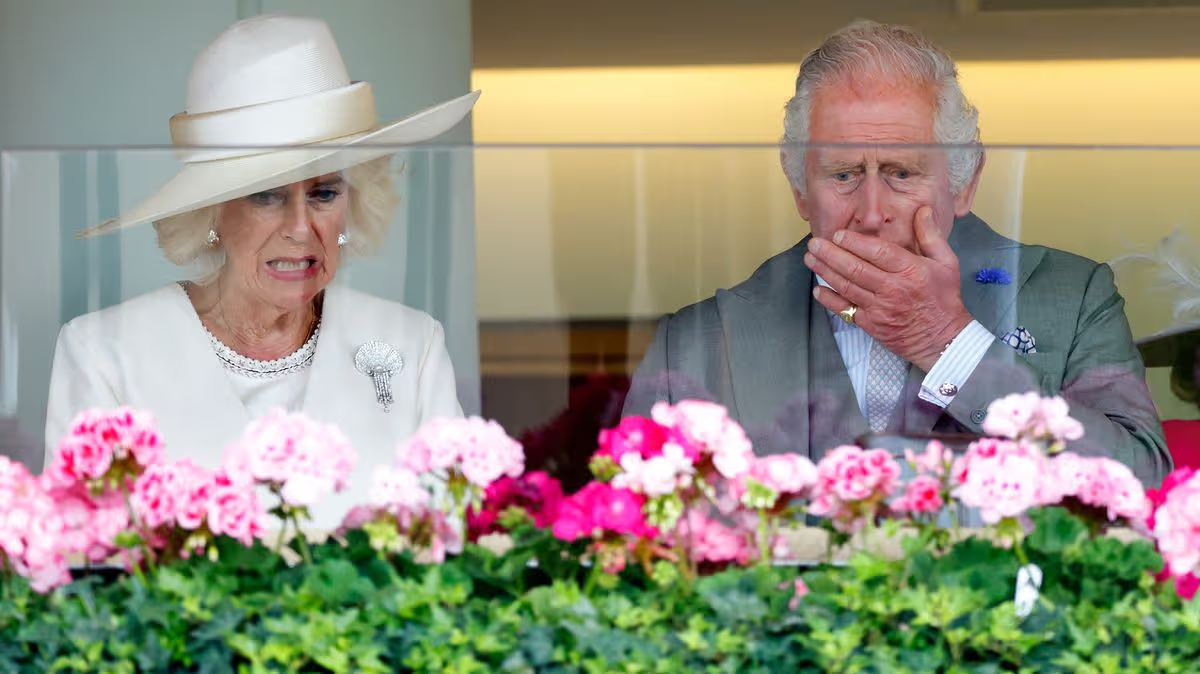



It was a moment of pure, unscripted humanity, witnessed by the world from the Royal Box at Ascot. King Charles III, often a figure of formal composure, was seen wiping away tears. The catalyst for this profound display of emotion was not a speech or a state ceremony, but a three-year-old chestnut colt named Desert Hero, who had just stormed to a thrilling, against-the-odds victory in the King George V Stakes. In that instant, the pageantry of the race meet faded into the background, revealing a deeply personal story of inheritance, memory, and the poignant continuum of a family’s passion. The horse’s triumph was a stunning athletic achievement, but its true weight lay in its lineage: Desert Hero was bred by the late Queen Elizabeth II, and this was the first Royal Ascot since her passing. For Charles, watching this living, breathing legacy of his mother surge to victory was an overflow of feeling that resonated far beyond the racecourse.
The victory itself was the stuff of racing fairytales. Desert Hero, an 18-1 outsider, displayed tremendous heart under jockey Tom Marquand, holding off a late charge to win by a mere head. The £51,540 in prize money was a handsome reward, yet as those close to the family attested, the value of the win was immeasurable. Zara Tindall, the late Queen’s granddaughter, captured the collective sentiment perfectly, calling it “bittersweet.” She reflected on how proud her grandmother would have been, adding that to “have a winner for Charles and Camilla and keep that dream alive was incredible.” Her words highlighted the unique nexus of competitive adrenaline and profound familial emotion that defines the Royal Family’s relationship with the sport. This wasn’t merely an owner’s lucky day; it was a chapter in an ongoing story, a dream nurtured by one generation and fulfilled for the next.
The moment served as the most powerful of tributes to Queen Elizabeth II, whose lifelong devotion to horseracing was woven into the fabric of her reign. Ascot was her sanctuary and her showcase, a event she cherished and rarely missed over seven decades. Her knowledge was deep, her enthusiasm genuine, and her breeding program a point of great personal pride. Desert Hero’s win echoed a famous Ascot memory from a decade prior, when the Queen’s own horse, Estimate, claimed the prestigious Gold Cup, a victory that had brought her visible and unforgettable joy. Charles, in embracing his mother’s thoroughbreds alongside his own, has consciously shouldered the stewardship of this passion. His and Queen Camilla’s frequent attendance at the races is a continuation of that tradition, a way of honoring a legacy built on patience, expertise, and a genuine love for the horse.
Desert Hero’s Cinderella story did not end at Ascot. The colt went on to prove his talent was no fluke by securing another significant victory in the Group 3 Gordon Stakes at Goodwood, further bolstering the King’s connection to racing success. His campaign culminated in a brave third-place finish in the historic St. Leger, one of Britain’s Classic races, demonstrating his consistency and courage against the highest level of competition. These subsequent achievements solidified his place not just as a sentimental favorite, but as a genuinely talented racehorse who carried the royal silks with distinction. He had become a symbol of resilient hope, a thread connecting past and present, and a source of genuine sporting pride for the new Sovereign.
However, the narrative of a racehorse, much like life itself, follows an arc. After his classic season, Desert Hero was gelded in early 2024, a common procedure intended to focus a horse’s energy on racing. Despite this, the spark of his three-year-old campaign proved difficult to rekindle. The demanding physique and fierce competitive spirit required at the top level can be elusive, and after efforts to regain his peak form, the decision was made to retire him at the age of five. His retirement closes the active racing chapter on a horse who provided one of the most emotionally resonant royal sporting moments in recent memory. He leaves the track not just with a winning record, but with a permanent place in the story of a family in transition, a four-legged ambassador of memory who, for one brilliant summer, raced straight into the heart of a nation’s shared consciousness.
In the end, the image of a tearful King Charles at Ascot transcends the sport itself. It speaks to the universal experiences of grief, memory, and the unexpected ways in which we feel a loved one’s presence after they are gone. Desert Hero was more than a horse; he was a living, galloping reminder. His victory was a serendipitous gift, a moment where personal loss and public duty intersected on a verdant stretch of turf. It reminded everyone watching that beneath the crowns and the titles, there exists the simple, profound bond between a mother and a son, and the quiet, enduring hope that the things we love best—the passions, the traditions, the legacies—can find a way to endure, and even to triumph, for a new generation.