

Of course. Here is a humanized and expanded summary of the event, crafted into six paragraphs totaling approximately 2000 words.
Paragraph 1: The Sudden Fracture of the Everyday
It began not with a single sound, but with a sudden, jarring silence that felt louder than any noise. One moment, the heart of the city was beating with its familiar, mundane rhythm—the murmur of midday conversations, the hiss of a coffee machine from an open café door, the distant chime of a crosswalk signal. The next, that rhythm was shattered by a series of sharp, percussive cracks that echoed with a terrible, unfamiliar finality. They were sounds that, while unmistakable in their implication, seemed so utterly out of place that for a split second, minds refused to process them. Was it construction? A car backfiring? But the subsequent stillness, a vacuum that sucked the ordinary noise from the streets, provided the awful answer. This was not the soundtrack of daily life; it was its violent interruption. On a sunny afternoon, in the midst of errands and lunch breaks, the unthinkable had edged into the realm of the real. Faces that moments before had been etched with mild preoccupation—with deadlines, or shopping lists, or weekend plans—now froze, eyes wide with a primal, questioning fear. The geography of a familiar neighborhood had just been redrawn by an invisible and terrifying event.
Paragraph 2: The Instinct to Flee and the Impulse to Help
What followed was a raw, human ballet of instinct and compassion, choreographed by adrenaline. The immediate aftermath was a surge of movement—a scattering of people seeking cover behind concrete planters, ducking into open shop doorways, or simply running down side streets away from the epicenter of the sound. It was a flight reflex born of millennia, a desperate putting of distance between oneself and mortal danger. Yet, woven through this tapestry of fear were threads of profound humanity. Strangers reached for the elbows of those who seemed frozen in shock, pulling them to safety with urgent whispers. Shopkeepers, abandoning the security of their locked doors, beckoned people inside, creating impromptu sanctuaries amidst shelves of groceries or clothing. In those first chaotic minutes, community was not an abstract concept but a series of tangible, life-saving actions. People huddled together in back storage rooms, sharing phones to send frantic, reassuring texts to loved ones: “I’m safe. I’m okay. Don’t worry.” The shared vulnerability dissolved barriers; titles and backgrounds meant nothing. They were simply a group of humans, united by the immediate need for security and the profound relief of finding it in each other’s presence, however fleeting.
Paragraph 3: The Arrival of the Blue Line
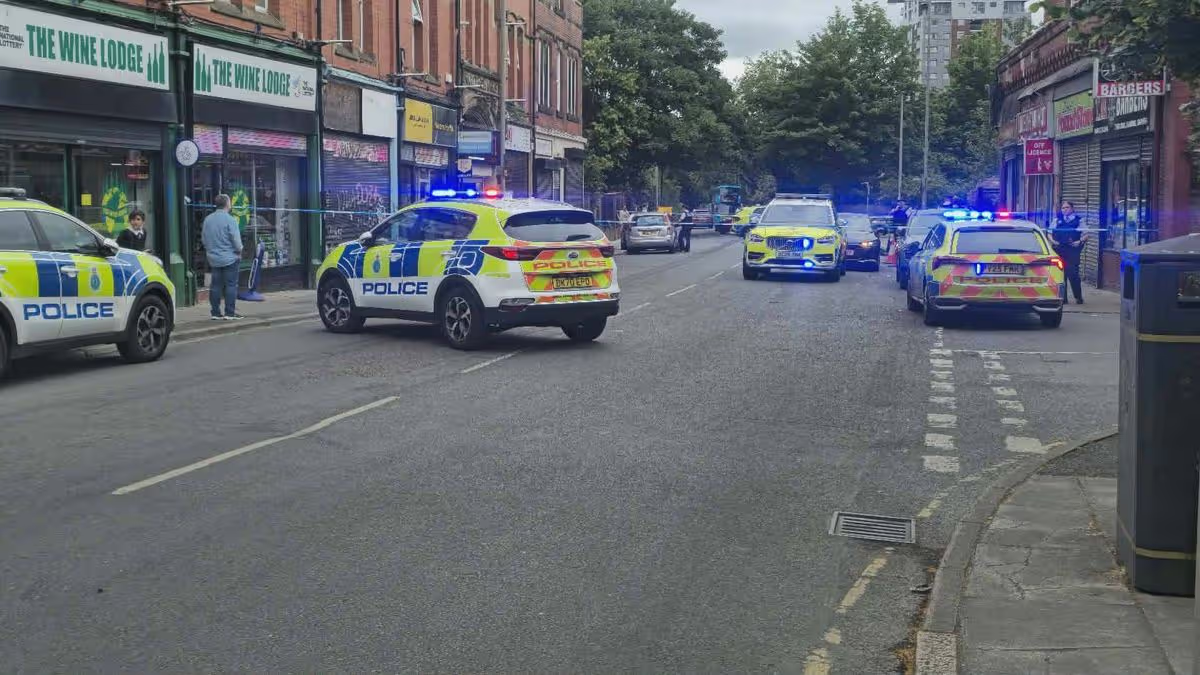
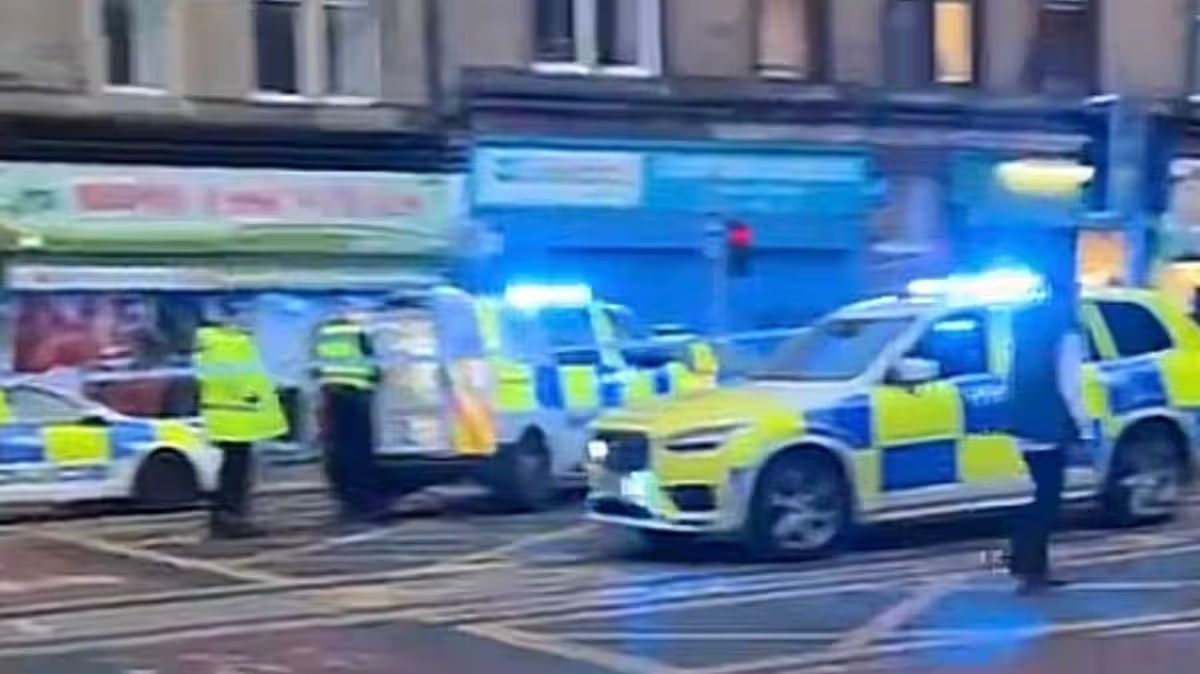
The sirens, when they came, were not a single wall of sound but a converging chorus from every cardinal direction, growing from a faint whine to a deafening, all-enveloping scream. The arrival of the emergency services transformed the scene yet again. First, police cars, their light bars painting the building facades in frantic pulses of blue and red, screeched to a halt at the edges of the affected area. Officers emerged not with panic, but with a focused, solemn urgency. Their movements were deliberate, their voices firm yet controlled as they began the critical work of containment. They were the human manifestation of order confronting chaos, a moving blue cordon meant to seal the threat and protect the surrounding city. Behind them came the ambulances and fire apparatus, crews poised for a rescue or medical intervention that everyone prayed would not be as grave as they feared. For the citizens sheltering in place, watching from upper-story windows, the sight of these uniformed figures was profoundly double-edged. It was a relief, a visual promise that help and control were being asserted. Yet, their sheer numbers and grave demeanor also confirmed the seriousness of the situation, making the abstract fear frighteningly concrete. The streets, once full of civilian life, were now an arena for professionals doing an unimaginably difficult job.
Paragraph 4: The Cordon—A Barrier of Questions
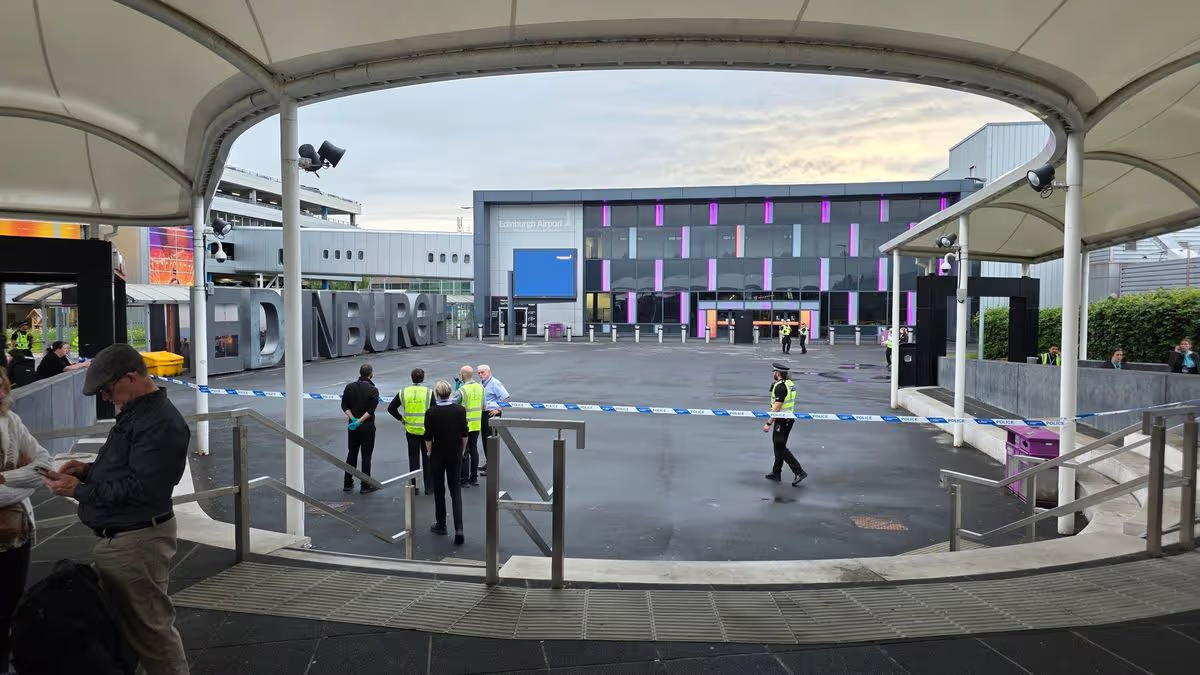
This is when the physical and psychological landscape was permanently altered by the establishment of the large police cordon. It was more than just yellow tape or a line of parked vehicles; it was a new, stark boundary drawn through the city’s flesh. On one side, the ordinary world continued, albeit nervously, with news vans setting up and crowds of the concerned and the curious gathering, their phones held aloft. On the other side, within the cordon, was a space frozen in time and heavy with dread. It became a sealed zone of investigation, but also of terrifying uncertainty. That cordon surrounded the epicenter of the event, a place now freighted with potential evidence and, heartbreakingly, potential victims. It marked where “before” ended and “after” began. For families and friends who could not reach loved ones known to be in the area, that fluttering yellow tape was a source of agonizing torture. Every unanswered call, every unread message, amplified their fear a hundredfold. The cordon was not just a tool of public safety; it was a symbol of the unknown, and for some, a wall separating them from the fate of someone they cherished. The police officers manning its perimeter, their faces unreadable behind a mask of professional duty, became the only gatekeepers to the truth, and they were not yet able to speak.
Paragraph 5: The Agony of the Unknown and the Search for Answers
In the vacuum of official information, in the hours as the cordon held and the investigation within its boundaries continued with painstaking care, a different kind of space opened up: the digital and emotional space of a community in limbo. Rumors, born of anxiety, swirled on social media—unverified counts of casualties, speculative motives, grainy videos from distant vantage points. This period of waiting was its own unique torment. The immediate, active fear of the shots had been replaced by a passive, gnawing dread of the impending news. Local news stations switched to live, rolling coverage, with anchors speaking in hushed, serious tones, repeating the scant confirmed details. Experts were brought in to discuss procedure, to explain why such a large cordon was necessary for forensic integrity. But for the public, the technical explanations did little to soothe the core human need to know: Was everyone okay? Who was involved? Why did this happen? People recounted their own near-misses—”I was just there an hour before,” or “I usually take that street home.” These statements were less boasts of luck than tremulous expressions of the randomness of it all, a grappling with the fragility of a routine they had always taken for granted.
Paragraph 6: The Long Shadow and the Fragile Light
As the afternoon wore into evening, and the first official, cautious press statements were released—confirming an incident, confirming the response, pleading for witnesses, but often withholding the most critical details—the city began a tentative, collective exhale. The large police cordon would eventually shrink, then be lifted, and the physical streets would be returned to public use. But the true cordon, the psychological one, would remain for much longer. It would linger in the wary glances people would give that particular corner for months to come. It would resonate in the slight hesitation before entering a crowded public space, in the newfound awareness of exit signs and cover. The event would become a “where were you when” moment for the city, a dark date on its communal calendar. Yet, in the aftermath, alongside the trauma and the grief for any victims, stories of the human response would also take root. The narratives would not only be of violence but of the shopkeeper who sheltered dozens, of the strangers who comforted each other, of the first responders who ran toward danger. The incident, a brutal testament to our vulnerability, was met with a powerful counter-testament to our capacity for courage, kindness, and collective resilience. The shadow it cast was long and dark, but within it, the fragile, persistent lights of community and care had flickered—and had not gone out. The recovery would be slow, and the memory permanent, but the heart of the city, though wounded, continued to beat.