


A Tragic Collision in Bedford: A Community Reels and Investigations Begin
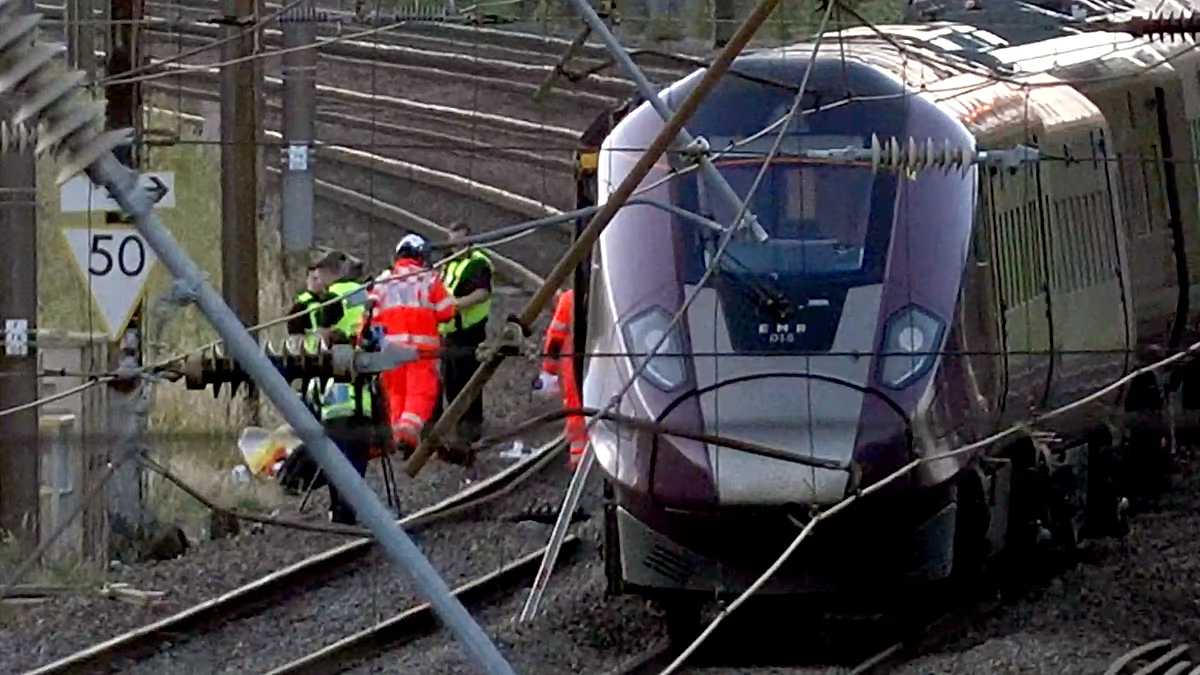
On a Friday afternoon in Bedford, a routine commute turned to tragedy when two train services collided in what authorities have swiftly declared a major incident. The East Midlands Railway (EMR) services, both bound for London St Pancras, met with catastrophic force. The 16:40 service from Corby struck the 15:50 service from Nottingham at a location identified as Bedford South. In the immediate, chaotic aftermath, the human cost became devastatingly clear. The rail company confirmed the heartbreaking loss of an EMR train driver, a professional whose day began like any other. Beyond this profound loss, a significant number of passengers sustained injuries, with early reports indicating at least 33 people were seriously hurt. The scene was one of sudden violence and shock, transforming carriages into scenes of distress.
The visceral horror of the moment was captured in the words of a survivor, who described the experience to the BBC as akin to “been in a bomb explosion.” His account paints a stark picture of the immediate aftermath: rising to see “people’s bloodied faces,” limbs that appeared broken, and a haze of smoke filling the compromised carriages. This testimony underscores the traumatic physical and psychological impact on those who were simply traveling home or to the capital. In response to the scale of the emergency, a massive mobilization of rescue services descended upon the site in southeast England. Over twenty ambulances, six air ambulances, and specialist hazardous area response teams were deployed, their swift arrival a critical factor in providing lifesaving aid and evacuating the wounded from the tangled wreckage.
The national response to the disaster was immediate and somber. British Prime Minister Keir Starmer took to social media to express that the incident was “hugely concerning” and extended his gratitude to the emergency crews for their rapid action. Striking a tone of condolence and solidarity, he stated, “First and foremost, my thoughts are with the family of the person who has sadly lost their life, and with those who have been seriously injured.” This sentiment reflects the shared national grief that accompanies such events, where the routine infrastructure of daily life becomes the setting for profound personal loss. The focus, rightly, was first on the human toll—the families shattered, the lives altered in an instant.
On the ground, railway officials moved quickly to manage the crisis and communicate with the public. Will Rogers, the Managing Director of East Midlands Railway, confirmed that teams were on the scene, working in close coordination with Network Rail and the emergency services to support all those affected. His statement highlighted the dual priorities in the wake of such a disaster: the immediate humanitarian response and the subsequent quest for answers. Rogers assured that once the critical work of aiding the injured and traumatized was underway, a thorough investigation into the cause would become the paramount objective. This process is essential not only for accountability but also for the prevention of future tragedies.
The task of unraveling the precise sequence of events that led to this fatal collision will fall to the specialist Rail Accident Investigation Branch (RAIB). As Rogers noted, EMR pledged to make “every effort to ascertain the cause in cooperation” with this independent body. The RAIB’s investigation will be meticulous, examining signalling data, train recording equipment, track conditions, and operational procedures. Its purpose is not to assign blame but to understand the systemic and immediate factors involved, leading to safety recommendations for the entire rail industry. This pursuit of clarity is a crucial step in the long journey following such an event, offering a pathway from grief toward enhanced safety.
In the end, this incident near Bedford is a stark reminder of the complex, human-dependent systems we trust with our safety every day. Behind the statistics of one driver killed and dozens injured are individuals, families, and a community of railway workers now mourning one of their own. The stories of survivors speak to the sudden terror that disrupted countless lives, while the images of extensive emergency resources illustrate the scale of the response. As the shockwaves from the collision slowly subside, the processes of healing and investigation will run in parallel. The nation’s thoughts remain with the bereaved and the injured, even as the necessary work begins to ensure that such a profound failure of safety is thoroughly understood and, wherever possible, prevented in the future.