




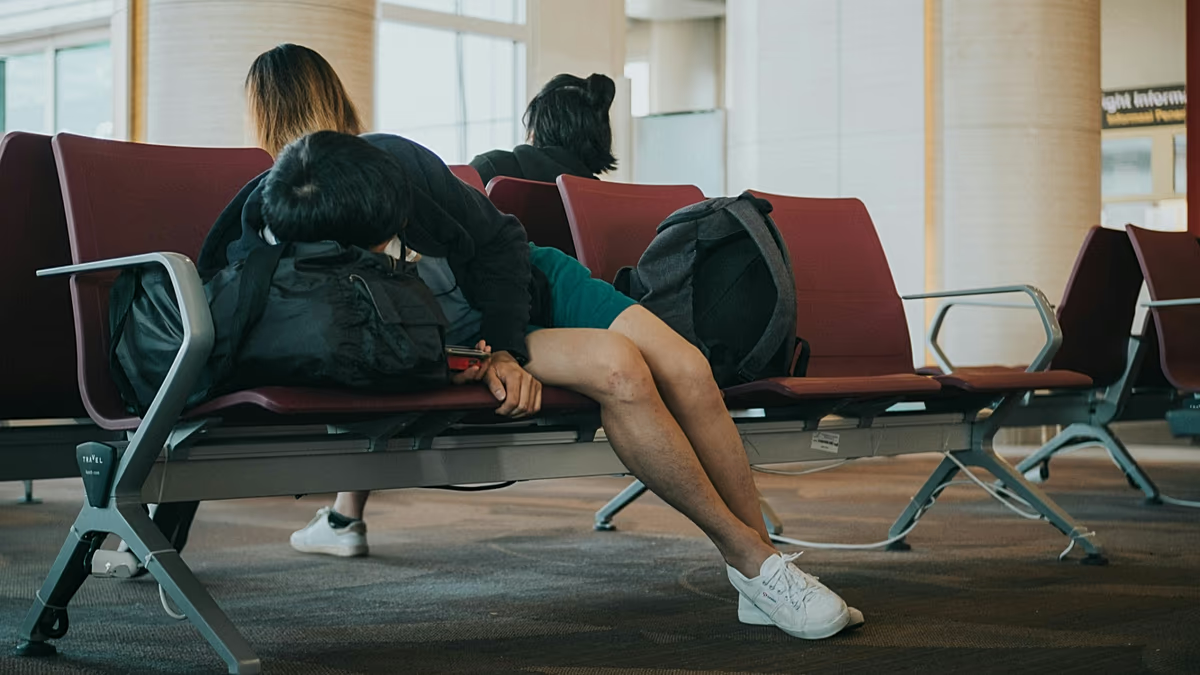
Crossing multiple time zones is a hallmark of modern travel, yet it often comes with a frustrating and fatiguing companion: jet lag. Whether you’re embarking on a crucial business trip or a long-awaited vacation, the disorientation of a disrupted circadian rhythm can swiftly dampen your spirits. This temporary mismatch between your internal body clock and the local day-night cycle leaves many travellers grappling with daytime exhaustion, nighttime alertness, brain fog, and irritability just as their adventure begins. While jet lag is an almost inevitable consequence of rapid long-haul travel, particularly when heading east, the good news is that its impact is not a foregone conclusion. A combination of strategic preparation, in-flight choices, and post-arrival habits can significantly soften the blow, helping you synchronize with your new environment faster and reclaim those precious first days of your trip.
The foundation of minimizing jet lag is laid well before you reach the airport. Sleep experts emphasize that gradual adjustment is key. In the days leading up to departure, gently shift your bedtime and meal times closer to those of your destination, even if only by an hour or two. This pre-emptive nudging helps your body begin its adaptation process early. Equally important is banking high-quality sleep; aim for at least seven restful hours per night in the run-up to your journey. As Dr. Megha Pancholi, a GP with Boots Online Doctor, advises, the goal is to align your schedule as closely as possible with your target time zone before you ever board the plane. Furthermore, packing thoughtfully can set you up for in-flight success. Essentials include a refillable water bottle to combat the dehydrating cabin air and compression socks to promote circulation during long periods of sitting, a simple measure that can prevent swollen ankles and discomfort.
Once aboard, your actions can either exacerbate or alleviate jet lag symptoms. Set your watch to your destination’s local time immediately to start thinking—and sleeping—accordingly. Hydration becomes paramount; sip water consistently and limit diuretics like alcohol and caffeine, which can worsen dehydration and disrupt sleep. Time any in-flight sleep to coincide with nighttime at your destination, using an eye mask and earplugs to create a restful environment. If it’s daytime where you’re headed, try to stay awake and engaged. Move around the cabin periodically to stimulate circulation. Dr. Pancholi also recommends simple techniques like chewing gum during ascent and descent to relieve ear pressure, ensuring one less source of travel discomfort. The principle is to use the flight not merely as transit, but as the first phase of your adaptation.
Upon arrival, your mission is to actively reset your internal clock using the most powerful tool available: natural light. Daylight exposure is the primary cue that regulates our circadian rhythms. If you land in the morning, seek out sunshine to signal to your body that it’s time to be awake and alert. Conversely, if you arrive in the evening, minimize exposure to bright light. Resist the temptation to take a long nap; instead, stay awake until a locally appropriate bedtime, even if you’re tired. A short, early afternoon nap of 20-30 minutes can offer relief without deeply disrupting nighttime sleep. Plan light activities and meals according to the local schedule to further anchor your rhythm. This proactive engagement with the new environment is the fastest way to overcome the internal dissonance of jet lag.
Innovative tools and programmes are now emerging to provide structured, science-backed support for weary travellers. Specialized apps like Timeshifter and Entrain create personalized plans based on your specific flight details, age, and sleep patterns, offering precise guidance on when to seek light, avoid caffeine, or sleep. On the carrier side, airlines like Fiji Airways are introducing holistic wellness programmes such as FlyWell. Available on select long-haul routes, this initiative integrates tools like blue-light-filtering glasses to encourage sleep, supplements for focus, wearable devices to promote circulation, and even post-flight red light therapy in their lounge. These approaches transform the journey from an ordeal to be endured into an integral part of the wellness experience, acknowledging that how we feel when we arrive is as important as the arrival itself.
In essence, while jet lag remains a common challenge of long-distance travel, it is increasingly a manageable one. The strategy is a holistic blend of old wisdom and new technology: prepare your body in advance, make conscious choices to support it during the flight, and use light and routine to anchor yourself upon landing. By viewing jet lag not as an inevitable penalty for travel but as a biological process we can guide, we empower ourselves to transition more smoothly between worlds. A little planning and self-awareness can ensure that you step off the plane ready to engage with your destination, allowing you to move from recovery to enjoyment with greater speed and ease.