


The Rising Tide: A New Alliance for Europe’s Future
In the historic halls of Warsaw, a significant political alliance is quietly taking shape, one that may well determine the course of European politics for years to come. Jordan Bardella, the young and charismatic leader of France’s National Rally, stood alongside Poland’s seasoned political force, Jarosław Kaczyński, to deliver a message that resonated with conviction and ambition. As the frontrunner in polls for the 2027 French presidential election, Bardella declared his intent not merely to win power in Paris but to orchestrate a fundamental shift within the European Union itself. His two-day visit to Poland, a nation poised for its own pivotal parliamentary elections, was far more than a diplomatic courtesy; it was a strategic mission to forge a united front. In his view, the electoral successes of right-wing and nationalist movements in both France and Poland by 2027 could create a powerful bloc capable of redirecting the EU’s trajectory. “To change everything without destroying anything,” Bardella proclaimed, envisioning a union where the Brussels bureaucracy finally serves the interests of sovereign nations, rather than the other way around.
A Meeting of Minds on Sovereignty and Security
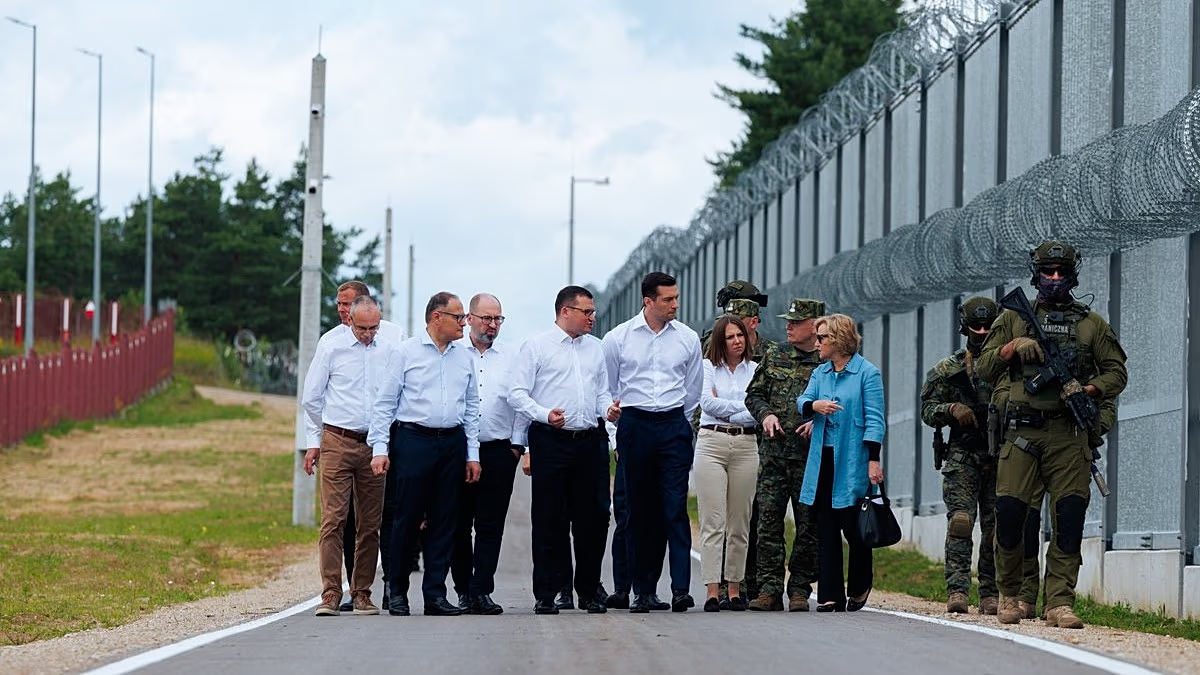
The core of this burgeoning partnership lies in a deeply shared worldview. During a joint press conference, Bardella expressed profound gratitude to Kaczyński for facilitating a visit to the tense Polish-Belarusian border, the European Union’s eastern frontier. Walking that line, Bardella witnessed firsthand the physical and symbolic battleground of modern Europe: a fortified barrier standing against what he described as orchestrated migration pressure. This experience solidified a common conviction. Both leaders see uncontrolled migration, particularly what they label as hybrid warfare tactics employed by Belarus and Russia, as an existential threat to European civilization, identity, and security. Bardella praised the measures implemented by Poland’s previous Law and Justice government, framing Poland’s border defense as a heroic safeguard for the entire continent. Beyond migration, their alignment extends to economic sovereignty. They share a critical view of EU initiatives like the Green Deal, which they argue cripple national industries and farmers, and have jointly opposed trade agreements such as MERCOSUR, deemed detrimental to their agricultural sectors.
Kaczyński’s Endorsement and the Vision of a Reformed EU
For Jarosław Kaczyński, the leader of Poland’s Law and Justice party, Bardella’s visit represented a beacon of hope for a broader political realignment. He did not merely welcome a colleague; he endorsed a future president. Kaczyński framed a potential Bardella victory in 2027 as a decisive, historic event for all of Europe, a critical step toward building a continent-wide coalition powerful enough to reform the EU from within. In his view, the current Union has strayed from its purpose, failing to serve the freedom, sovereignty, and development of its member nations. “This is a state of affairs that has to end,” Kaczyński stated plainly, expressing an optimistic belief that the political tide is turning. He drew poignant parallels between their parties’ journeys, noting both have endured intense, often brutal opposition from establishment forces. This shared resilience, he suggested, has forged the strength needed for the tough political battles ahead—battles they are now convinced they can win together.
On the Front Lines: Witnessing the Border Challenge
The symbolism of the border visit was powerfully articulated by Bardella on social media, where he declared that by defending its frontier, Poland was defending the soul of European civilization itself. Accompanied by Polish MEPs and local officials at the Border Guard post in Kuźnica Białostocka, the discussions moved from high politics to gritty reality. They focused on the daily challenges faced by officers: the shifting migration routes through Lithuania and Latvia, the interdiction of smugglers, and the relentless pressure. Anna Bryłka, a Polish MEP who was part of the delegation, underscored the urgency, stating plainly, “The border must be tight. No exceptions.” This firsthand experience reinforced Bardella’s commitment to a Europe of robust borders. His agenda was further detailed during a visit to the Warsaw headquarters of Frontex, the EU’s border agency, alongside its former head. Bardella’s message was clear: Frontex must be empowered and fully supported to push back against every illegal entry, standing shoulder-to-shoulder with nations like Poland on the front lines.
The Strategic Calculus: Forging a Path to Power
Beneath the public pronouncements and photo opportunities lies a clear and calculated political strategy. Jordan Bardella’s journey to Poland is a key move in building an international network of allies ahead of the 2027 French presidential race. By aligning with Poland’s influential right, he lends credibility to his vision and signals to voters at home that he is a leader with continental stature, capable of navigating European power dynamics. For Kaczyński and his allies, the embrace of a leading French politician offers validation and projects their influence beyond Poland’s borders, amplifying their call for EU reform on a major stage. Together, they are crafting a narrative of a patriotic, sovereignty-focused alternative to the current federalist direction of the EU. They position themselves not as destroyers of the European project, but as its reformers—voices for a union that protects its citizens, its borders, and its national identities.
A Continent at a Crossroads
The meetings in Warsaw have concluded, but their reverberations will be felt across Europe’s political landscape. Bardella and Kaczyński have presented a unified, populist challenge to the status quo, centered on nationalism, border security, and economic protectionism. Their alliance highlights the growing cohesion among right-wing parties across the continent, who see 2027 as a potential tipping point. Whether this vision gains enough popular support to translate into electoral victory and tangible policy change remains to be seen. What is undeniable, however, is that this partnership underscores a deep and widening fissure within the European Union about its fundamental purpose and future. The coming years will test whether the call for a “Europe of nations” can successfully counter the prevailing drive for deeper integration, setting the stage for one of the most consequential political struggles in the EU’s history.