



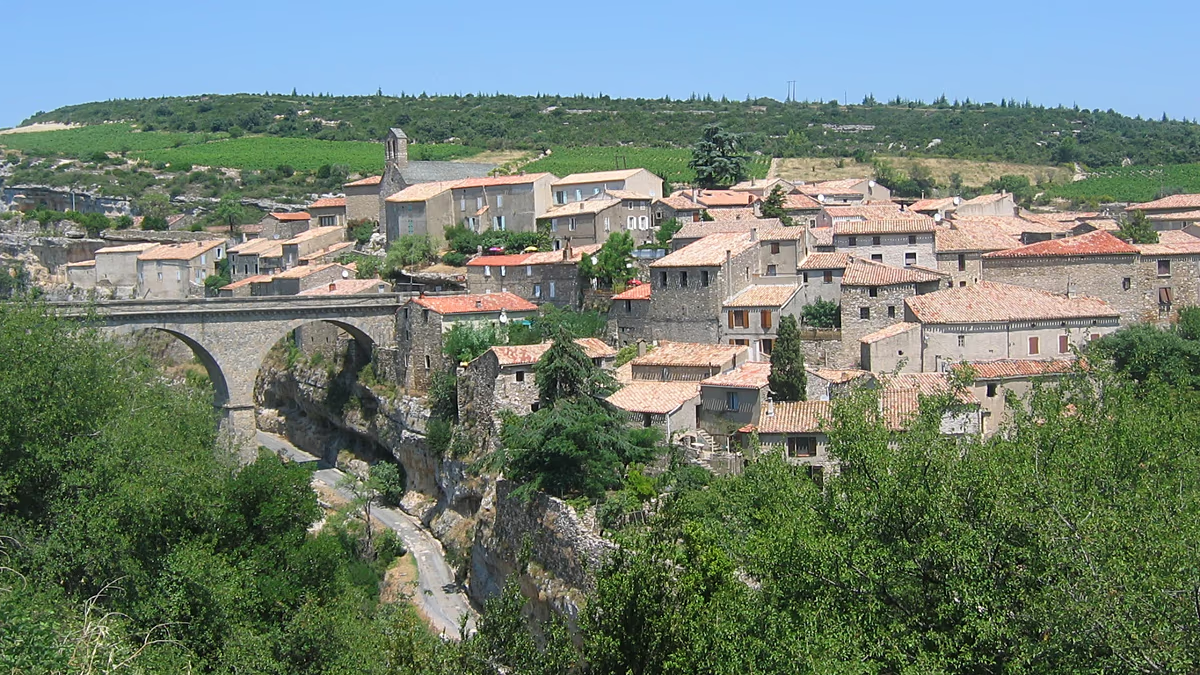
Nestled in the lush, rolling hills north of Tours, the medieval village of Trôo offers more than just picturesque views and quiet lanes. As France, like much of Europe, grapples with increasingly severe and frequent heatwaves, this unique troglodyte settlement has emerged as a living testament to ancient ingenuity. Its homes, carved directly into the soft limestone rock face, possess a remarkable and suddenly invaluable quality: they remain naturally, blissfully cool even as temperatures soar into the mid-thirties Celsius outside. In an era defined by the escalating climate crisis, Trôo’s cave dwellings are no longer mere historical curiosities; they are being re-evaluated as models of sustainable, passive architecture, offering a quiet lesson from the past for a hotter future.
The principle behind this natural comfort is elegantly simple. The dwellings, known locally as habitats troglodytiques, are enveloped by meters of solid rock. This immense thermal mass acts as a natural buffer against the whims of the external climate. In the summer, the thick stone walls absorb the heat from the warmer air inside, slowing its penetration to the cooler, stable temperature deep within the earth. The result is an interior climate that residents like Dominique Opéron describe as consistently hovering around a pleasant 20 degrees Celsius, even on days when the world outside is sweltering above 35 degrees. Conversely, in winter, the rock retains the modest warmth generated within the home, releasing it slowly and reducing the need for excessive heating.
For the residents who call these caves home, this is not a novelty but a profound and practical advantage. Jean-Luc Eclercy-Deterpigny, chairman of the local tourism association, captures the sentiment perfectly, calling cave living “an incredible stroke of luck” in the face of climate change. In a time when air conditioning units hum relentlessly across cities, driving up energy consumption and contributing to the very problem they aim to solve, the inhabitants of Trôo enjoy a serene, low-tech alternative. Their reliance on the earth’s own insulation translates to lower energy bills, a smaller carbon footprint, and a resilient sanctuary from the increasingly dangerous heatwaves that sweep across the continent.
Trôo is not merely a cluster of isolated cave houses; it is a vast and fascinating underground network. Beyond the occupied homes, the village sits atop several kilometers of historic tunnels, wells, and caverns, whispering of a time when entire communities lived within the rock. Today, while only a small number of the caves are permanently occupied as primary residences, their legacy is deeply woven into the village’ s identity. This subterranean labyrinth adds a layer of mystery and historical depth, attracting those interested in archaeology and medieval history, even as the practical benefits of the dwellings draw a new wave of attention.
Indeed, local officials have noted a significant shift in recent years. Where visitors once came primarily for the quaint charm or the panoramic views from the historic bell tower, many now arrive with questions about sustainability and climate adaptation. They are drawn by the prospect of seeing firsthand an ancient solution to a modern crisis. The quiet, sturdy homes of Trôo stand as a powerful counterpoint to the frenetic energy consumption of contemporary life, offering a tangible example of how human shelter can work in harmony with natural processes rather than constantly fighting against them.
As the world searches for pathways to adapt to a warming planet, the lessons of Trôo resonate deeply. The village represents a convergence of heritage and urgent contemporary relevance. It reminds us that sometimes the most forward-looking solutions can be found by looking back, by rediscovering the wisdom embedded in older ways of living. The cool, silent interiors of these rock-carved homes are more than just a refuge from the sun; they are a quiet statement on resilience, sustainability, and the enduring human capacity to find comfort and sanctuary within the very fabric of the earth itself.