

Paragraph 1: A Moment of Horror and Heroism
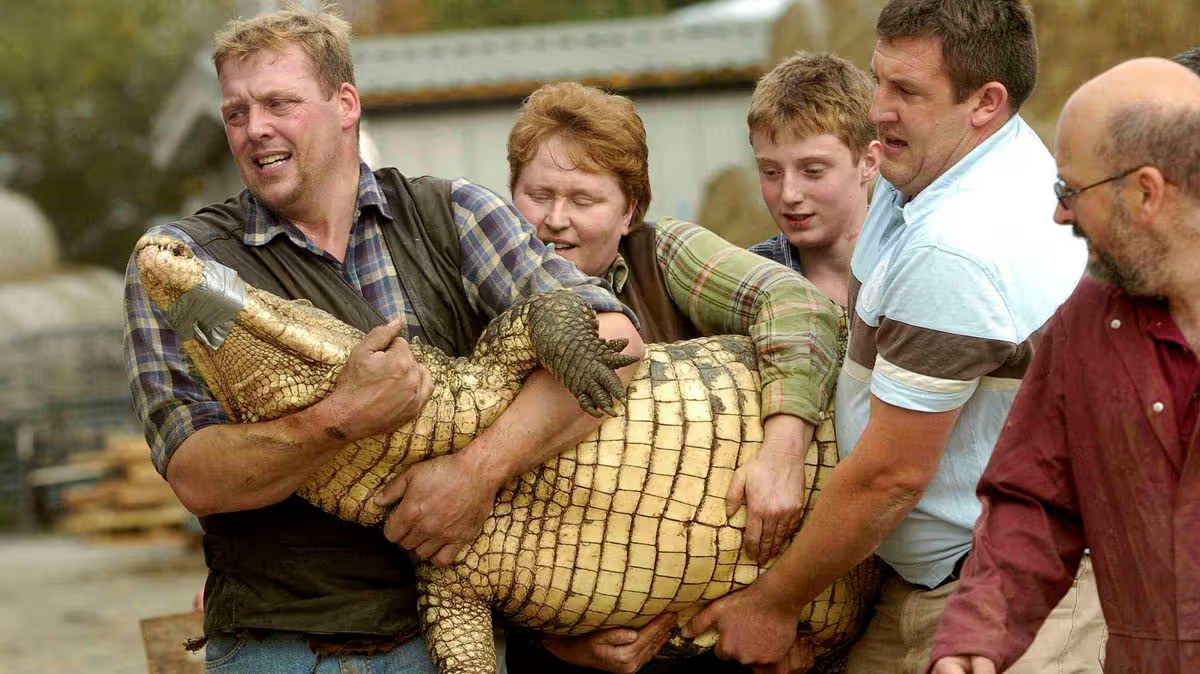
On a seemingly ordinary Thursday afternoon at Johnsons of Old Hurst, a small, family-run zoo near Huntingdon, a scene of unimaginable horror unfolded. A three-year-old boy was allegedly thrown into an enclosure housing approximately 50 crocodiles by a 30-year-old man, who has since been arrested on suspicion of attempted murder. As the child’s family watched in helpless terror, the perilous situation demanded immediate, life-risking intervention. In that critical moment, the zoo’s ethos shifted from caretaker to rescuer, and the extraordinary bravery of the family who owns it sprang into action. Without a second thought for their own safety, Tracey Johnson, her husband Andrew, and their son Edward, all experienced zookeepers, leapt into the pit to confront the reptiles and save the young boy.
Paragraph 2: The Family Who Acted Without Hesitation
At the heart of this rescue are Tracey and Andrew Johnson, who have dedicated their lives to the zoo, and their son Edward, who grew up amongst its animals. Tracey, 55, was reportedly the first to react, jumping into the enclosure to face the immediate danger. She was swiftly joined by Andrew, 56, and Edward, 29, transforming a personal nightmare into a coordinated family effort. Their deep familiarity with the animals and the environment, born from daily care and respect, became their greatest asset in the chaos. As Chris Newman, a friend and director of the National Centre for Reptile Welfare, later emphasized, this act was a testament to their character, noting that Tracey’s response, while heroic, was precisely what he would expect from her resilient and courageous nature.
Paragraph 3: The Perilous Rescue and the Child’s Condition
The rescue itself was a harrowing struggle against powerful, instinct-driven reptiles. The family worked together to pry the young boy from the grip of at least one crocodile—believed to be either a saltwater or Nile species—before lifting him to safety from the significant drop. Their quick action was vital, but the child sustained serious injuries, including a broken arm and pelvis, along with significant crocodile bites. He was rushed to Addenbrooke’s Hospital in Cambridge, where he remained in critical but stable condition in the days following the attack. Meanwhile, the Johnson family, though physically unharmed, were left profoundly distraught, their thoughts entirely focused on the young victim’s recovery.
Paragraph 4: Understanding the Animals and the Environment
Johnsons of Old Hurst is not a large commercial park but a rural haven for over 100 animals, from lions and tigers to capybaras and meerkats. The crocodile enclosure, as described by locals, features raised viewing platforms with fencing, placing visitors above the animals. Experts like Chris Newman point out that while these crocodiles are captive-bred, their primal instincts remain intact; any sudden intrusion into their space would trigger a defensive bite. Ironically, it is speculated that the boy may have survived the initial attack because the crocodiles are fed a consistent diet of livestock offcuts, possibly delaying their recognition of the child as food—a small, grim factor that may have afforded the rescuers a crucial window of time.
Paragraph 5: The Aftermath and Community Impact
In the wake of the incident, the zoo was closed as police continued their investigation. The 30-year-old suspect, reported to have learning difficulties and unknown to the boy, was assessed as unfit for interview and released on bail. The event has sent shockwaves through the local community and beyond, highlighting both the profound vulnerability of the victim and the astounding bravery of the rescuers. Neighbors and visitors expressed their shock, noting the perceived safety of the elevated enclosures. The incident lays bare a tragic contradiction: a place dedicated to the wonder and preservation of wildlife became the stage for a human act of violence, met with an extraordinary human act of valor.
Paragraph 6: A Legacy Defined by Courage
This traumatic event will forever be part of the Johnson family’s story, yet it underscores a legacy defined by courage, quick thinking, and an unwavering commitment to protect life. Their leap into danger transcends their role as zookeepers; it was a raw, human response to a child in mortal peril. As the investigation proceeds and the community grapples with the shock, the enduring hope is for the young boy’s full recovery. The actions of Tracey, Andrew, and Edward Johnson stand as a powerful reminder that heroism often emerges from the most unexpected places, revealing the profound strength embedded in family bonds and a lifelong dedication to care—even when it requires risking everything.