


A profound sense of shock and solidarity has swept through Edinburgh and the wider United Kingdom following a harrowing series of violent attacks across the city on a Friday evening, which left five individuals injured. The incidents, which authorities have described as a fast-moving sequence of events targeting various locations in the west and north of the capital, prompted an immediate and robust response from emergency services. Counter-terrorism officers were swiftly brought in to lead the investigation, underscoring the grave nature of the assaults. Police Scotland confirmed that a 36-year-old white Scottish man has been charged in connection with the attacks and assured the public that there is no further threat to the community. The victims, five men aged between 22 and 39, sustained a range of injuries, with three requiring hospital treatment; thankfully, none are considered life-threatening. Several of those attacked are reported to be Muslim, a detail that has shaped the understanding of the suspect’ s alleged motivations.
In a powerful and unequivocal response, Prime Minister Sir Keir Starmer directly addressed the nation, condemning the violence and identifying what he described as a driving force behind it: anti-Muslim hatred. Taking to social media platform X, the Prime Minister stated, “Absolutely appalling. No one should face violence on our streets. The suspect appears to be motivated by anti-Muslim hatred. I will not tolerate this – he will face the full force of the law.” His message extended heartfelt thoughts to the injured and gratitude to the police and emergency services for their rapid response. This sentiment was echoed at the highest levels of the Scottish Government, with First Minister John Swinney expressing deep concern and affirming, “There is no place for violence, racism or intolerance in our country.” These unified statements from leaders across the political spectrum sought to offer reassurance and a clear moral stance against the bigotry that appeared to fuel the attacks.
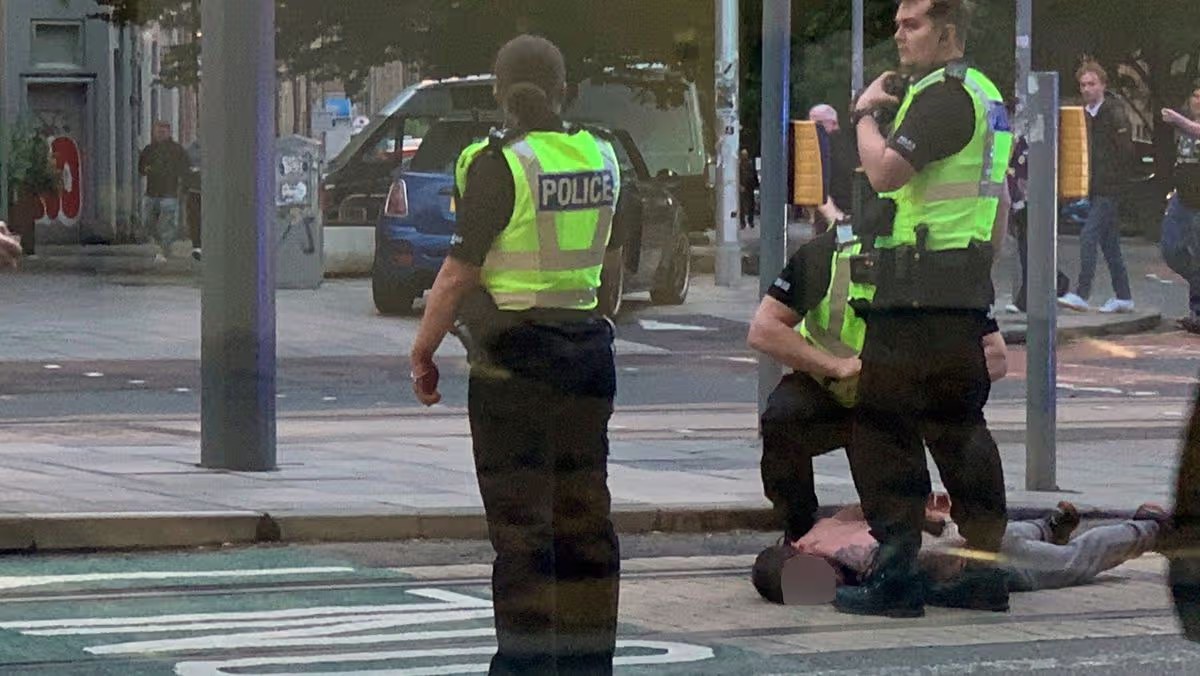
The disturbing events unfolded publicly, with videos circulating online depicting a bare-chested white man wandering Edinburgh’s streets, notably on Leith Walk, while brandishing a large weapon. Other footage appeared to show a man hammering on the door of a pizzeria, contributing to a sense of widespread alarm. As officers cordoned off areas and worked to apprehend the suspect, further clips emerged showing the individual on the ground being restrained by police, shouting that he was “protecting the country.” These visceral images brought the reality of the threat home to a national audience, transforming the incident from a police report into a shared, traumatic visual narrative. The visible police presence and the establishment of a Major Incident Public Portal (MIPP) for information submissions reflected the seriousness with which authorities treated both the immediate danger and the subsequent investigation.
Condemnation of the attacks and the apparent hatred behind them was swift and crossed governmental boundaries. Home Secretary Shabana Mahmood stated she was “horrified” by violence that seemed “to be motivated by anti-Muslim hatred,” adding a personal and ministerial weight to the rejection of such intolerance. She expressed gratitude for the bravery of the emergency services and firmly declared, “There is no place for hatred and violence against Muslims. I know it is not who we are as a country.” Similarly, Police Scotland Assistant Chief Constable Catriona Paton labelled the incidents “shocking” and extended her thoughts to those injured and most directly affected. She delivered a clear message of communal solidarity: “I want to send a clear message of support to all our communities that there is no place for racism or faith-based hate in a Scotland which is at its best when we stand together.” Her praise for the bravery and professionalism of the responding officers highlighted the human effort that contained the crisis.
The aftermath of the violence has placed a sharp focus on community cohesion and the urgent need to confront faith-based hatred. The statements from leaders consistently paired condemnation of the acts with affirmations of support for Muslim communities and a rejection of the ideologies that seek to divide society. Scottish Justice Secretary Neil Gray encapsulated this dual focus, stating, “These attacks were awful and my thoughts are with those who were injured and affected by them. As Police Scotland have said, there is no place for racism or faith-based hate in Scotland.” His thanks to the emergency services for their “bravery and skill” in bringing the incident under control underscored the collective effort to restore safety and order. The collaborative investigation with Counter Terrorism Policing, operating under the direction of the Crown Office, signals a determined pursuit of justice and a thorough examination of the circumstances surrounding the attacks.
As Edinburgh and the nation begin to process these events, the path forward is marked by a collective resolve to uphold the values of tolerance and mutual respect. The unified political and civic response serves as a bulwark against the hatred that motivated the attacker, aiming to prevent such violence from sowing deeper divisions. The ongoing police investigation, supported by public information, will seek full accountability through the legal system. Ultimately, this tragic episode has reaffirmed a fundamental commitment from the country’s leaders and institutions: that violence rooted in religious or racial bigotry is an assault not just on individuals, but on the very fabric of a diverse and inclusive society, and it will be met with the full force of both law and communal solidarity. The hope now is for healing for the victims and a reinforced dedication to protecting every citizen’s right to safety and dignity.