


Paragraph 1: A Community Reels in the Aftermath
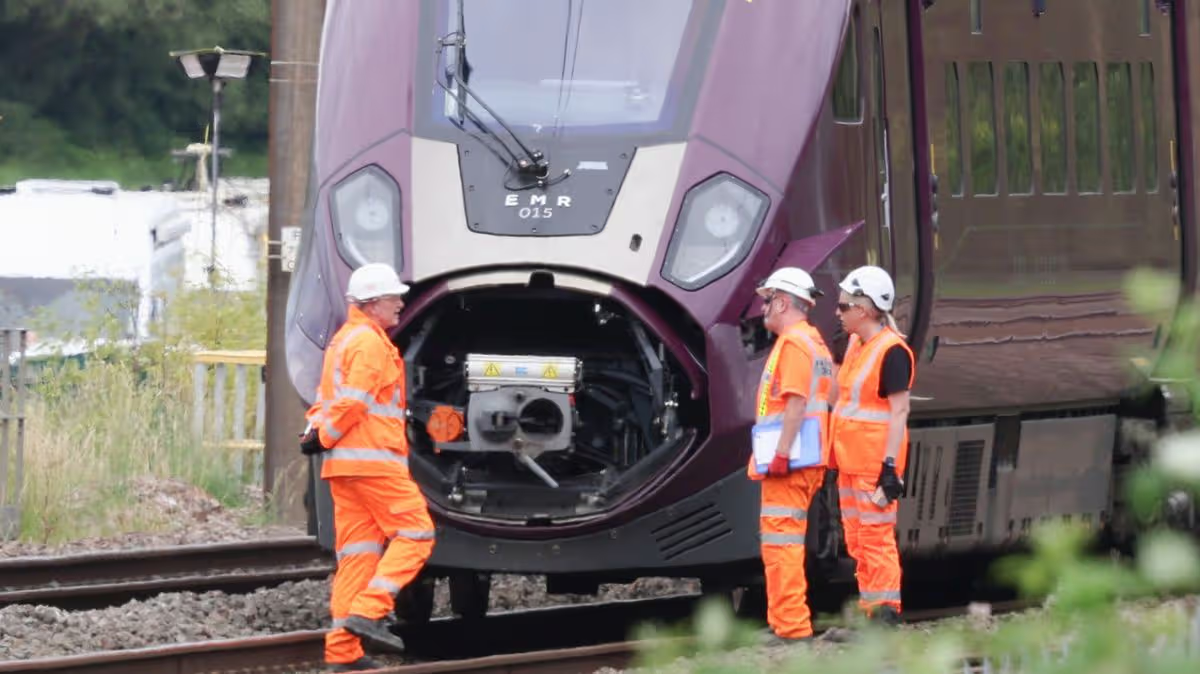
The Bedfordshire countryside, typically a tranquil corridor for commuters, became the site of a national tragedy on the evening of Friday, June 19th, 2026. Just after 5pm, two busy London-bound East Midlands Railway trains collided on the Midland Mainline, south of Bedford near Elstow. The impact was catastrophic, instantly transforming carriages into a scene of devastation and prompting the declaration of a major incident. In the immediate and harrowing hours that followed, the collective efforts of more than 70 firefighters, over 20 ambulances, six air ambulances, and countless police and railway personnel unfolded at the scene. Their mission was one of urgent rescue and medical care, transporting 64 injured passengers to six different area hospitals. Tragically, despite these efforts, the driver of one of the trains lost his life at the scene. A day later, the human toll remained severe, with 28 people still hospitalized, nine of them in critical condition. The crash sent shockwaves through the nation, drawing expressions of profound sorrow from King Charles and Prime Minister Keir Starmer, who extended their sympathies to the victims and praised the extraordinary emergency response.
Paragraph 2: The Search for Answers Begins
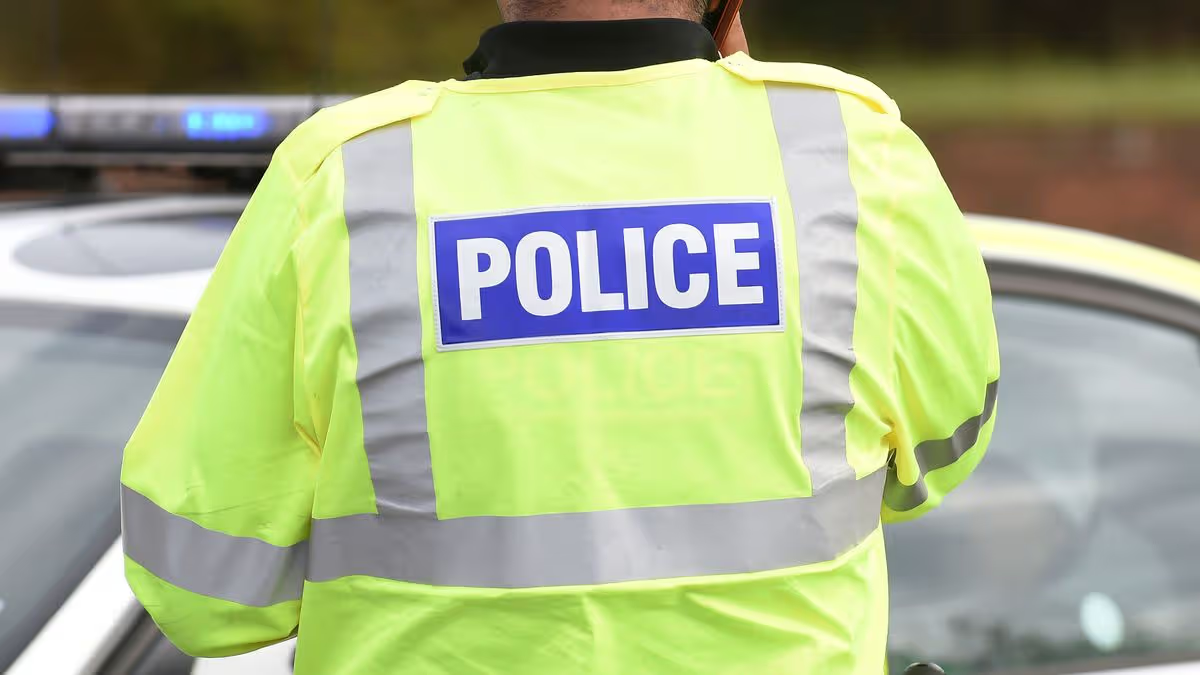
As the dust settled and the most critically injured were cared for, the complex and meticulous task of determining the cause of the disaster began. The responsibility fell to the expert investigators of the Rail Accident Investigation Branch (RAIB) and the British Transport Police (BTP), who swiftly arrived to lead a joint, independent probe. With a scene described by officials as “complex,” their work involves a forensic examination of the two trains—the 3:50pm service from Nottingham and the 4:40pm service from Corby—as well as the track and signalling infrastructure. Early reports indicated that the Nottingham train had stopped at a signal when it was struck from behind by the Corby train, but the crucial question of why this happened remains unanswered. Investigators are carefully exploring all possibilities, including potential signalling failures or human error, while authorities have strongly cautioned against public speculation. Transport Secretary Heidi Alexander emphasized the importance of a thorough investigation to “establish the cause of this incident and to make sure that those lessons are learned.”
Paragraph 3: Harrowing Accounts of Survival and Heroism
From within the wreckage, stories of terror, miraculous survival, and selfless heroism began to emerge, painting a visceral picture of the collision’s moment of impact. Passengers described a violent, multi-stage crash. Aleister Adamson, on the Nottingham train, recounted being “thrown around” and hearing “a bang and another bang,” believing he was going to die. Construction manager Mareks Grabovskis, who had fortuitously chosen a rear carriage on the Corby train, was knocked unconscious and awoke to a scene of chaos, with people “covered in blood” and screaming. Teacher Brett Byatt described the horrifying sight of a woman with a snapped leg, trapped beneath another passenger. Amidst the terror, acts of courage shone through. Grabovskis hailed an onboard ticket inspector as a “hero” for managing communications and checking on passengers despite being injured himself. Simon Bentley, who was travelling with his wife, spoke for many survivors in expressing a mix of profound relief and deep sadness, stating they felt “very lucky and obviously very, very sad about what’s happened to the driver.”
Paragraph 4: A Railway Family in Mourning
The human heart of the tragedy was felt most acutely within the railway community itself. The driver who died, operating the Corby service, was a colleague, friend, and family member whose name has yet to be released publicly out of respect for his loved ones. Across the industry, statements from leaders were infused with grief and solidarity. Ellie Burrows, Network Rail’s Regional Managing Director, called it “a profoundly sad day… for the wider railway family.” Mark Budden, Route Director for Network Rail’s East Midlands line, expressed being “deeply saddened” by the loss of a colleague. Their words underscored that this was not just a mechanical or operational failure, but a deeply personal loss that has reverberated through the thousands of people who work to keep the railways running every day. The industry’s focus, alongside the official investigation, has firmly shifted to providing support for the victims, the bereaved family, and their own traumatized staff.
Paragraph 5: The Long Road to Recovery and Normalcy
In the aftermath, the practical challenges of recovery and restoring service became paramount. A significant portion of the vital East Midlands route remained closed on Saturday as specialist teams worked to assess the extensive damage to both the trains and the track infrastructure. The process ahead is methodical and deliberate; investigators must complete their initial on-site evidence gathering before the mangled carriages can be carefully removed for further analysis elsewhere. Only then can the arduous work of repairing the railway safely begin. Network Rail officials have been careful not to speculate on timelines, acknowledging the priority is a safe and thorough recovery over speed. They have pledged to keep the public updated as they gain a clearer understanding of the work required to reopen the line, balancing the need for transportation with the imperative of a complete investigation.
Paragraph 6: A Nation’s Reflection and the Path Forward
The Bedford train crash stands as a somber reminder of the profound responsibility inherent in public transport. As the specialist teams continue their painstaking work at the site and in laboratories, the nation holds its collective breath for answers. The investigation by the RAIB and BTP will be exhaustive, likely taking months to conclude, with an interim report possibly released in the coming days. Its ultimate findings will be crucial not only for providing closure to the victims and their families but for shaping future safety protocols across the UK’s rail network. The shared hope, as voiced by officials and the public alike, is that from this profound tragedy, definitive lessons will be learned to strengthen the system, honoring the memory of the lost driver and the ordeal of the survivors by working tirelessly to prevent such a devastating event from ever happening again.