


A Community Mourns, Investigators Begin the Long Search for Answers
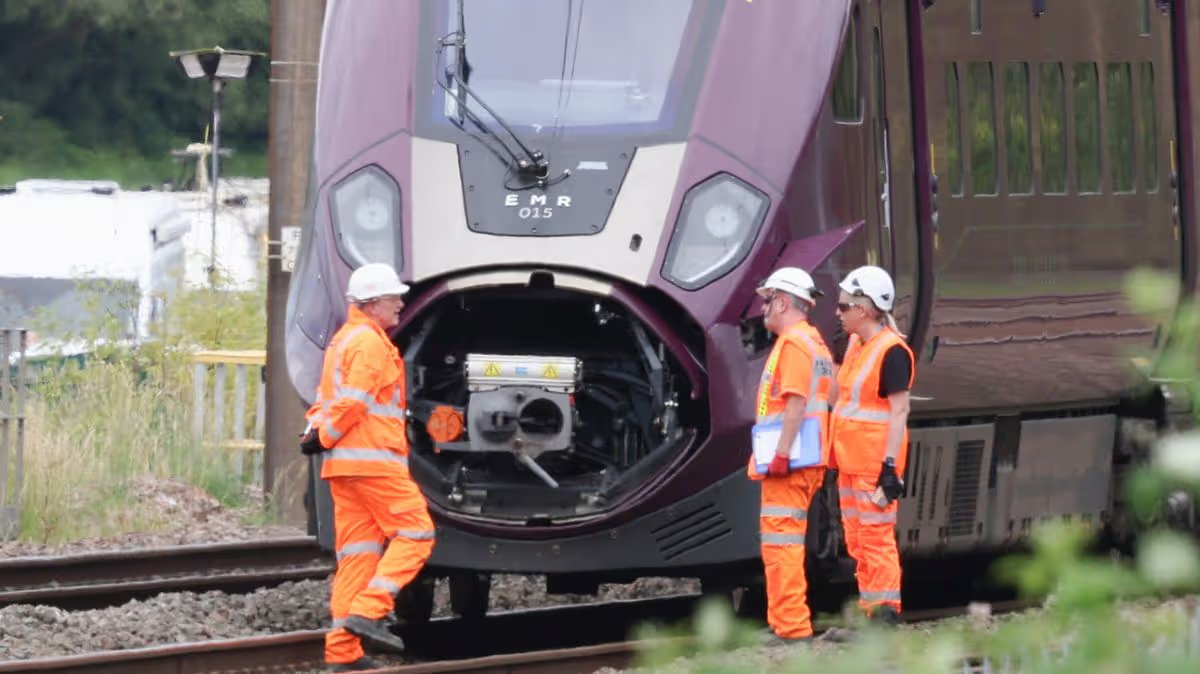
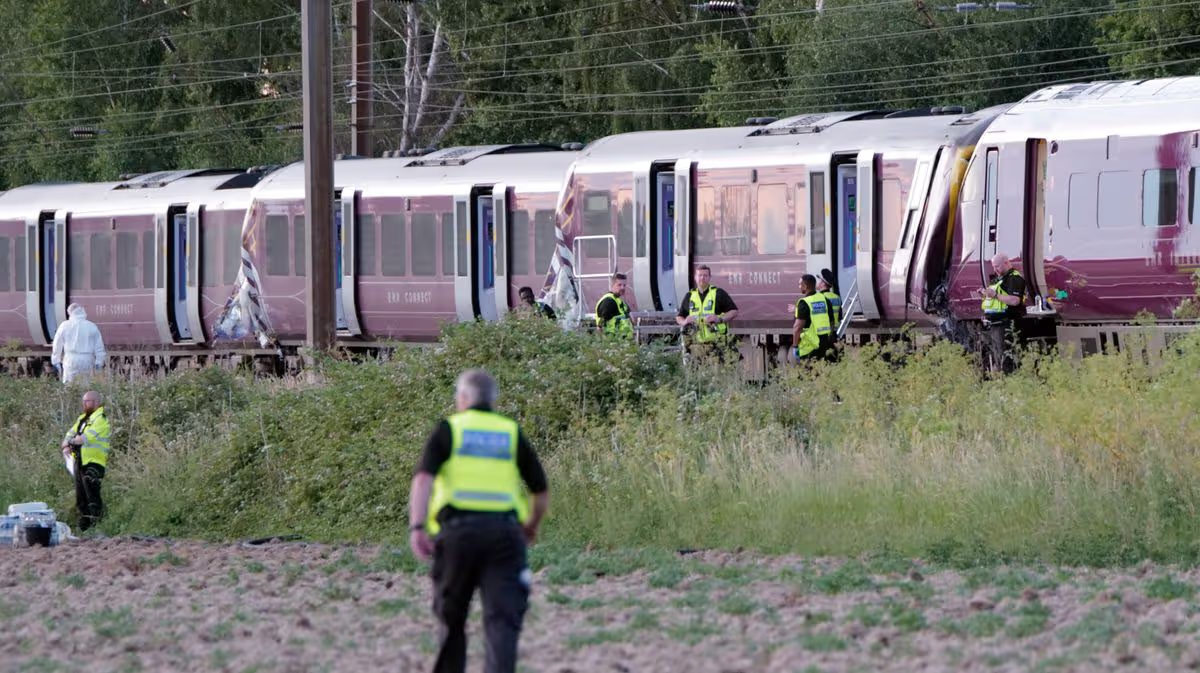
The rural landscape south of Bedford, normally a scene of quiet English countryside, became the site of a profound tragedy on Friday afternoon. Shortly after 5 p.m., two East Midlands Railway services on the same line collided, an event that has left one train driver dead, 28 people in hospital—nine of whom are in critical condition—and countless others grappling with shock and injury. The collision, described as one train striking the back of the other, has plunged the local community and the wider railway family into mourning. As British Transport Police Chief Constable Lucy D’Orsi expressed, their deepest condolences are with the driver’s family, friends, and colleagues. East Midlands Railway’s managing director, Will Rogers, echoed this sentiment, calling it a “profoundly sad day for the railway community” and emphasizing that their immediate priority is the welfare of all those affected by this devastating incident.
In the wake of the crash, a meticulous and multi-faceted investigation has been launched to unravel the sequence of events that led to this disaster. The central, haunting question revolves around why the leading train, a Nottingham-to-London service, was stationary or moving very slowly on the main line when it was struck from behind by the Corby-to-London service. Early, unconfirmed reports have suggested a possible technical issue with the first train, but officials, including Transport Secretary Heidi Alexander, stress it is far too early to speculate. The investigation will painstakingly examine every detail, from onboard data recorders to maintenance logs, to determine if a mechanical failure played a role.
Perhaps the most critical line of inquiry focuses on why the following train did not stop. Modern British railways are equipped with multiple, overlapping layers of safety technology designed specifically to prevent such rear-end collisions. Investigators from the independent Rail Accident Investigation Branch (RAIB) will scrutinize whether the driver received and acted upon correct signal information, whether the train’s braking systems functioned properly, and crucially, why the automatic train protection systems—which are meant to intervene if a danger signal is passed or a hazard is approached too quickly—failed to avert the crash. The Guardian has noted that understanding this systems failure is a major priority, as it strikes at the heart of railway safety protocols.
Parallel to the examination of the trains themselves will be a forensic analysis of the signalling infrastructure. The RAIB will pore over signalling records and data from control centres to establish a definitive account of what the signalling system communicated to the driver of the second train. They must determine whether the signals correctly showed the track ahead as occupied, whether any fault or miscommunication occurred in the signalling network, and whether controllers had an accurate, real-time picture of the trains’ positions on the line. This aspect is fundamental, as the signalling system is the primary guide for safe movement on the rails.
As the technical investigation proceeds, human factors will also be carefully considered. Investigators will examine the actions and decisions of both drivers, their communications with signallers, their training records, and their workload and rest patterns in the lead-up to the accident. At this initial stage, authorities have pointedly noted there is no public evidence suggesting driver error, a reminder that the inquiry must follow the evidence wherever it leads without prejudgment. Simultaneously, experts will analyze the dynamics of the crash itself—the speed at impact, the structural integrity of the carriages, and the performance of interior fittings—to understand why, despite the trains reportedly remaining upright, so many passengers sustained injuries.
As specialist teams work at the site and behind the scenes, the collective focus remains on compassion and support for the victims and their families, while committing to a thorough and transparent investigative process. The goal, as Heidi Alexander stated, is to fully understand the circumstances so that necessary lessons are learned. For the railway community and the public, the unanswered questions loom large, but the resolve to find those answers—to honour the driver who lost his life and to ensure such a tragedy is not repeated—is the guiding principle in the difficult days ahead.