

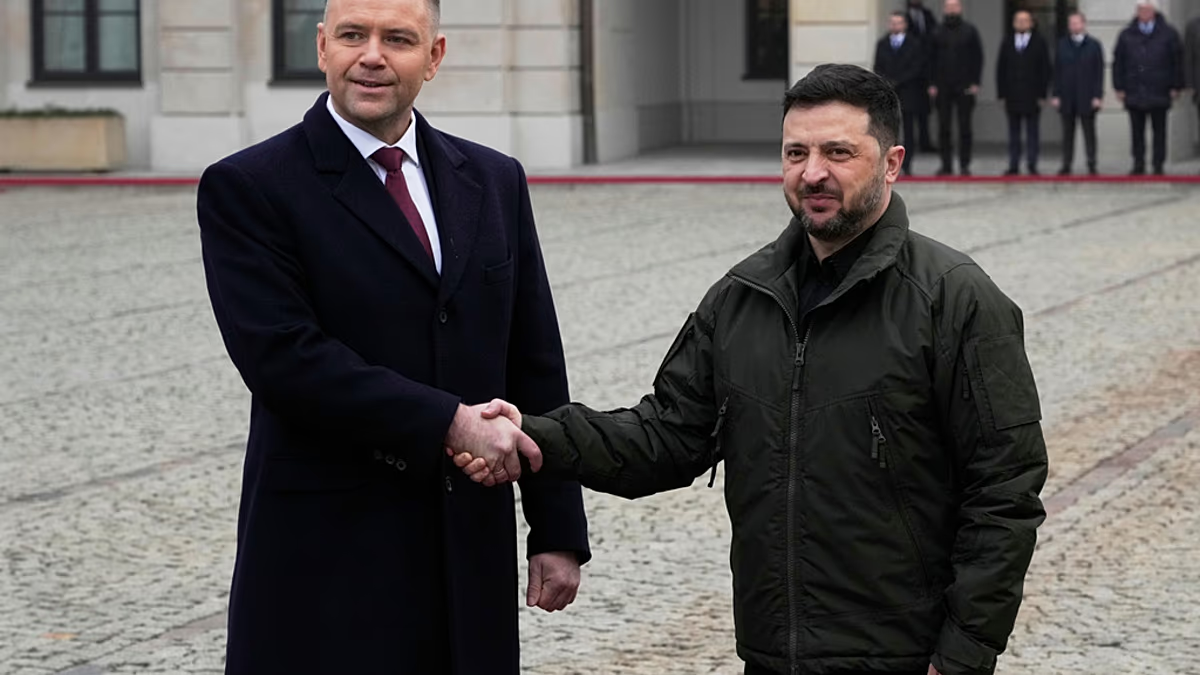
A significant diplomatic rift has opened between Poland and Ukraine, two nations whose solidarity since the full-scale Russian invasion in 2022 had been a cornerstone of European resistance. The crisis was triggered by a decree from Ukrainian President Volodymyr Zelenskyy, who named a special operations unit after the controversial World War Two-era Ukrainian Insurgent Army (UPA). This move provoked a sharp response from Poland, where the UPA’s legacy is profoundly painful due to its role in the massacres of Polish civilians in Volhynia during the war. In reaction, Poland’s far-right President, Andrzej Duda, and the head of the Institute of National Remembrance, Karol Nawrocki, announced the symbolic revocation of the Order of the White Eagle, Poland’s highest state honour, which had been bestowed upon Zelenskyy in 2023.
President Zelenskyy responded by formally returning the Order, posting a photo of it packaged for shipment. He framed the act as one of dignified regret, stating that he had believed the honour was for the entire Ukrainian people and their army, to whom he remains dedicated. This gesture, however, was only the beginning of a wider show of solidarity from within Ukraine. Foreign Minister Dmytro Kuleba and other senior officials, including the head of military intelligence Kyrylo Budanov and Ambassador to Poland Vasyl Zvarych, announced they would return their Polish state awards. Furthermore, former Ukrainian Presidents Leonid Kuchma, Viktor Yushchenko, and Petro Poroshenko joined this coordinated action, relinquishing their own Orders of the White Eagle. They each stressed that their decisions were acts of unity with Zelenskyy and the current Ukrainian state, not a rebuke of the Polish people, while explicitly criticizing President Duda’s move as irresponsible and damaging.
The heart of the dispute lies in the profoundly divergent historical narratives surrounding the UPA. For many in Ukraine, particularly in the context of national identity forged under Soviet domination and now against Russian aggression, the UPA represents a complex symbol of anti-Soviet resistance and the struggle for Ukrainian independence. However, for Poland, the organization is indelibly linked to the ethnic cleansing of Poles in Volhynia and Eastern Galicia, a traumatic chapter in the nations’ shared history. Polish leaders, including Prime Minister Donald Tusk, argued that glorifying the UPA, regardless of the intent, crosses a moral line for Poland and provides potent fodder for Russian propaganda, which seeks to falsely paint modern Ukraine as a Nazi-affiliated state.
Despite the intensity of the historical dispute, voices on both sides urgently warned against allowing the rift to benefit the Kremlin. Polish Foreign Minister Radosław Sikorski and his Ukrainian counterpart, Dmytro Kuleba, each separately emphasized that only Russia gains from a fractured Polish-Ukrainian alliance. Prime Minister Tusk, while criticizing Zelenskyy’s decision, relayed the Ukrainian president’s assurances that no offence to Poles was intended and called for both nations not to let “history ruin our future.” This sentiment was echoed by Ukrainian officials who expressed gratitude to Poles opposing the escalation, underscoring the shared strategic interests and common future that bind the two countries against the threat from Moscow.
The Russian government was quick to seize upon the discord, with officials like Dmitry Medvedev gleefully welcoming President Duda’s action as a validation of their own war propaganda. This external reaction highlighted the strategic peril of the rift. Poland has been Ukraine’s most vital logistical hub and a passionate advocate within NATO and the EU, while also hosting hundreds of thousands of Ukrainian refugees. The underlying strength of people-to-people ties and shared strategic imperatives suggests a reservoir of resilience in the bilateral relationship, but the incident exposed how historical wounds, however dormant, can be reopened with severe diplomatic consequences.
Ultimately, this episode serves as a stark reminder that the solidarity forged in contemporary crisis must navigate the treacherous terrain of shared, painful history. The coordinated return of honours by Ukrainian leaders was a powerful signal of internal unity and a pointed critique of the Polish presidential decision, but it also reflected a desire to contain the damage. The challenge for both governments is to manage these historical sensitivities with utmost care, recognizing that while the past cannot be changed, its interpretation in the present must be handled with a mindfulness towards the future. The stability of their alliance is not just a bilateral concern but a key component of European security, making its preservation a task of paramount importance, even amidst profound disagreement.