



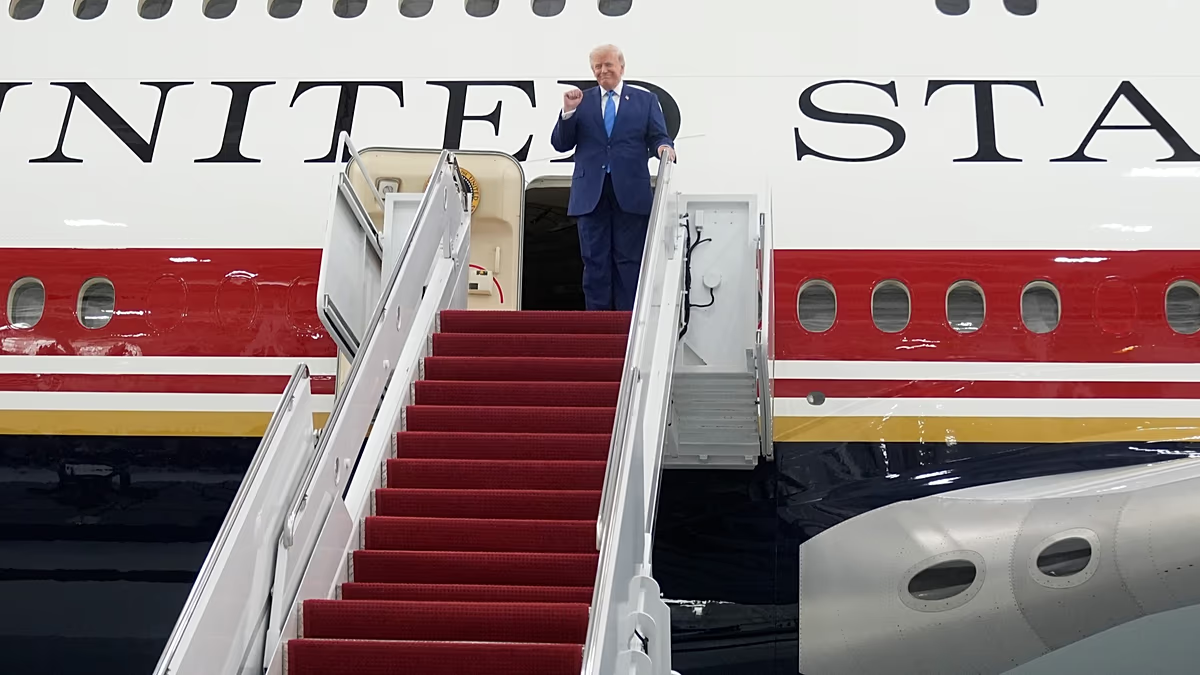
The iconic image of the presidential aircraft soaring through the skies, known the world over as Air Force One, has entered a new and controversial chapter. In a characteristically bold ceremony at Joint Base Andrews, President Donald Trump unveiled the latest aircraft to assume that prestigious call sign. The jet, a converted Boeing 747 previously owned by the government of Qatar, marks a dramatic departure from tradition, most visibly in its striking new livery. Gone is the light, muted blue associated with the Kennedy era, replaced by a deep navy underside, a bold red stripe along the fuselage, and a large American flag emblazoned on the tail. Standing before assembled Air Force personnel, with his signature anthem “God Bless the USA” playing, Trump framed the redesign as a matter of national pride, declaring that when landing in global capitals like London and Berlin, “nobody tops this one.” He openly acknowledged the design was to “my taste,” cementing the aircraft as a personal and political statement as much as a functional mode of transport.
However, the origins of this new “flying White House,” as Trump described it, are layered with geopolitical and ethical complexities. The aircraft is formally a gift from the State of Qatar, intended as a “bridge” solution to carry the president until the delivery of two brand-new, purpose-built Air Force One jets from Boeing, which have been delayed until 2028. This arrangement has raised persistent questions about the propriety of a sitting U.S. president accepting such an extravagant gift from a foreign government, a potential violation of the Emoluments Clause. Trump has previously asserted he would not retain the jet after his presidency, suggesting it would be donated to a future presidential library. During the unveiling, he positioned the move as a savvy, unconventional deal for the American taxpayer, recalling how he directly asked the Emir of Qatar for the aircraft and stating, “See, a normal president wouldn’t do this.” This framing underscores his administration’s penchant for bypassing traditional diplomatic and procurement channels in favor of personal deal-making.
The decision to implement this specific color scheme represents the culmination of a years-long effort by Trump to reshape the visual identity of the presidency’s aerial fleet. His vision dates back to his first term, when he directed that the future, Boeing-built VC-25B aircraft adopt a livery nearly identical to that of his personal private jet. The aesthetic choice is more than cosmetic; an Air Force review during the Biden administration suggested that darker, non-standard paint could increase maintenance costs due to heat absorption and potentially cause further delays. President Joe Biden had reversed Trump’s initial order in 2023, but upon returning to office, Trump reinstated his preferred design. Furthermore, the administration has announced that other government jets transporting senior officials will also adopt the red, white, and navy scheme, effectively rebranding the entire executive branch fleet in a distinctly Trumpian palette.
From a logistical and security standpoint, the integration of the Qatari jet into the Presidential Airlift Group is a significant undertaking. The U.S. Air Force, in official statements, has emphasized that any aircraft designated as Air Force One must meet the most rigorous security and communications requirements. They detailed that the Qatari 747 underwent extensive modifications under a “disciplined engineering approach” that prioritized these critical capabilities, while retaining much of the luxurious interior layout originally designed for a head of state. Security modifications alone are reported to have cost nearly $400 million. Notably, the two existing, aging VC-25A aircraft—the familiar blue-and-white jumbos in service since the 1990s—are not being retired. An Air Force spokesperson indicated they will remain in the fleet alongside the Qatari “bridge” plane until the new VC-25Bs arrive, with mission planners selecting the most appropriate aircraft based on operational needs.
The unveiling event was seamlessly woven into Trump’s immediate political and diplomatic calendar. He confirmed that his first major trip aboard the new aircraft would be to a NATO summit in Ankara, Turkey, symbolically projecting his renewed vision of American stature onto the global stage at an alliance he has often criticized. He also hinted at a return to China, likely for the Asia-Pacific Economic Cooperation summit later in the year. His return from the G7 summit in France, he noted, was the final voyage for the old Air Force One. In a fitting piece of political theater, he announced the new jet would perform a flyover during the upcoming July 4th celebrations, ensuring its dramatic new profile will be one of the first images associated with his current administration for millions of Americans.
Ultimately, this new Air Force One transcends its function as a mere aircraft. It is a multifaceted symbol: of a president’s powerful personal branding, of an unorthodox approach to governance and diplomacy, and of a deliberate break from established tradition. The red, white, and blue design, while patriotic in its colors, is a sharp stylistic shift that mirrors the polarized nature of contemporary American politics. The jet’s provenance as a gift from Qatar will continue to fuel debates about ethics and influence, while its role as a temporary solution highlights ongoing challenges in major defense acquisitions. As it takes to the skies, this flying White House embodies the Trump presidency itself—opulent, assertive, unconventional, and designed to command attention and provoke conversation wherever it lands.