
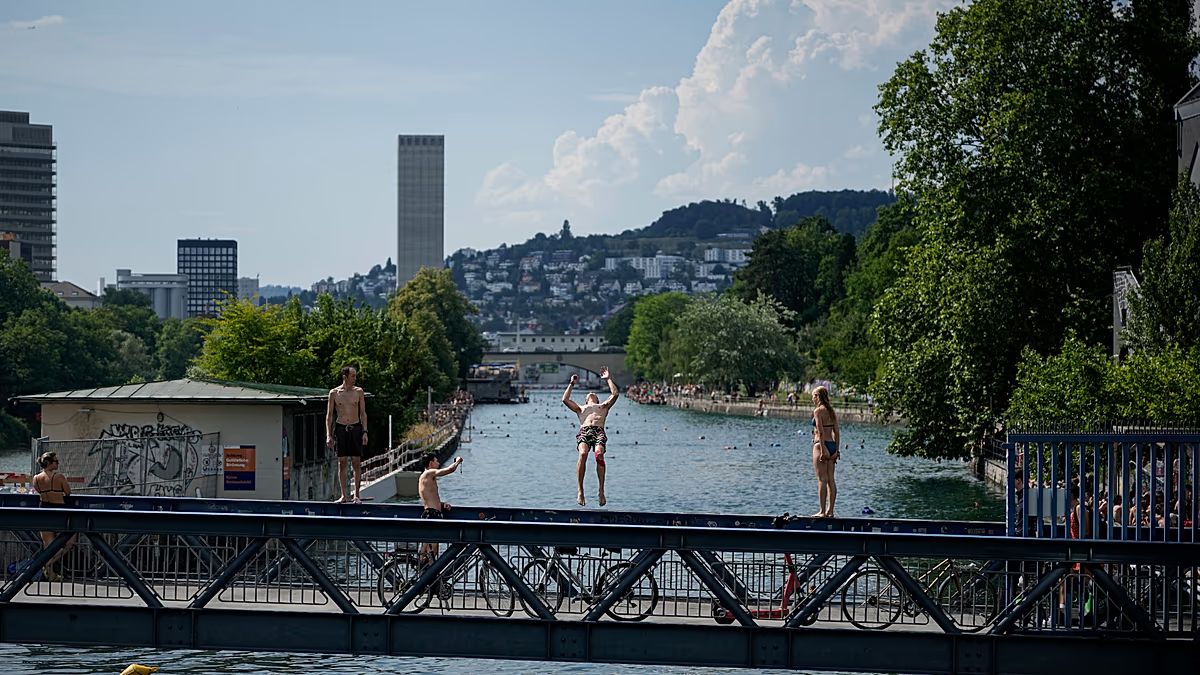


As a severe and prolonged heatwave tightens its grip across Europe, authorities are taking unprecedented measures to protect public health during what is typically a season of celebration. The continent finds itself in the grips of an early and intense bout of heat, forcing a recalibration of summer traditions in the face of dangerous conditions. This is not merely a spell of warm weather, but a significant meteorological event with red-level warnings—the highest possible—in place across vast regions. The timing, coinciding with the summer solstice and various cultural festivals, underscores a poignant conflict between human tradition and the escalating realities of extreme weather.
In France, the urgency of the situation has led to stark, immediate action. The iconic Fête de la Musique, a nationwide festival where streets fill with free concerts and revelry, will see a ban on alcohol consumption in Paris—a move almost unthinkable for the normally convivial event. This decision highlights the severe public health calculus at play, aiming to reduce heat-related illnesses exacerbated by dehydration. Simultaneously, Parisian officials are scrambling to provide relief, announcing that the Canal Saint-Martin will be opened for public swimming and that city parks and gardens will remain open around the clock. These measures paint a picture of a city adapting in real-time, transforming its urban fabric into a network of cooling shelters as temperatures are forecast to reach 35°C.
The Iberian Peninsula is facing even more extreme conditions, with thermometers threatening to hit 40°C in parts of southern France and Spain. In Spain, the national weather agency, AEMET, has issued heat warnings across 14 regions, stressing that the danger is not confined to daylight hours. They warn of “very high nighttime temperatures” that offer little respite, a particularly hazardous situation for vulnerable populations. The agency explicitly links the heat to a “significant danger” for outdoor activities and a heightened risk of devastating wildfires. The message is clear: this is a systemic threat, challenging both personal safety and environmental stability.
Central Europe is similarly afflicted, with the heatwave demonstrating its continental reach. Switzerland anticipates highs of 37°C in its southern valleys, while major cities like Zurich, Geneva, and Basel will swelter in the mid-30s. The crisis has turned volatile in Germany, where the combination of intense heat and atmospheric instability has spawned violent storms. These have already had deadly consequences, with multiple people injured from lightning strikes. Italy, too, is baking, with Rome and Turin expecting temperatures up to 36°C. The pattern reveals a synchronized weather event punishing a wide swath of the continent without discrimination.
The United Kingdom, often perceived as a temperate respite, is also bracing for impact. The Met Office has escalated its warnings to amber for parts of England and Wales, signalling that the incoming heat is likely to cause “adverse health effects” and an “increased risk of water safety incidents” as people seek relief in rivers and lakes. This warning is a sobering reminder that the threat extends beyond traditionally hot Mediterranean nations, affecting regions with populations and infrastructure less accustomed to such extremes. The concurrence of this alert with the summer solstice—when the sun’s angle is most direct—only amplifies the risk of high UV radiation and heat accumulation.
This continent-wide event, unfolding at the very start of astronomical summer, forces a moment of collective pause. It is more than a news item about weather; it is a narrative about adaptation and vulnerability. From the cancellation of key festival rituals in Paris, to the stark health warnings in Madrid, to the storm-related injuries in Germany, the human impact is immediate and multifaceted. As parks become nocturnal refuges and canals turn into public pools, the image of a Europe grappling with a new climate reality comes sharply into focus. This heatwave is a powerful, uncomfortable reminder that the environment is writing new rules, and our social rituals, public health policies, and personal behaviors must swiftly evolve in response.