



The Gathering Storm: High-Stakes Diplomacy Under a Mediterranean Sun
As the sun casts a warm glow over the ancient landscapes of Cyprus, a modern diplomatic drama unfolds. Ian reports from this Mediterranean crossroads, where the island nation is hosting one of the most significant gatherings of European Union leaders in recent memory. The serene setting belies the tense agenda awaiting the assembled heads of state and government. Over the next two days, the calm seas and historic vistas will serve as a backdrop for conversations that could shape the continent’s future. This isn’t a routine meeting; it’s a summit born of necessity, convening at a moment when multiple crises converge to test the bloc’s unity and resolve. The choice of Cyprus itself is symbolic—a nation at the edge of Europe, geographically and politically perched between continents, embodying the EU’s complex relationship with its neighbors and the wider world.
An Agenda of Urgency: From Tehran to the Budget
The discussions poised to dominate the summit table are unambiguously critical. Foremost among them is the escalating crisis involving Iran, a situation that threatens regional stability and ties directly to European security concerns. Alongside this, the persistent shock of high energy prices continues to strain economies and households across the Union, demanding coordinated strategies for resilience and affordability. Perhaps the most foundational debate will center on the EU’s long-term financial framework—its multi-year budget. This is the engine for everything from climate transition to agricultural support, and any revision carries profound implications for every citizen. Wrapping these tangible issues is the overarching, existential question: how can Europe better defend itself in an era of renewed geopolitical competition and aggression? Each topic alone is weighty; combined, they represent a formidable test of leadership and collective vision.
A Transatlantic Political Current Reaches Greek Shores
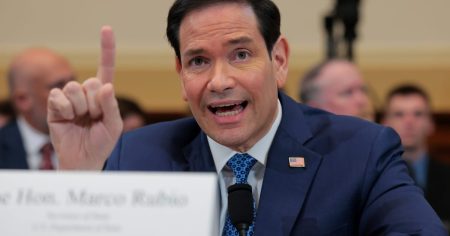
Meanwhile, from the historic intellectual haven of Delphi in Greece, Nick provides a fascinating and unexpected sidebar to the main event. At the Delphi Economic Forum, a gathering traditionally focused on global economic dialogue, a conspicuous new presence has emerged: several high-profile figures aligned with the MAGA movement in the United States. Their attendance signals a curious expansion of this political sphere’s outreach, seeking engagement and influence beyond American borders. With Hungarian Prime Minister Viktor Orbán, a longstanding ally of former President Trump, facing political challenges within Europe, the movement appears to be casting its net wider, scouting for new connections and sympathetic voices within the European establishment. This development hints at the increasingly blurred lines between domestic politics and international diplomacy, where ideological alliances stretch across oceans.
The Human Element: Voices in the Corridors and on the Airwaves
Amid the formal negotiations and scripted statements, these events are deeply human endeavors. They are shaped by the personalities of the leaders in Cyprus, the thinkers and politicians debating in Delphi, and the journalists like Ian, Sarah, and Nick who connect these dots for the public. Behind the policy papers are handshakes, private conversations in palace halls, and the subtle dynamics of personal rapport that can sway outcomes. The inclusion of a direct invitation for listeners to submit questions or comments via WhatsApp underscores this human dimension. It’s a reminder that these high-level meetings, while distant in protocol, ultimately revolve around the lives, security, and prosperity of ordinary people across Europe and beyond. The channel is open, democratizing the discourse by allowing public curiosity and concern to flow into the coverage.
The Unseen Framework: Technology and the Modern Public Square
An often unseen aspect of bringing such news to a global audience is the intricate digital infrastructure that supports it. The embedded code in the original text, though technical and easily overlooked, represents the modern reality of media engagement—tracking reach, managing consent, and navigating the complex relationship between public information and digital privacy. This framework operates silently behind the stories of summits and forums, enabling the distribution of content while adhering to evolving norms of data protection. It’s a parallel universe to the diplomatic talks, one where connectivity and analytics shape how citizens access and interact with the news of these pivotal gatherings. In essence, the public square is now both a physical place, like a Cypriot conference hall, and a digital space, accessible on a smartphone screen anywhere in the world.
Converging Narratives in a Moment of Decision
Thus, we find ourselves observing a convergence of narratives: the urgent, geopolitical chess game in Cyprus; the ideological networking in Delphi; the human dialogue facilitated by reporters and listeners; and the digital pipelines that carry it all. This moment captures Europe in a state of introspection and action, grappling with immediate threats while also sensing the shifting winds of global political sentiment. The outcomes of the Cypriot summit will send signals—about European solidarity, fiscal priorities, and strategic autonomy. The appearances in Delphi signal another kind of shift, in transatlantic political tectonics. Together, they form a snapshot of a world in flux, where leaders are seeking paths through uncertainty, and where every citizen, equipped with a phone and a question, has a stake in the journey ahead.