




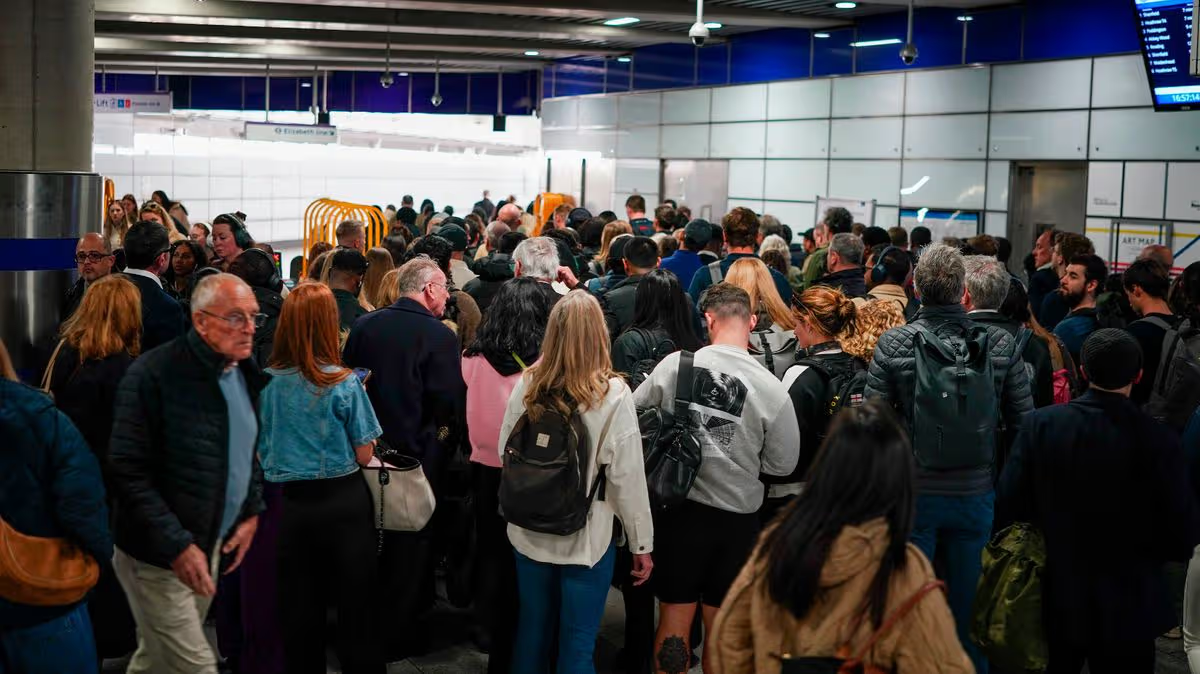
The persistent rhythm of London’s daily life is built upon the steady pulse of its Underground network. This coming spring, that essential pulse is set to be repeatedly disrupted by a series of planned Tube strikes, a prospect that carries a staggering economic price tag for the capital. According to a sobering analysis provided to City AM by the Centre for Economics and Business Research (Cebr), this ongoing industrial action could drain London’s economy of as much as £760 million in total. This figure lays bare the profound and far-reaching implications of transport paralysis in one of the world’s leading financial and cultural hubs.
The analysis from the Cebr quantifies the direct costs that will accumulate from strikes scheduled across several Transport for London lines this week, and then again in May and June. Their estimated range is vast and cautionary, sitting between £360 million on the lower end and the daunting ceiling of £760 million altogether. This “direct cost” represents more than just lost ticket revenue for TfL; it is a measure of the immediate economic paralysis. It encompasses the value of lost working hours as millions struggle to get to offices, shops, and construction sites, the cancelled meetings and delayed projects in the Square Mile, and the severe drop in footfall for retail and hospitality businesses that rely on the steady flow of commuters and tourists.
Beyond these immediate, calculable losses, the human cost of the disruption paints a picture of a city under strain. Londoners from all walks of life will face lengthened, more expensive, and deeply stressful commutes, forced to crowd onto replacement buses, navigate overwhelmed rail services, or resort to costly taxi rides. For many in low-paid or hourly-wage jobs, an inability to reach their workplace can mean a direct and painful loss of income for that day. The strain extends to family logistics, with parents late for school pickups, and to personal wellbeing, as already-long workdays are extended by hours of exhausting travel. The collective frustration and fatigue erode the city’s social fabric and quality of life.
The economic reverberations extend into the vital tourism and hospitality sectors, which are still recovering from past challenges. Visitors confronted with headlines about transport chaos may reconsider their plans, while those who do come face a fractured experience of the city. Missed theatre bookings, deserted restaurants, and empty hotel lobbies on strike days translate into lost revenue for businesses operating on thin margins. This damage to London’s global reputation as an accessible, smoothly functioning world city could have lingering effects, potentially influencing future conference bookings and leisure travel decisions long after the strikes have ended.
While the headline figure of £760 million is a powerful symbol of potential loss, it is crucial to remember what underpins this industrial action. The strikes are not an arbitrary disruption but a symptom of deeper disputes over issues like working conditions, pensions, and job security following the financial pressures on TfL. From the perspective of the rail workers and unions, these walkouts are a last resort to protect their livelihoods and the long-term safety and integrity of the transport network itself. This creates a painful dilemma, pitting the immediate economic health of the city against the rights and futures of those who keep it moving every day.
In conclusion, the planned Tube strikes represent more than a temporary travel inconvenience; they are a significant economic event with a multi-million-pound impact. The Cebr’s analysis, forecasting a total cost of up to £760 million, frames the strikes as a severe blow to productivity, commerce, and the daily lives of millions. As London braces for these disruptions, the situation underscores a critical tension: the vital infrastructure that powers a modern metropolis is only as resilient as the agreement between those who manage it and those who operate it on the front lines. Finding a resolution is therefore imperative, not merely to restore train services, but to heal the broader economic and social wounds that each day of strike action will inevitably inflict.