



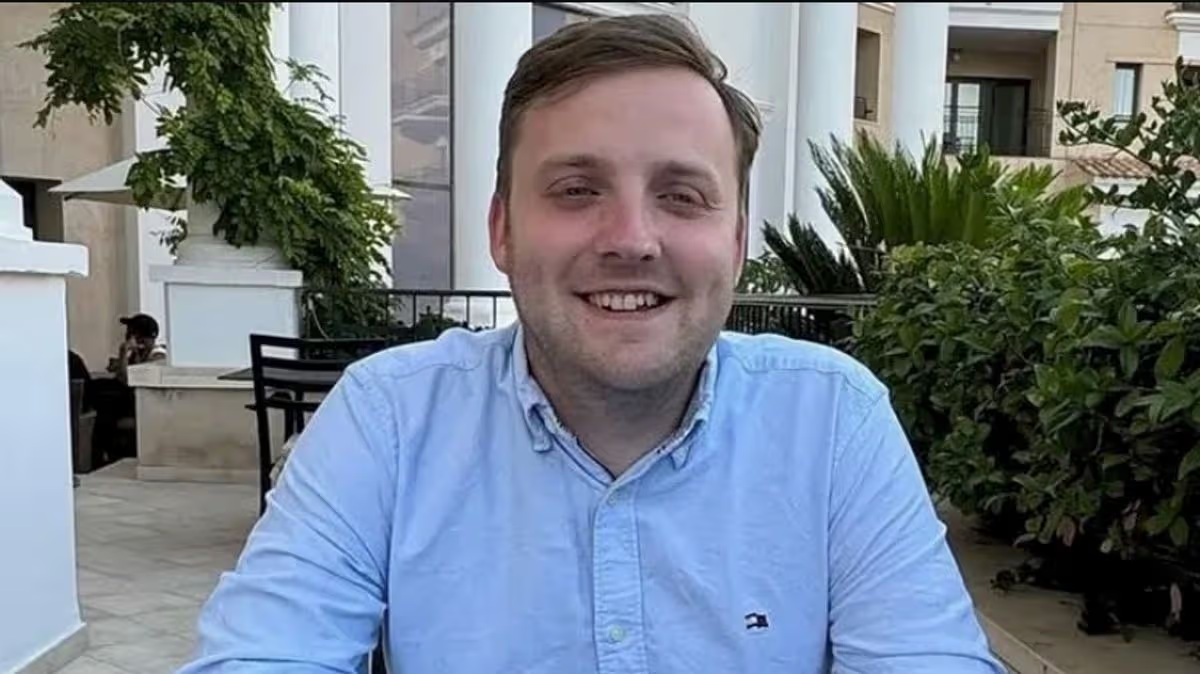
The tragic and untimely death of thirty-year-old Joshua Haines in his Leeds home is a story of a promising life cut short and a harrowing sequence of missed opportunities within the healthcare system. In March of 2025, Mr. Haines, a surveyor described by his family as a “rising star” with “exceptional ability,” began experiencing severe and worsening symptoms, including relentless vomiting, profound dehydration, and slurred speech. With no prior history of illness, he intuitively feared something was gravely wrong, specifically suspecting he might have developed diabetes. Over the course of a single day, March 16th, he made three separate telephone calls to his GP’s Extended Access service, desperately seeking help and voicing his specific concerns. Despite his clear articulation of alarming symptoms, the medical response he received was fatally inadequate, setting in motion a chain of failures that would culminate in his death just three days later.
During those critical calls, the GP, Dr. Saleh Majid, assessed Mr. Haines remotely. While Dr. Majid later acknowledged that diabetes had been considered as a possibility, he primarily attributed the symptoms to a severe stomach bug. Crucially, he advised Mr. Haines to contact the NHS non-emergency 111 line rather than recommending an immediate face-to-face assessment or advising him to call 999 for an ambulance. This advice represented the first critical missed opportunity. An inquest into Joshua’s death would later hear expert testimony that, had his symptoms been properly conveyed to emergency services, he would have been classified as a Category 2 emergency, warranting an ambulance response within approximately 40 minutes. A senior paramedic further stated that attending crews would almost certainly have recognized the life-threatening condition and begun emergency treatment en route to the hospital.
The condition that took Joshua Haines’s life was diabetic ketoacidosis (DKA), a catastrophic complication of undiagnosed Type 1 diabetes. DKA occurs when the body, starved of insulin, begins breaking down fat at an alarming rate, poisoning the bloodstream with acidic ketones. It is a medical emergency that requires immediate hospitalization for intravenous fluids and insulin. The inquest heard that this condition can develop “out of the blue,” as it did in Joshua’s case, and that the “red flags” in his presentation were missed. Dr. Majid himself conceded in court that, upon reflection, he could have acted differently, stating he did not “envisage it being at a life-threatening stage” during their calls. This tragic case underscores the peril of attempting to assess acute, escalating symptoms without a physical examination, especially when a patient explicitly voices fears about a specific, dangerous illness.
The coroner, Assistant Coroner Naomi McLoughlin, formally identified several systemic failures in the conclusion of the inquest. She cited the lack of a face-to-face appointment and the failure to escalate Joshua’s case to emergency services as significant “missed opportunities” to secure him the urgent medical help he so clearly needed. While she recorded that Joshua died from diabetic ketoacidosis between March 16 and 19, she stated she could not definitively conclude that these missed opportunities directly caused his death. Nonetheless, the narrative painted a clear picture of a breakdown in care. The family’s legal representative, Peter Skelton, argued powerfully that there had been “very serious failures of care with the most extreme of consequences: the needless death of a young patient.”
For Joshua’s grieving family, led by his devastated sister Jessica Parker, the inquest’s findings were a source of profound disappointment amidst their overwhelming grief. Ms. Parker spoke of a heart torn apart by a loss she and her family view as entirely preventable. “We cannot understand how he could die so suddenly,” she said, emphasizing that their primary goal is to ensure no other family endures the same nightmare. The family questioned the competency of the care provided and urged the coroner to issue a Prevention of Future Deaths report, a tool meant to compel systemic changes to protect others. Their anguish is compounded by the knowledge that Joshua’s intuition about his own health was correct, yet the system he trusted failed to listen and act with the requisite urgency.
The death of Joshua Haines is more than a statistic; it is a sobering human story that exposes dangerous gaps in remote triage and the vital importance of heeding a patient’s own concerns. A young man, full of potential, correctly identified a lethal threat to his own life, but his cries for help were filtered through a protocol that underestimated his crisis. His story is a stark reminder of the irreplaceable value of in-person medical evaluation in acute situations and the catastrophic speed at which conditions like diabetic ketoacidosis can escalate. While the coroner did not directly link the failures to his death, the sequence of events leaves little doubt that a more robust and urgent response could have offered Joshua Haines a fighting chance, transforming this story from one of preventable tragedy into one of a life saved.