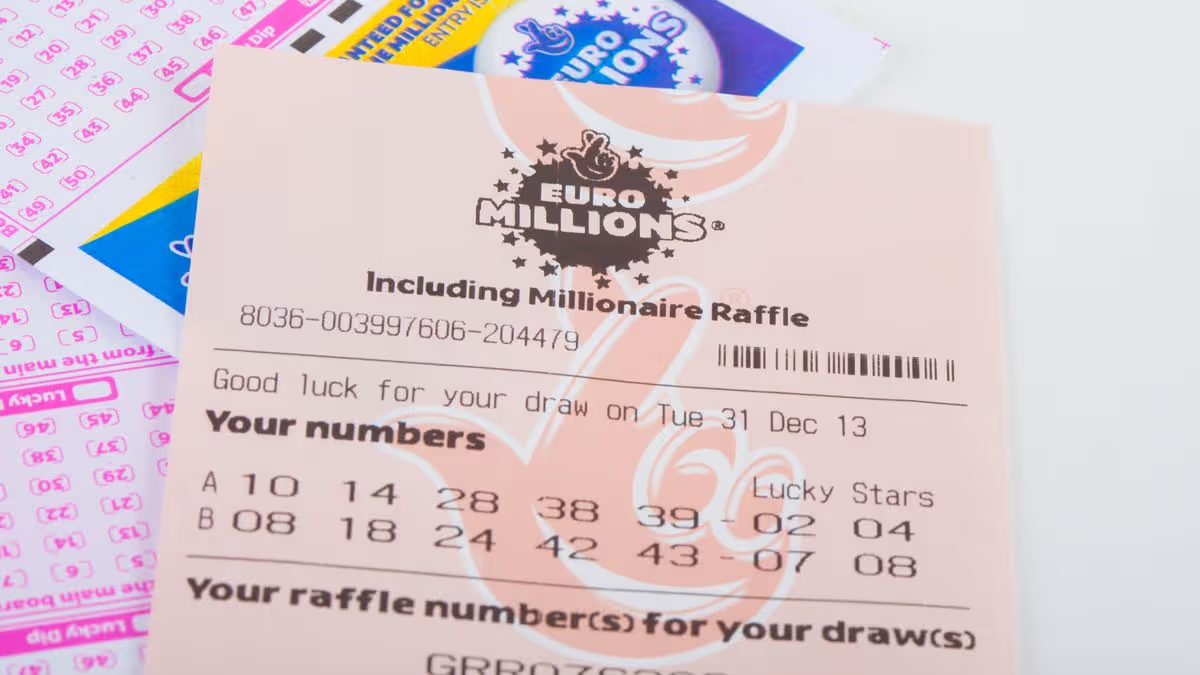



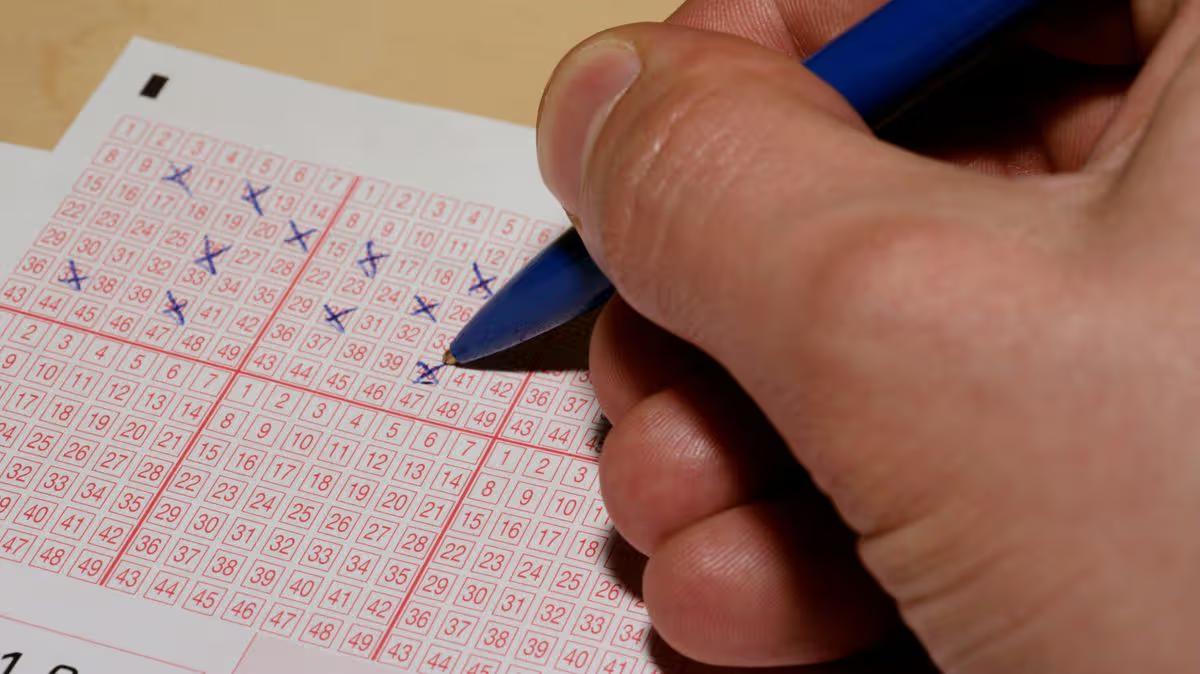
Imagine, for just a moment, holding a ticket worth £8.4 million. That’s the staggering dream on offer tonight, as the UK’s National Lottery Lotto draw prepares to spin its drums at 8pm. This isn’t just a small fortune; it’s a life-transforming sum that represents freedom, security, and possibilities beyond ordinary imagination. To capture this golden jackpot, a player’s ticket must perfectly align with all six main numbers drawn. Yet, the universe of possible combinations is vast, creating immense odds. Statistically, the chance of any single ticket claiming that top prize sits at approximately one in 45 million. To visualize that scale, you’re significantly more likely to be struck by lightning or become an astronaut. It’s a testament to the extraordinary rarity of the jackpot win, a once-in-a-lifetime event that, against all probability, happens to someone.
Shortly after the Lotto numbers settle, at 8:15pm, the stage shifts to the Thunderball draw. Here, the top prize is a formidable £500,000—a sum that could clear mortgages, fund dreams, or provide a colossal financial cushion. The winning formula is slightly different: to bag this half-million-pound prize, a player must match all five main numbers plus the special Thunderball. The odds, while still profoundly long, are considerably more favorable than the Lotto jackpot, standing at one in just over 8 million. This difference makes the Thunderball a compelling alternative for many, offering a slightly more accessible shot at a life-changing sum, all within the same thrilling evening of anticipation.
Beyond these headline-grabbing top prizes, both games are built on a foundation of smaller, more frequent wins that keep the dream alive for millions. In the Thunderball draw, for instance, there’s a whole spectrum of prizes ranging from a still-significant £5,000 down to a handy £3. Crucially, the overall odds of winning something in each Thunderball draw are dramatically better: one in 13. This means that on any given draw night, a substantial portion of players will experience the genuine joy of a win, however modest. These smaller victories fuel the community spirit of the game, providing little bursts of excitement and the tangible proof that winning is possible, creating a shared experience that goes beyond the solitary dream of the jackpot.
What makes tonight particularly compelling is the dual opportunity. Within a span of just fifteen minutes, participants have two distinct shots at fortune. The Lotto offers the ultimate, multi-million-pound fantasy, while the Thunderball presents a more concentrated chance at a massive half-million. This one-two punch of draws caters to different hopes and risk appetites. For some, the astronomical Lotto jackpot is the only dream worth chasing. For others, the better odds and still life-altering prize of the Thunderball are the main attraction. This strategic scheduling turns a simple Wednesday night into a mini-event, a shared national moment of collective ‘what if?’
It’s essential to remember the human element behind these numbers and draws. Every ticket purchased represents a story—a person allowing themselves a few minutes of hopeful escapism. It might be a couple discussing what they’d do with a windfall over a cup of tea, a syndicate in an office sharing the cost and the camaraderie, or an individual treating themselves to a dream for the price of a coffee. The draws themselves, broadcast live, become a point of connection. Even for those who don’t play, the announced jackpot figure becomes a conversational staple, a shared cultural reference point pondering universal questions of luck, fate, and desire.
As the clock ticks toward 8pm, that potent mix of statistics and sentiment hangs in the air. Yes, the odds are long, mathematically bordering on the impossible. But the heart of the lottery has never been pure logic; it’s about the permission to hope. For the cost of a ticket, you buy a legitimate ticket to dream vividly and specifically for a short while. Tonight, someone’s random set of numbers will defy odds of one in 45 million or one in 8 million. That person is almost certainly not expecting it, which is what makes the potential so magical. So, as the draws approach, it’s less about probable outcome and more about universal potential—the enduring, human belief that maybe, just maybe, tonight the stars will align.