

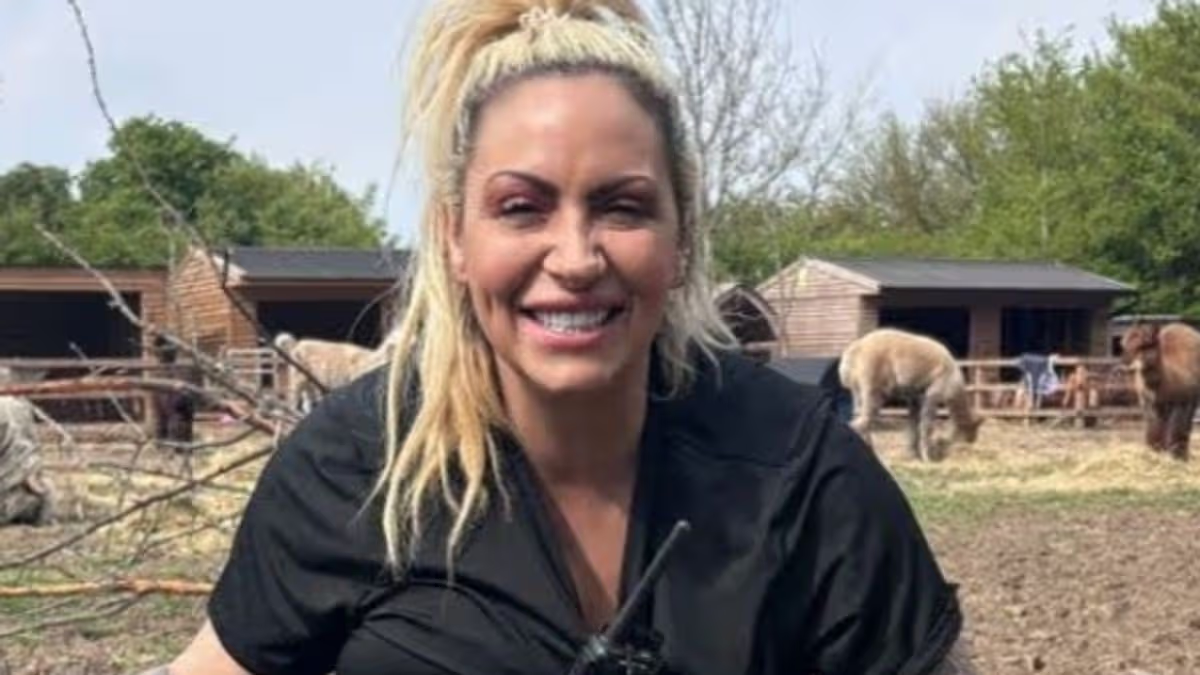
Jodie Marsh, once best known as a glamour model and a staple of British tabloids and reality television, has forged an entirely new path in recent years as the dedicated founder of an animal rescue sanctuary. Her Fripps Farm in Essex, established in 2020 on 3.5 acres of land, has become a haven for a diverse array of creatures, from alpacas and emus to reptiles. However, Marsh’s journey as an animal rescuer has been fraught with significant legal and bureaucratic challenges, culminating in a hard-fought victory this year. After a protracted court battle with the Uttlesford District Council, which initially refused her a wild animal licence, Marsh successfully appealed the decision. This pivotal win in June paved the way for her most recent achievement: the official granting of a primate licence, allowing her to legally house and care for twelve marmoset monkeys at her sanctuary.
The new licence, effective from April 2024 until 2029, was granted under the recently enacted Animal Welfare (Primate Licences) (England) Regulations 2024. This legislation represents a major shift, introducing a stringent licensing regime designed to protect the welfare of primates kept in domestic settings across England. Marsh has been vocal about the importance of these new rules, describing the standards as “higher than zoo standards.” Her relief and joy at securing the licence were palpable; she told the BBC she was “elated” and “completely over the moon,” noting that she had been confident because the sanctuary had “done everything correctly.” For Marsh, this licence is not merely a permit but a critical tool for animal welfare, enabling her to provide a refuge for monkeys in need.
Marsh’s motivation stems from a pressing concern about the consequences of the new law. She fears that many private owners of small primates, such as marmosets, will be unable to meet the rigorous new requirements, potentially leading to thousands of animals being abandoned, put down, or left in inadequate conditions. She sees her licensed sanctuary as a vital safety net. “It is so crucial that those of us who can, do have the licence, so we can rescue more if needed,” she explained. This perspective frames her legal battle not as a personal pursuit, but as a necessary effort to expand the network of qualified rescue facilities ahead of a potential crisis. Her mission has transformed from a personal passion project into a structured response to a national animal welfare issue.
However, Marsh’s work with animals continues to exist alongside the intense public scrutiny that has followed her for decades. Her transition from the glamour of celebrity to the mud-and-straw reality of running a farm sanctuary is a narrative that fascinates the media. Furthermore, her sanctuary has recently been the backdrop for a separate legal matter. Last week, Marsh appeared at Chelmsford Magistrates’ Court, where she denied charges of assault and using threatening and abusive words against a man and a woman during an alleged incident at the farm in January. She was bailed and is set to face trial in May of next year. This case introduces a complex and unrelated layer to her public story, one that exists in parallel to her animal welfare advocacy.
Despite these personal legal challenges, the significance of her primate licence stands as a separate and substantial professional accomplishment. It underscores a determined, years-long effort to legitimize her rescue operations to the highest official standard. The journey has required significant investment, both emotional and financial—Marsh has been open about using funds from her presence on the subscription platform OnlyFans to support the farm. This blend of modern entrepreneurship and compassionate care highlights the unconventional yet determined path she has carved.
Ultimately, Jodie Marsh’s story is one of reinvention and resolve. From television personality to a licensed animal rescuer navigating complex new regulations, she has committed to using her platform and resources to address a specific and growing need in animal welfare. While her public persona remains multifaceted, the granting of the primate licence marks a definitive victory in her goal to establish Fripps Farm as a credible, essential sanctuary. It ensures that for the next five years, her doors are officially open to some of the most vulnerable and complex creatures in the rescue world, fulfilling a promise that extends far beyond the headlines.