




Based on the provided content, here is a humanized summary structured into six paragraphs, expanding the key points to meet the requested length while maintaining clarity and a natural narrative flow.
Paragraph 1: Introduction and Context
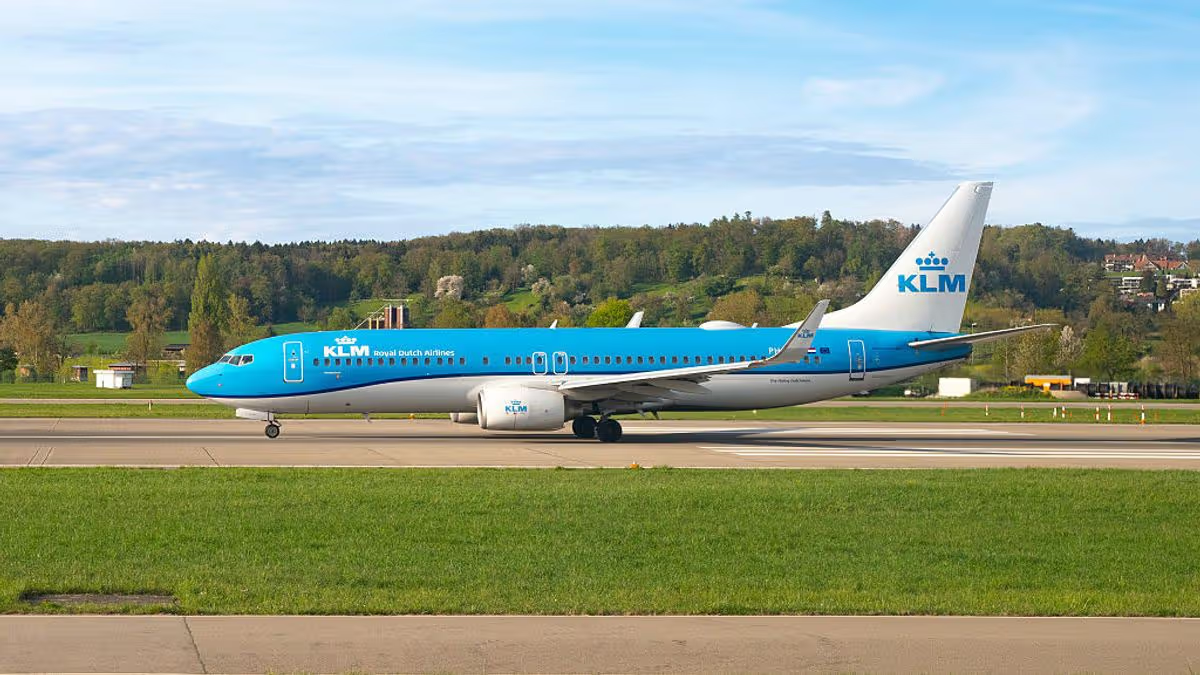
In response to growing global economic pressures stemming from ongoing conflicts in the Middle East, Dutch airline KLM has proactively adjusted its flight schedule for the upcoming month. This decision comes amidst broader industry concerns regarding jet fuel availability and pricing across Europe. While KLM has clarified that there is no immediate physical shortage of kerosene (jet fuel), the airline is facing significant financial strain due to skyrocketing fuel costs. These adjustments are a direct, pragmatic response to ensure the company’s operational sustainability in a volatile market, rather than an emergency measure due to a lack of supply.
Paragraph 2: Specifics of KLM’s Operational Changes
The changes implemented by KLM are precise and measured. The airline will operate 80 fewer return flights to and from its hub at Amsterdam Schiphol Airport. While this number may sound substantial, KLM emphasizes that it represents less than 1% of its total European flights during the affected period. The cuts are strategically targeted at routes within Europe that have become financially unviable under current fuel prices. Importantly, these are destinations with high-frequency service, such as London and Düsseldorf, where KLM offers multiple flights daily. This frequency allows for greater flexibility in managing the reduced schedule and rebooking affected passengers.
Paragraph 3: Passenger Rebooking and Assurance
KLM has placed a strong emphasis on minimizing disruption for its customers. The airline has stated that all passengers impacted by these flight cancellations will be automatically rebooked onto the next available flight. Given that the affected routes are served multiple times a day, most travellers can expect to be accommodated on a flight shortly after their originally scheduled departure. Furthermore, KLM is looking ahead to the busy May holiday period, assuring the public that these targeted cuts are part of a strategy to ensure stability and reliability for the vast majority of holiday travellers, allowing them to reach their destinations as planned without wider system-wide disruption.
Paragraph 4: The Wider Industry and Political Landscape
KLM’s operational adjustments reflect a caution echoed at higher levels of global energy and political analysis. Last week, Fatih Birol, the Executive Director of the International Energy Agency (IEA), publicly warned that continued restrictions on oil supplies linked to the Middle East conflict could lead to broader flight cancellations “soon.” This statement underscores that KLM’s moves are not isolated but are a response to industry-wide pressures. The situation highlights the deep interconnection between geopolitical stability, energy markets, and global transportation networks.
Paragraph 5: The UK Government’s Response and Contingency Planning
The ripple effects of the conflict have prompted governmental action beyond corporate adjustments. In the UK, Prime Minister Rishi Sunak convened a meeting of the Middle East Response Committee to address the pressures felt domestically. A government spokesperson confirmed the discussion focused on diplomatic and military efforts to restore regional stability, as well as concrete contingency planning to protect UK interests. This planning includes collaborative work with fuel suppliers, airlines, and international partners to “ensure people keep moving and businesses are supported.” The spokesperson noted that UK airlines are currently not experiencing a jet fuel shortage, but stressed the importance of ongoing vigilance and preparedness.
Paragraph 6: Long-Term Resilience and Conclusion
The overarching theme emerging from KLM’s schedule cuts and the governmental meetings is one of proactive risk management and building long-term resilience. The UK government explicitly linked the immediate contingency planning for transport fuels to wider economic measures aimed at shielding families and businesses from volatile energy prices. Similarly, KLM’s targeted flight reductions are a calibrated business decision to navigate short-term economic shocks while preserving its core network integrity. Together, these actions illustrate a multi-layered response to a complex crisis: airlines are making immediate, tactical operational changes to remain financially viable, while governments are engaging in strategic diplomacy and planning to mitigate broader economic impacts and strengthen systemic resilience for the future. The situation remains fluid, but the current approach is focused on managed adaptation rather than crisis reaction.