



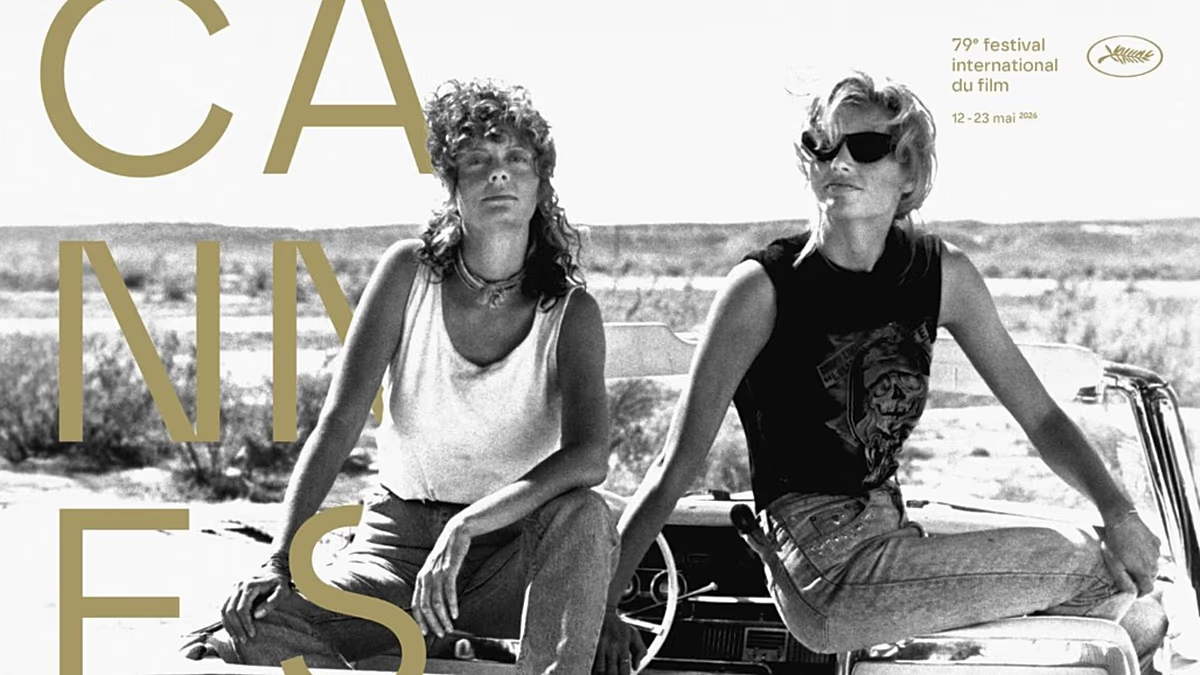
The Cannes Film Festival’s Poetic Poster Tradition
The Cannes Film Festival is renowned not just for its premieres and red carpets, but for its eloquent visual voice: the official poster. Each year, this image becomes the face of the festival, plastered across the Croisette, adorning press materials, and setting the tone for the cinematic celebration. Rather than opting for abstract designs or contemporary graphics, Cannes has cultivated a deeply thoughtful tradition. It selects iconic moments from beloved, cult films, using them as a canvas to pay tribute to cinema’s rich history. This practice is more than mere decoration; it is a form of tender homage, a way for the festival to pause and reflect on the artistic legacy that forms its foundation. It connects the glamour and buzz of the present event to the enduring power of past stories, creating a poignant bridge between generations of film lovers.
A Feminist Icon Takes Center Stage in 2026
For its 79th edition in 2026, the festival has chosen an image that resonates with profound cultural significance. The new poster features a photograph by Roland Neveu from Ridley Scott’s 1991 landmark film, Thelma & Louise. It captures the film’s stars, Susan Sarandon and Geena Davis, standing triumphantly atop their turquoise 1966 Ford Thunderbird Convertible, a moment of defiance and liberation frozen in time. This choice is particularly meaningful because Thelma & Louise itself premiered at Cannes on May 20, 1991, creating a perfect circularity of history—honoring a film that the festival first introduced to the world. By elevating this image, Cannes is doing more than recalling a hit movie; it is reaffirming its own role in launching a work that would become a defining part of cinematic and social discourse.
Honoring a Legacy of Freedom and Friendship
The festival organizers explicitly praised the film for its revolutionary spirit. In their statement, they highlighted how Thelma & Louise “broke gender roles and challenged film conventions,” noting that its message maintains powerful relevancy today. They celebrated the characters as “two unforgettable fighters” who “turned the tables and shattered a few gender stereotypes, both societal and cinematic.” More than just a story of escape, the film was hailed as an embodiment of “absolute freedom and unwavering friendship,” showing “the way to emancipation when it becomes vital.” This official recognition frames the poster not as a nostalgic throwback, but as a conscious, living commentary. The festival’s words underscore that remembering this story means “celebrating the road already covered, without overlooking what still remains ahead.” It is an acknowledgment of progress and a sober reminder of the ongoing journey toward equality.
The Film’s Impact and Enduring Resonance
Thelma & Louise was far more than a critical darling at Cannes; it became a cultural phenomenon. Upon its release, it was a major box office success and a awards season powerhouse, earning six Academy Award nominations, including Best Actress for both Sarandon and Davis. It won the Oscar for Best Original Screenplay for Callie Khouri’s groundbreaking script. The film’s impact, however, transcended trophies. It ignited conversations about female agency, friendship, and resistance against patriarchal constraints, debates that continue to echo in today’s social landscape. By choosing this poster, Cannes taps into that enduring resonance. The image of Thelma and Louise on their car is not simply a scene from a movie; it has become a universal symbol of rebellion, solidarity, and the pursuit of self-determination, making it a profoundly fitting emblem for a festival dedicated to artistic expression.
The 2026 Festival Context and Broader Celebration
The 2026 Cannes Film Festival will run from May 12 to 23, with celebrated South Korean director Park Chan-wook presiding as the head of the jury—a choice that signals the festival’s commitment to global and visionary cinematic voices. The opening film will be Pierre Salvadori’s The Electric Kiss. Within this contemporary framework, the Thelma & Louise poster serves as a grounding and inspiring anchor. It reminds attendees and the world that amidst the new discoveries and future-facing discussions, cinema’s history provides both context and inspiration. The poster ensures that the spirit of a film that challenged norms and celebrated female friendship will literally oversee the festival, from the palm-lined boulevards to the grand steps of the Palais.
Conclusion: A Poster as a Statement and a Beacon
In essence, the Cannes Film Festival’s 2026 poster is a masterful synthesis of art, history, and social statement. It leverages the festival’s established tradition of homage to make a deliberate and powerful point. By resurrecting the defiant image of Thelma and Louise, Cannes does not just decorate its event; it actively participates in the cultural conversation. The poster becomes a beacon, celebrating a seminal feminist road movie while implicitly encouraging the continued exploration of bold, unconventional stories within the festival’s own lineup. It is a reminder that cinema, at its best, is both a mirror and a catalyst for change, and that the stories we celebrate from the past can light the way for the stories we need to tell in the future.