


Aldeas: A Cinematic Testament to Pope Francis’s Vision
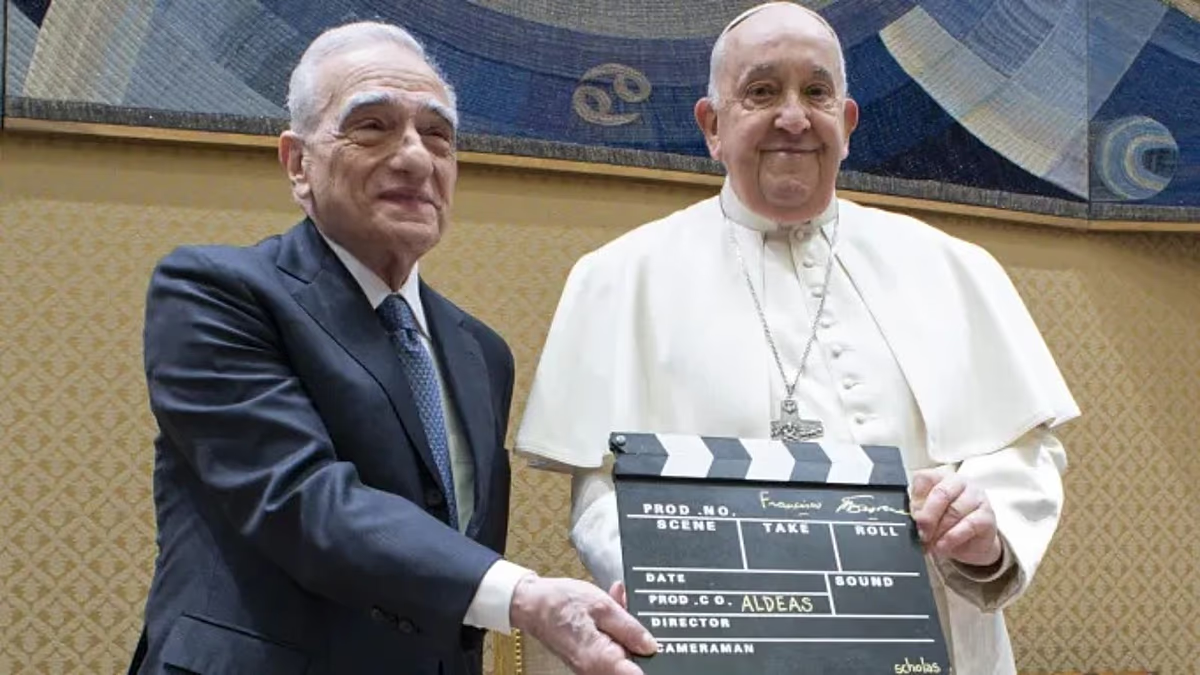
In a poignant tribute marking the first anniversary of Pope Francis’s passing, a unique cinematic project, overseen by the legendary filmmaker Martin Scorsese, will premiere today at the Vatican. The film, titled Aldeas, The Final Dream of Pope Francis, represents the late Pontiff’s final recorded testimony, captured shortly before his death. This world premiere, organized by the educational movement Scholas Occurrentes which Francis himself founded, transforms the Vatican into not just a spiritual sanctuary but a cultural one, honoring a leader who believed deeply in the power of art and encounter. The project was filmed across a tapestry of global locations—from Italy and Vatican City to Indonesia and The Gambia—mirroring Francis’s own universal outreach, his insistence that the Church must speak to and from every corner of the human experience.
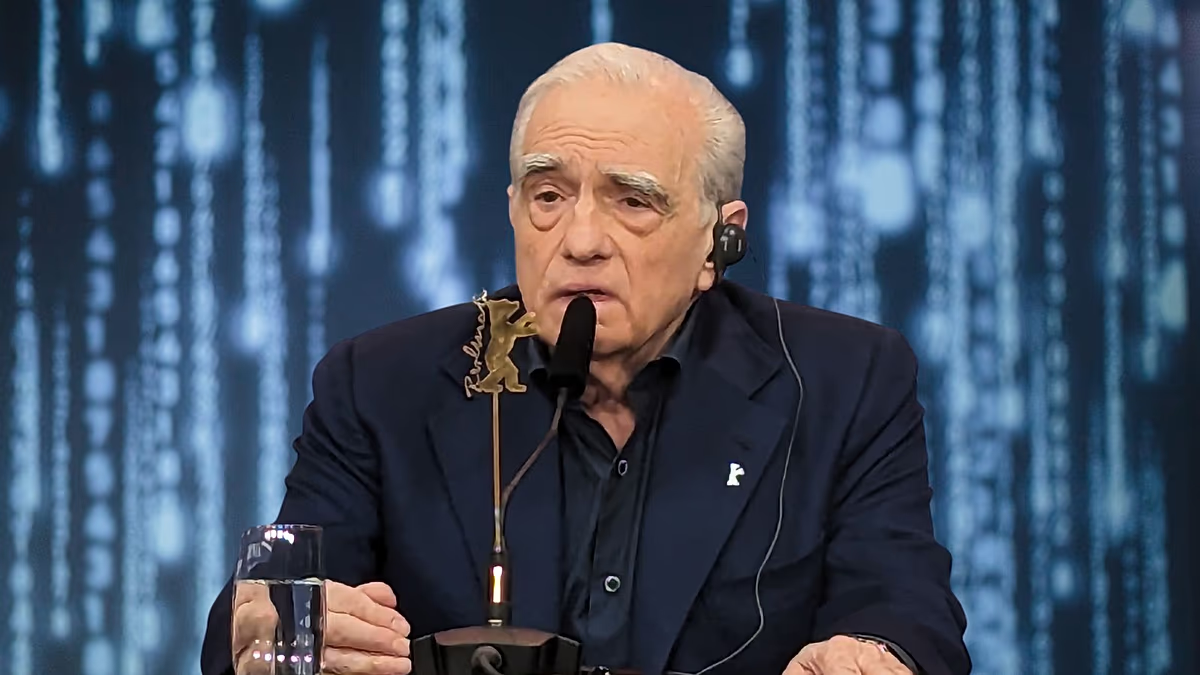
The film is far more than a documentary; it is, as Pope Francis described it, “an extraordinarily poetic and deeply transformative project.” He entrusted its realization to Scorsese, seeing in cinema a vital tool to reach “the very root of human life: our sociability, our conflicts, and the very essence of life’s journey.” Scorsese, reflecting one year after the Pope’s death, understood this mandate perfectly. He stated that Francis saw cinema’s fundamental role in making “the culture of encounter a reality.” For Scorsese, this film is a tribute that honors Francis’s memory by embodying the spirit of his entire ministry—a dream of fostering a more compassionate, more human global culture. In Scorsese’s view, such a dream is not merely aspirational but a profound necessity for our fractured modern world.
However, this solemn cultural moment unfolds against a backdrop of stark contemporary political and religious discord, highlighting how far the world remains from the “culture of encounter” Francis championed. The premiere coincides with a heated public dispute between the current Pope, Leo XIV—the first U.S.-born Pontiff—and former President Donald Trump. The conflict erupted after Pope Leo XIV called Trump’s threat that “a whole civilization will die,” referring to Iran, “truly unacceptable.” Trump responded by attacking the Pope as “WEAK on Crime, and terrible for Foreign Policy,” refusing to apologize. The controversy deepened when Trump briefly posted an AI-generated image of himself depicted as Jesus, a move widely condemned as blasphemous and provocative. U.S. Vice President JD Vance, a Catholic convert, further injected himself into the fray, cautioning the Pope on matters of theology.
Pope Leo XIV’s response to this political storm has been one of deliberate detachment, stating it was “not in my interest at all” to debate Trump about war. This stance itself is telling, perhaps reflecting a different papal approach compared to his predecessor’s emphasis on direct engagement and dialogue. The contrast casts the premiere of Aldeas in a sharper light. The film emerges not just as a memorial but as a symbolic counterpoint—a project dedicated to universal human connection, released amidst a climate of division, where even the office of the Pope is subject to political attack and the lines between faith, power, and identity are fiercely contested.
The artistic team behind Aldeas brings together diverse talents to realize this complex vision. Directed by Clare Tavernor and Johnny Shipley and produced by Aldeas Scholas Films in association with Scorsese’s Sikelia Productions and Massive Owl Productions, the project bridges the worlds of faith, education, and high-caliber filmmaking. The sales are handled by LBI Entertainment and Double Agent, with a principled financial model: all proceeds will be reinvested into the Aldeas initiative itself. This ensures the project’s legacy is ongoing, funding the very educational and cultural work it portrays, making the film a living, sustainable embodiment of Pope Francis’s dream rather than a static monument.
In essence, Aldeas, The Final Dream of Pope Francis is a multifaceted event. It is a sacred farewell, containing the last words of a globally influential spiritual leader. It is a work of art, crafted under the guidance of one of cinema’s great masters to explore the deepest questions of human community. It is also a statement of resilience, premiering in a world where the values it espouses—encounter, dialogue, shared humanity—are under visible strain. As the film is unveiled in the intimate setting of the Vatican, it invites viewers to look beyond the noise of current conflicts and remember a persistent vision: that our shared journey, with all its conflicts and connections, is a story worth telling, worth honoring, and worth continuing to build, with both poetry and purpose.