



Paragraph 1
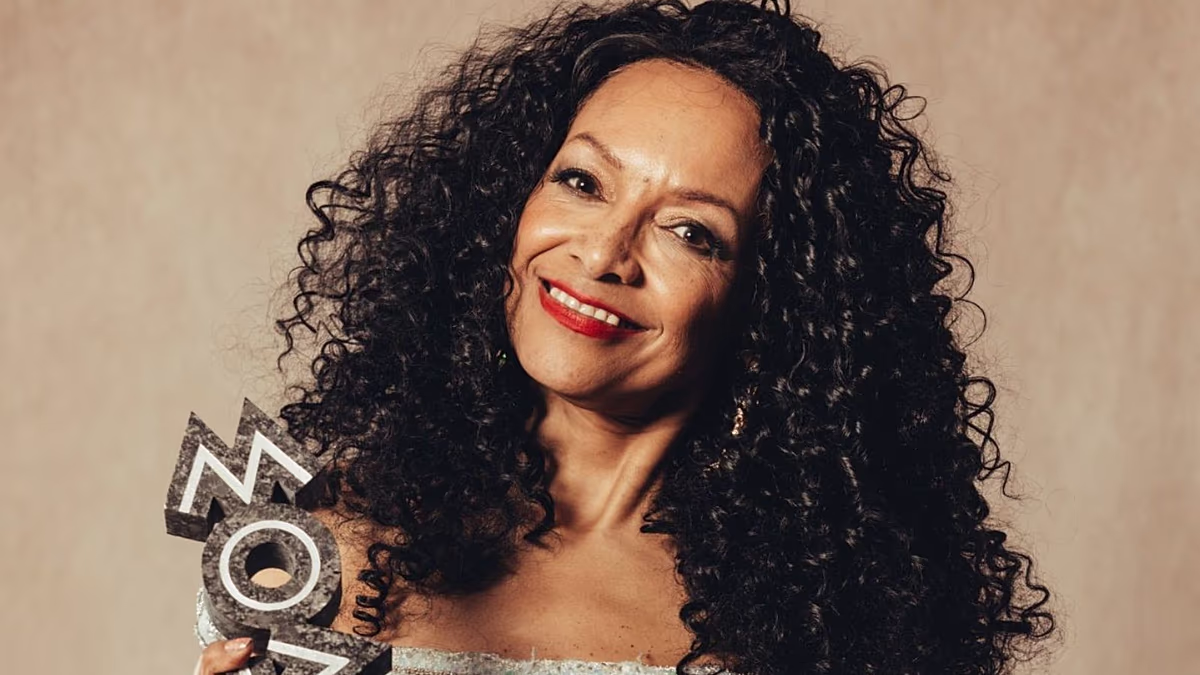
The world of music and culture is in mourning following the announcement from the MOBO Organisation that its visionary founder and CEO, Kanya King CBE, has passed away at the age of 57. The news, shared on June 5th, 2026, confirmed she died peacefully on June 3rd after a determined and courageous two-year battle with colon cancer. King was the indefatigable force who, in 1996, created the MOBO Awards—Music of Black Origin—to carve out a vital and celebratory space for Black British artists. Her passing marks the end of an era for an industry she fundamentally reshaped, leaving behind a legacy that stretches from the streets of London to global stages, having transformed a personal vision into a cultural institution.
Paragraph 2
Kanya King’s story is one of extraordinary defiance and unwavering belief. As a single mother from a council estate in Kilburn, London, she faced a wall of scepticism from an industry that dismissed Black music as a niche concern with no market. Rather than accepting these limitations, she built her own table. With relentless drive, she orchestrated the first MOBO Awards just six weeks after conceiving the idea, broadcasting it to the nation and irrevocably changing the landscape. She didn’t just create another awards show; she built a platform of legitimacy and amplification for genres and artists who were systematically overlooked, proving that the appetite for this music was not only real but monumental.
Paragraph 3
The impact of the MOBOs under King’s stewardship is immeasurable, serving as a crucial launchpad and recognition point for generations of talent. From its early days celebrating pioneers like Goldie, Gabrielle, and Ms. Dynamite, the awards grew to spotlight and champion the artists who would define British music for decades. The list of those whose careers were bolstered by the MOBO stage reads like a who’s who of contemporary music: the groundbreaking Stormzy, the profound lyricism of Little Simz, the soul of Craig David, the raw energy of Grime, the global pop sensation that was Amy Winehouse, and current stars like RAYE and Central Cee. King’s platform ensured that excellence in Black music was not a subcategory but a central, celebrated pillar of the UK’s cultural identity.
Paragraph 4
In the wake of her passing, an outpouring of grief and profound gratitude has flooded in from across the entertainment world and political sphere, each tribute echoing the theme of her pioneering spirit. London Mayor Sadiq Khan called her “a true pioneer” who “changed the face of culture and music,” while Culture Secretary Lisa Nandy affirmed she “changed British music for the better.” From artists, the messages were deeply personal. Stormzy conveyed his sorrow with simple, powerful emojis. Alesha Dixon honoured her as an “incredible woman” with “immeasurable” impact. Idris Elba, expressing heartbreak, wrote, “You inspired me. Your dedication is unmatched.”
Paragraph 5
The testimonials highlight that King’s legacy extends far beyond trophies and television broadcasts. Oritsé Williams of JLS captured this sentiment perfectly, calling her a pioneer who “created a powerful platform that championed cultures, communities and talent that were often unseen and underrepresented.” He noted that her greatest gift was creating “belief. Belief in our culture, our creativity and our potential.” This was the core of her mission: to provide not just opportunity, but validation and pride. She forged a space where artists could see themselves reflected in glory, inspiring countless young people to believe that their stories and their sound mattered on the world’s biggest stages.
Paragraph 6
Kanya King’s journey from a determined single mother with a dream to a Commander of the Order of the British Empire is a testament to the power of cultural vision and relentless perseverance. She faced down industry gatekeepers, shattered ceilings, and built an enduring institution that reaches hundreds of millions worldwide. While her physical presence is gone, the rhythm of her impact continues in every artist who steps onto a MOBO stage, in every genre that now enjoys mainstream acclaim because she first insisted it deserved a spotlight. As the final tributes echo—”icon,” “visionary,” “fearless champion”—it is clear that Kanya King (1969-2026) did not just witness history; she authored it, and her symphony of change will resonate for generations to come.