



In the ever-shifting landscape of Donald Trump’s social media presence, the deployment of outlandish, AI-generated imagery has become a standard tactic. His Truth Social platform has served as a gallery for digital avatars that cast him as everything from a stoic cinematic soldier to a celestial figure, blurring the lines between self-mythology and meme-savvy political marketing. These images are crafted not merely for admiration, but as instruments of “memetic warfare,” designed to dominate the online conversation, energize his base, and bait his critics into reaction. This strategy has normalized a spectacle where the former president’s digital persona is perpetually superhuman, a figure seamlessly inserted into the iconography of American power and pop culture. Yet, a recent share attributed to him has cut through this predictable noise with a uniquely bizarre and ironically timed twist.
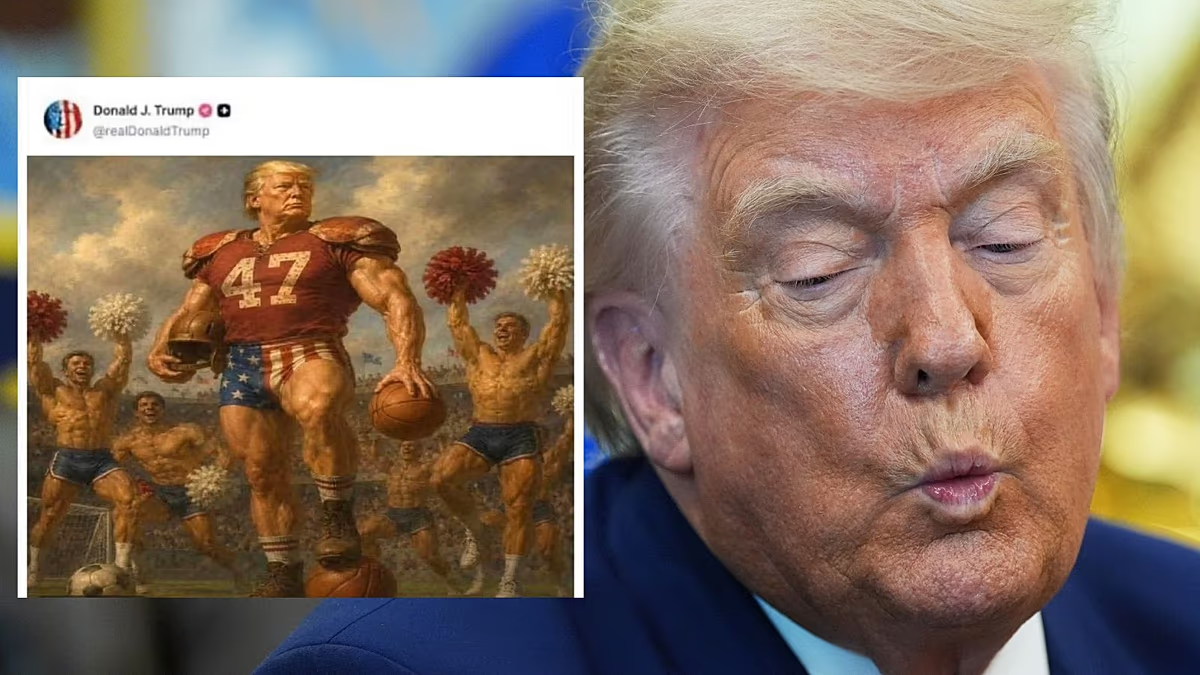
The image in question presents Trump in the style of a classic oil painting, but the subject is jarringly incongruous. He is depicted in intensely tight American football gear, complete with a “47” jersey, standing before a backdrop of shirtless, ecstatic male cheerleaders waving pompoms. The portrait leans heavily into exaggerated, almost comical hyper-masculinity, with a heavily muscular Trump holding not a football, but a basketball—an odd detail that only adds to its surreal quality. What has captivated observers, however, is the undeniable camp aesthetic and homoerotic subtext of the entire scene. The visual language—the posing, the attire, the adoring male entourage—evokes a style that is often embraced by and associated with LGBTQ+ culture, making its apparent origin from Trump profoundly dissonant.
This dissonance is amplified exponentially by its timing, as the image circulated at the onset of June, which is internationally recognized as Pride Month. The contrast could not be more stark. Trump’s political record and that of his administration have been marked by policies widely criticized as hostile to LGBTQ+ rights, from attempting to ban transgender individuals from military service to erasing LGBTQ+ references from federal resources. Historically, he has declined to issue official Pride Month proclamations. Therefore, an image so saturated with what many read as queer-coded flamboyance created a surreal cognitive clash. It prompted a wave of reactions that ranged from bewildered mockery to ironic celebration, with many online users humorously welcoming Trump to the Pride festivities.
The viral spread of the image, especially after reports it was removed from Truth Social, ignited a firestorm of commentary that highlighted this profound irony. Critics and observers were quick to juxtapose the portrait’s exuberant energy with the administration’s documented policy positions. Jokes and quips flooded social media, with figures like activist Rick Wilson simply stating “Happy Pride,” and tennis legend Martina Navratilova quipping, “Is he gay??? Roflmao!!!” The dominant sentiment online was not one of outrage, but of satirical reclamation—a collective highlighting of the absurd gap between the symbol and the reality. The image was treated less as a political statement and more as an unwitting, AI-produced piece of camp art that ironically celebrated the very community his political agenda has often marginalized.
Beneath the layers of irony and humor, this episode reveals a deeper vulnerability in the age of AI-driven political messaging. The technologies that allow for the creation of such compelling and shareable images operate without an inherent understanding of context, history, or cultural nuance. They can generate powerful symbols that are visually coherent but contextually chaotic. This creates a risk for the creator: a meme intended to project strength and virility can be effortlessly reinterpreted by the public as its opposite—a piece of inadvertent satire or even solidarity. The campaign’s control over its narrative slips when the imagery it sponsors is so richly layered that it escapes its intended framing and is repurposed by the audience in unpredictable ways.
Ultimately, this bizarre football portrait is more than a fleeting internet joke. It serves as a case study in the modern political spectacle, where digital avatars wrestle with tangible records, and AI-generated symbols can rebel against their creators’ intentions. It underscores how visual culture, especially that which is intentionally over-the-top, exists in a communal space where meaning is decided not by the poster, but by the people. In the end, the image that may have been meant to showcase a robust, patriotic leader was overwhelmingly received as a curiously timed, flamboyant oddity—a digital ghost that hauntingly reflected a Pride Month spirit its source has never officially acknowledged.