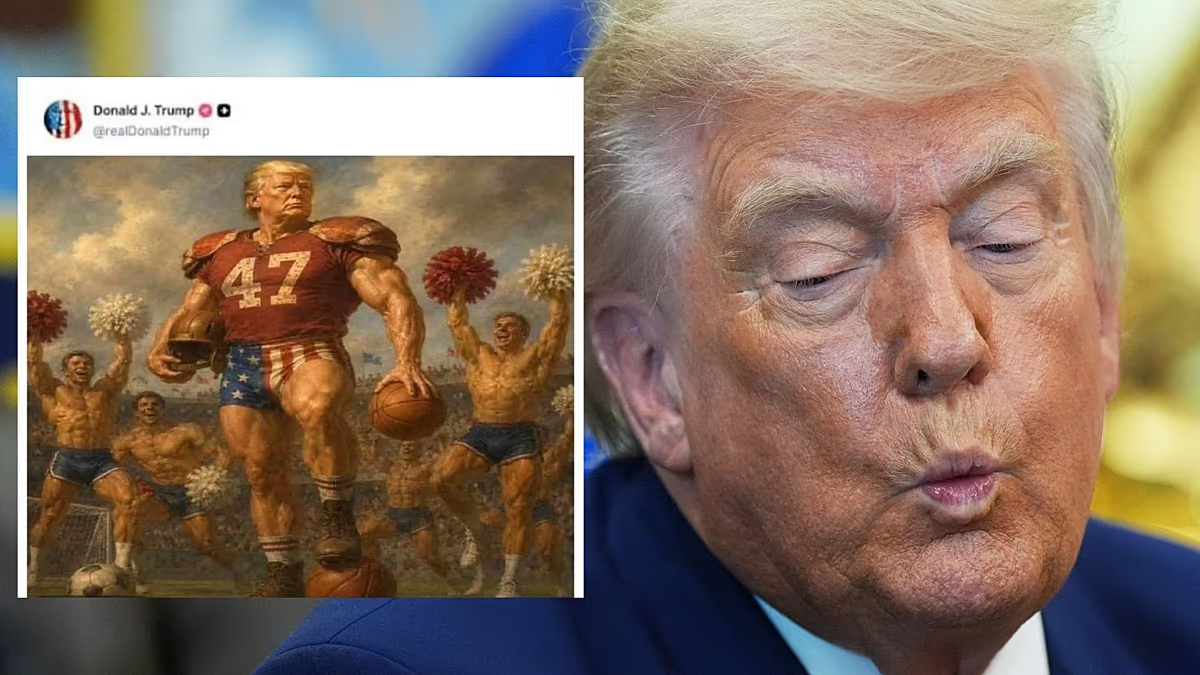


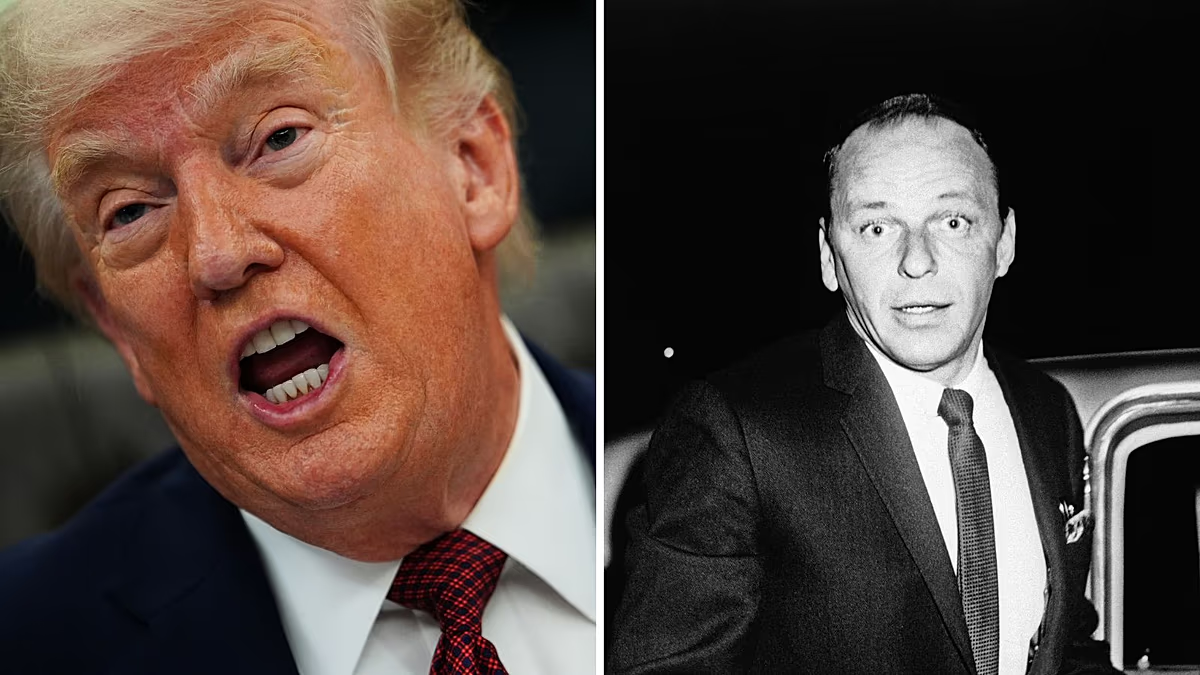
In the twilight hours of April 21, 2026, former President Donald Trump once again engaged his followers with a late-night post on his social media platform, Truth Social. This particular entry, devoid of any explanatory text or fiery commentary, consisted solely of a clip of Frank Sinatra performing his iconic anthem, ‘My Way’. The post, arriving amidst a period of heightened global tensions, immediately sparked a flurry of speculation and concern among observers. The choice of song, with its opening lines—“And now, the end is near / And so I face the final curtain”—seemed ominously poetic to some. Commentators like Harry Sisson wondered aloud if the post was a cryptic signal regarding escalating international crises, while others focused on the more mundane worry about an elderly man’s sleep schedule. The shared clip was, on its surface, a simple homage to a classic artist, yet in the hyper-charged atmosphere of Trump’s online presence, no gesture is ever interpreted as just that.
The response was not confined to political analysts. The post provoked a swift and pointed reaction from Nancy Sinatra, the daughter of the legendary singer. Taking to X, she denounced Trump’s use of the footage as “a sacrilege.” When asked by a user if any action could be taken, she explained that only the song’s publishers held such power. Furthermore, she echoed comments from fans asserting that her father, who passed away in 1998, harbored a personal disdain for Trump. This added a deeply personal layer to the controversy, framing Trump’s post not as a tribute, but as a violation. The incident underscored a recurring theme: Trump’s affinity for certain music is often starkly opposed by the artists themselves and their families, creating a cultural disconnect where his symbolic use clashes directly with the creators’ own values and wishes.
This episode is merely a single note in a long-running symphony of discord between Trump and the music industry. His political rallies have been accompanied by a soundtrack repeatedly rejected by the original artists. From rock legends like Neil Young, The Rolling Stones, and Tom Petty to pop icons such as Adele, Rihanna, and Céline Dion, a vast chorus of musicians has publicly demanded he stop using their work. These disputes often highlight a fundamental misinterpretation of the songs’ meanings. A prime example is Bruce Springsteen’s ‘Born in the U.S.A.’, which Trump deployed as a patriotic anthem despite its critical lyrics about the plight of Vietnam veterans. Similarly, R.E.M. expressed outrage at the use of their deeply introspective songs like ‘Everybody Hurts’ and ‘Losing My Religion’ in a rally context, feeling their art was being co-opted for a message antithetical to its spirit.
The conflict extends beyond subjective interpretation into the complex realm of legal rights and moral permissions. In one notable case, the estate of Leonard Cohen explicitly refused Trump permission to use ‘Hallelujah’ at the 2020 Republican National Convention. After the song was used anyway, the estate issued a statement condemning the action and sarcastically noting they might have considered approving his darker song, ‘You Want It Darker’. This scenario exposes the legal nuance at play: American politicians can often bypass direct artist approval by purchasing broad licensing packages from performing rights organizations, which grant access to vast catalogs for events. This system leaves artists feeling powerless, as their work can be legally used while ethically misappropriated. Their recourse is to request removal from these blanket license lists, a process that is often reactive and fails to prevent initial use.
This ongoing tension reveals a profound cultural schism. For Trump, music serves as a powerful tool for branding and emotional resonance, crafting an atmosphere of nostalgia, triumph, or defiance. His choice of ‘My Way’ perfectly encapsulates his preferred narrative of unwavering individualism and defiance of convention. For the artists and copyright holders, however, their work is an extension of their identity and worldview. Its unauthorized use in a political context they oppose feels like a violation of their artistic integrity and a corruption of their message. It becomes a battle over the ownership of meaning—who controls the narrative when a song leaves the studio and enters the political arena? The legal framework provides a battlefield, but the core conflict is about respect, association, and the soul of the art itself.
Ultimately, the late-night posting of Frank Sinatra is a microcosm of a larger, persistent dynamic. It blends the personal with the political, the legal with the ethical, and the symbolic with the literal. It highlights how Trump’s communication style—often cryptic, always provocative—invites maximal interpretation from both supporters and critics. Meanwhile, the forceful rebuttal from Nancy Sinatra and the historical record of her father’s opinions reinforce that cultural symbols are not neutral territory; they carry the weight of their creators’ legacies. This recurrent drama over campaign soundtrack choices is more than a minor dispute; it is a recurring clash over who gets to define our collective cultural moments, and a reminder that even in politics, the power of a song can resonate far beyond its melody.