


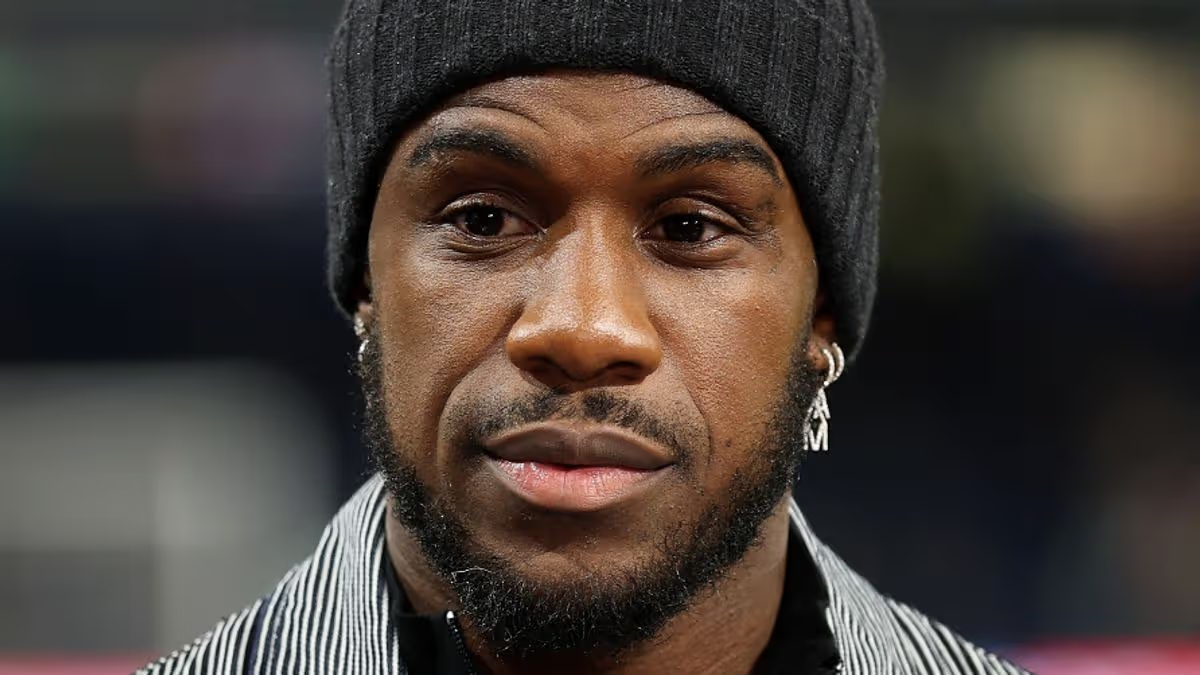
Of all the images that define the modern professional footballer, few are as potent as that of the supercar—a gleaming, low-slung symbol of speed, success, and a life lived in the fast lane. For Michail Antonio, the 36-year-old former West Ham United striker, this symbol has become a recurring motif in a troubling narrative, one that now sees him on the brink of a driving ban and grappling with the serious consequences of life behind the wheel. His story is not merely a tabloid tale of fast cars and fines; it is a human story of survival, repeated lapses in judgment, and the difficult reckoning that can follow a second chance.
The latest chapter unfolded in a quiet Birmingham Magistrates’ Court, where Antonio was convicted in his absence for failing to inform police who was driving his Lamborghini Urus when it was caught speeding. The vehicle was recorded traveling at an average of 50mph in a 40mph zone on Birmingham roads in March of last year. While the speeding charge itself was dropped, the core offense—a refusal or failure to comply with a legal requirement to identify the driver—carries significant weight. This legal misstep is compounded starkly by its timing: it occurred just three months after Antonio was pulled from the twisted wreckage of his £260,000 Ferrari, a horrific crash in Epping Forest that left him with a badly broken leg and a three-week hospital stay in December 2024.
That earlier crash was a seismic event, one Antonio himself described as leaving him “close to dying.” In a heartfelt interview afterwards, he spoke of being given “another chance at life,” a perspective that makes the subsequent Lamborghini incident all the more perplexing and poignant. The court heard he already had six penalty points on his licence, partly related to having no insurance at the time of the Ferrari crash. The six new points for the failure to identify offence would trigger an automatic “totting up” driving ban, a severe practical and symbolic penalty for a man whose recent past is shadowed by a devastating collision. The physical and emotional trauma of the crash appears, in this instance, not to have translated into heightened legal caution.
Complicating the picture further is a separate, ongoing case brought by the Metropolitan Police. Antonio faces an allegation of failing to respond to authorities about who was driving a Lamborghini Urus—the same model—linked to an alleged “driving without due care and attention” incident on London’s Pall Mall in November of last year. In a written response to that charge, to which he has pleaded not guilty, Antonio stated the vehicle was on hire at the time and that he has the hire agreement as proof. This case, adjourned for a public hearing in July, introduces a pattern: a luxury vehicle, a question over its operation, and a formal request for information that allegedly goes unheeded.
Antonio’s driving history, as glimpsed through these cases and his own public comments, suggests a fraught relationship with powerful cars. He has previously recounted crashing a Lamborghini Huracan into a bin shed on a “slippery” London road on Christmas Day 2019, an anecdote he shared with a degree of levity. The gravity of the Ferrari crash, however, changed the context entirely. It transformed fast cars from symbols of joy and achievement into potential instruments of catastrophe. His survival was a profound moment, yet the subsequent legal entanglements indicate a struggle to align his day-to-day responsibilities with the lessons of that near-fatal experience.
Now playing in the Qatar Stars League, Antonio will be sentenced for the Birmingham conviction in June. The magistrates, noting he provided no details of his income or a mitigation for his failure to identify the driver, will decide his fate on the road. The outcome extends beyond a simple legal sanction. It represents a critical point of reflection on the responsibilities that come with privilege, the sobering reality of consequences, and the challenging, non-linear path of personal change after a traumatic wake-up call. For Michail Antonio, the road ahead involves more than just navigating legal hearings; it demands a conscious and consistent decision to steer a safer, more accountable course, honouring the second chance he so thankfully received.