


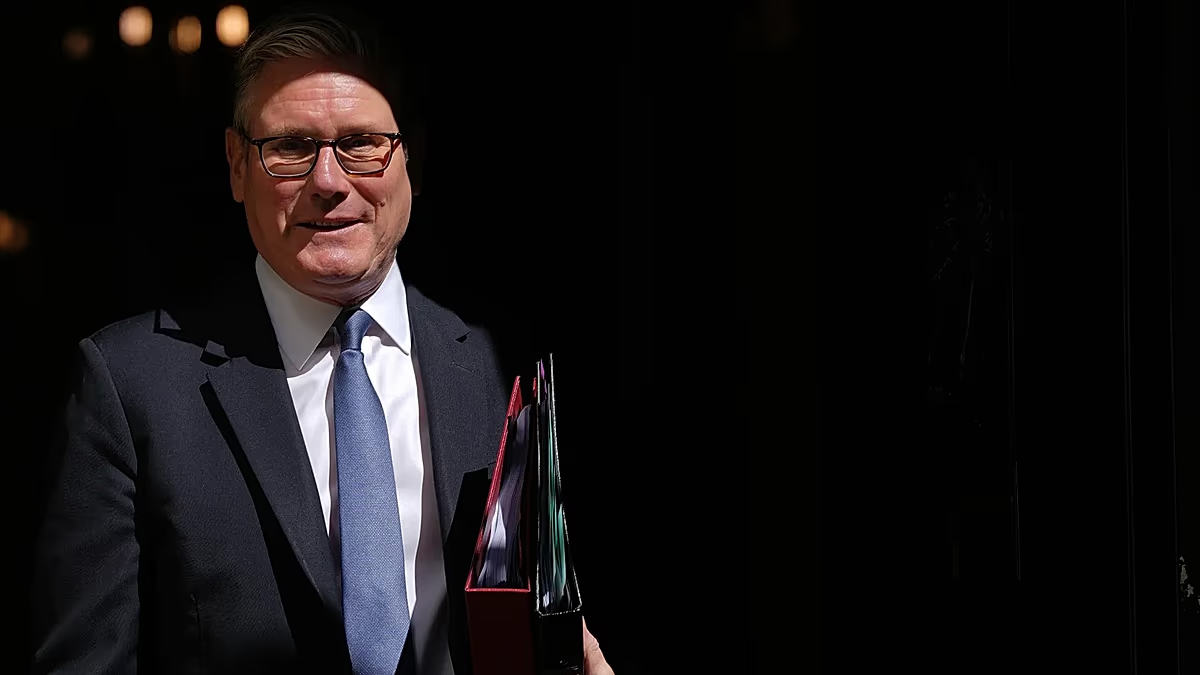
In a tense session of the British Parliament on Wednesday, Prime Minister Keir Starmer made a defiant stand, firmly rejecting mounting calls for his resignation. The political storm centres on his controversial appointment of veteran political figure Peter Mandelson as the UK’s Ambassador to Washington. Starmer asserted that recent testimony had definitively cleared him of allegations that he knowingly misled Members of Parliament regarding the integrity of the appointment process. “That puts to bed all the allegations levelled at me … in relation to dishonesty,” he declared, aiming to draw a line under a scandal that has consumed Westminster for weeks and shaken confidence in his leadership.
The crisis erupted from the revelation that Mandelson’s security clearance had been recommended for denial by independent vetting officials—a critical detail the Prime Minister claims was kept from him. Starmer has placed the blame squarely on Olly Robbins, the Foreign Office’s most senior civil servant, whom he dismissed last week. Starmer told MPs that Robbins had confirmed under questioning that he did not share the security officials’ negative recommendation with the Prime Minister, Number 10, or any other ministers. This, Starmer argued, vindicates his repeated, albeit awkward, insistence that while “all due process” was followed on his understanding, he would have halted the appointment had he been fully informed of the risks identified.
However, the opposition, led by Conservative Party leader Kemi Badenoch, remains utterly unconvinced by this defence, ensuring the controversy is far from over. Badenoch pivoted the attack away from the narrow question of the security clearance to other damning information she claims Starmer did see. She cited a due diligence report that flagged Mandelson’s former directorship at Systema, a Russian defence company with Kremlin links, which he retained long after Russia’s initial invasion of Ukraine in 2014. “Why did the prime minister want to make a man with links to the Kremlin, our ambassador in Washington?” Badenoch demanded, painting the appointment as a profound error of judgement that compromises national security, regardless of the security clearance dispute.
The picture of a pressured and rushed vetting process was vividly corroborated by Olly Robbins himself in his own parliamentary testimony a day prior. Robbins described an atmosphere of intense pressure emanating from the Prime Minister’s office, characterised not as a gentle nudge but as an imperative command to “get it done,” with security concerns seemingly dismissed. This testimony suggests a Downing Street operation determined to install its preferred candidate, arguably placing political convenience above rigorous protocol. This narrative is further compounded by the resignation of Starmer’s former top aide, Morgan McSweeney, over his role in the affair, with McSweeney poised to give his own account to MPs, which may deepen the government’s woes.
Beneath the political manoeuvring lie unresolved and troubling questions about the suitability of Peter Mandelson himself. Appointed in December 2024, just weeks before Donald Trump’s return to the Oval Office, Mandelson was meant to be a high-powered political operator navigating a crucial alliance. Yet, the exact nature of the security risks that prompted vetting officers to oppose his clearance remains secret. While Robbins stated they were unrelated to Mandelson’s past association with the convicted sex offender Jeffrey Epstein, the void of official information has been filled with speculation and suspicion, eroding public trust. The combination of hidden security warnings, Kremlin-linked business ties, and a seemingly bulldozed appointment process has created a perfect storm for the Prime Minister.
Ultimately, Keir Starmer’s fight to save his premiership hinges on a narrow legalistic defence—that he was not technically lied to about one specific finding—while the wider political and ethical judgement of his actions crumbles around him. His opponents successfully frame the scandal not merely as a bureaucratic failure but as a story of reckless prioritisation and a failure to ask obvious, critical questions about a key diplomatic post. As the drama continues with further testimony expected, the British public is left witnessing a government mired in self-inflicted controversy, with a Prime Minister desperately insisting a matter is “put to bed” even as the political world insists it remains very much awake and potent.