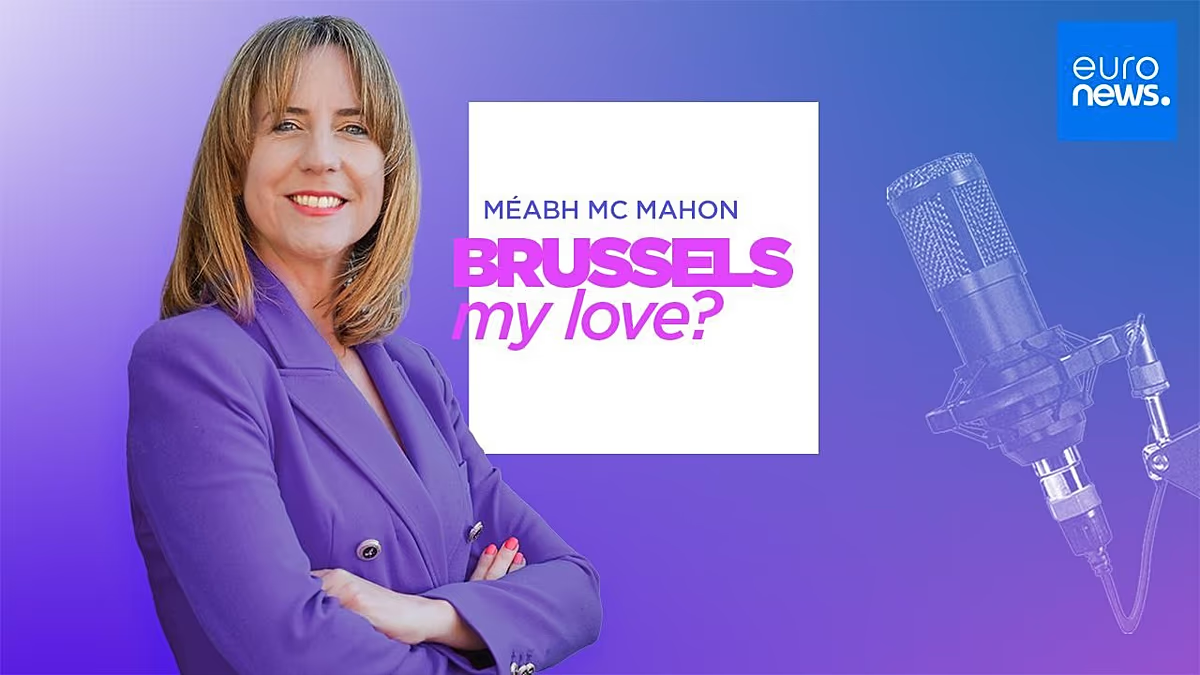


In an increasingly interconnected world, staying informed about the pivotal events shaping Europe and its global relationships is more crucial than ever. The weekday program Europe Today, hosted by chief anchor Méabh Mc Mahon and EU editor Maria Tadeo, serves as an essential guide through this complex landscape. Broadcasting live on television, the Euronews website, and various digital platforms, the show is designed to be accessible wherever its audience may be. For those who prefer to digest news on their own schedule, the content is also thoughtfully repackaged into a convenient daily newsletter and podcast. This multi-format approach underscores a commitment to delivering not just headlines, but meaningful context, ensuring viewers and listeners are equipped to understand the forces at work behind the day’s top stories.
The top story dominating the agenda centers on a significant geopolitical shift with major implications for European unity and support for Ukraine. As reported by Euronews’ Sándor Zsíros, Ukraine has taken the consequential step of re-opening the Druzhba pipeline, a critical legacy Soviet-era oil conduit that runs through its territory to supply parts of central Europe. This move is strategically timed, coinciding with a gathering of EU ambassadors where a long-standing impasse may finally be broken. Hungary, heavily reliant on this pipeline and led by Prime Minister Viktor Orbán, has been the sole obstacle blocking the European Union’s substantial 90-billion-euro loan package intended to bolster Ukraine’s economy and reconstruction efforts. By restoring this energy flow, Ukraine has addressed a key Hungarian concern, potentially paving the way for Budapest to lift its veto. This development highlights the intricate dance of diplomacy, where energy security and wartime solidarity are deeply intertwined, and a single pipeline can become the lever for unlocking billions in vital aid.
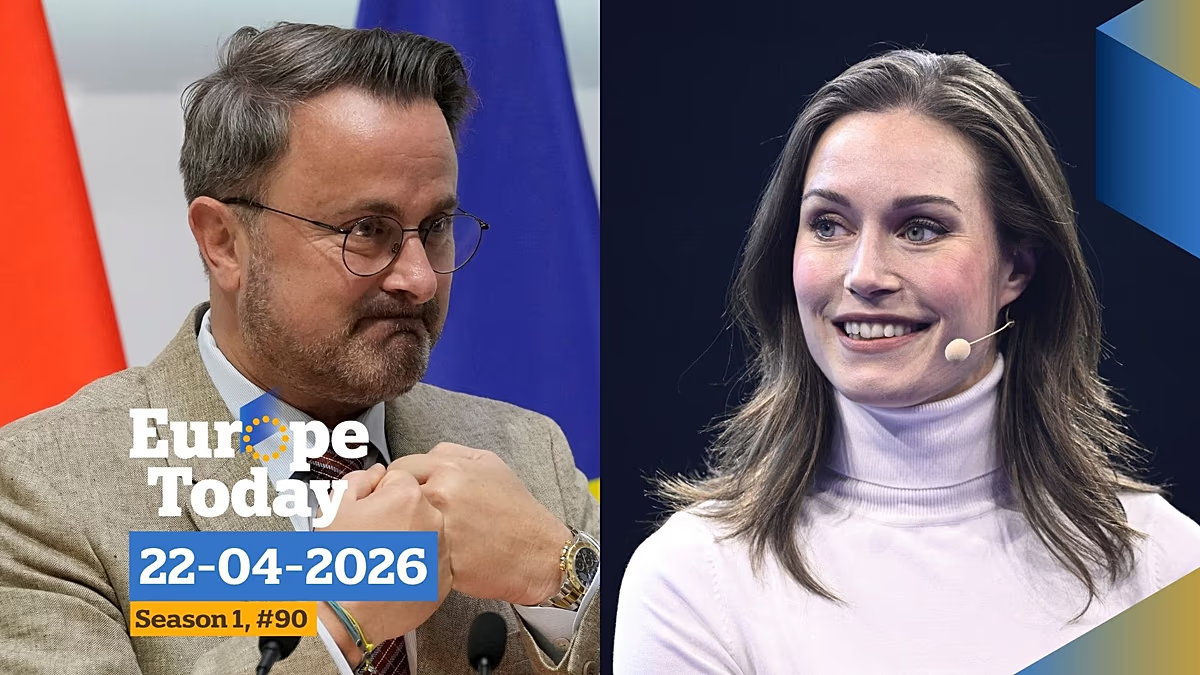
Adding depth to the political analysis, the show features an interview with two respected voices from within the EU: Xavier Bettel, Luxembourg’s Deputy Prime Minister and Foreign Minister, and Sanna Marin, the former Prime Minister of Finland. Their perspectives are invaluable at this juncture. Bettel, a seasoned statesman from a founding EU member, can speak to the delicate art of consensus-building within the bloc, especially on matters of financial commitment and shared security. Marin, who steered Finland through its historic decision to join NATO, brings a keen understanding of European defense and the existential threats posed by aggression on the continent’s doorstep. Their conversation likely delves into the challenges of maintaining a unified European front, the moral and strategic imperative of supporting Ukraine, and the future of EU foreign policy in an increasingly volatile world.
Shifting focus beyond Europe, correspondent Laila Humairah provides an update on the tense and evolving situation in the Middle East. The report centers on an extended ceasefire between the United States and Iran, a diplomatic move orchestrated by the returning Trump administration. This pause in open hostilities represents a significant, if fragile, de-escalation in a region perpetually on a knife’s edge. However, such developments are rarely straightforward. An extended ceasefire, while offering a respite from immediate conflict, also creates a complex new political landscape, affecting regional proxies, global oil markets, and the strategic calculations of other Middle Eastern powers. Humairah’s analysis would explore what this tentative peace means for stability in the region, the potential for a broader diplomatic initiative, and how these distant events ripple outward to impact European interests and security.
Meanwhile, within the EU itself, member states continue to grapple with internal policy challenges. In an explainer segment, Jakub Janas breaks down Spain’s new mass migrant regularisation scheme. This policy represents a bold, humane, and controversial approach to addressing the realities of migration. By creating a pathway for a large number of undocumented migrants to gain legal status and work rights, Spain aims to bring people out of the shadows, boost its economy by formalizing labor, and improve social cohesion. However, such a unilateral move sparks intense debate across Europe about the principles of border control, the distribution of responsibility among EU nations, and the long-term strategy for migration management. This segment underscores how national decisions on issues like migration, energy, and rule of law consistently test the fabric of European solidarity and shared governance.
Ultimately, Europe Today is more than a news bulletin; it is a connective tissue linking high-stakes diplomacy in Brussels, wartime strategy in Kyiv, geopolitical shifts in the Middle East, and domestic policy in Madrid. By weaving together live reporting, expert interviews, and clear explainers, the program fulfills its mission to provide not just the “what,” but the “why” and “how” of the stories that shape our world. In an era of information overload, it offers a curated, analytical, and humanized perspective, reminding us that behind every headline about pipelines, vetoes, and ceasefires are decisions that affect the lives of millions, defining the future of European cooperation and its role on the global stage.