


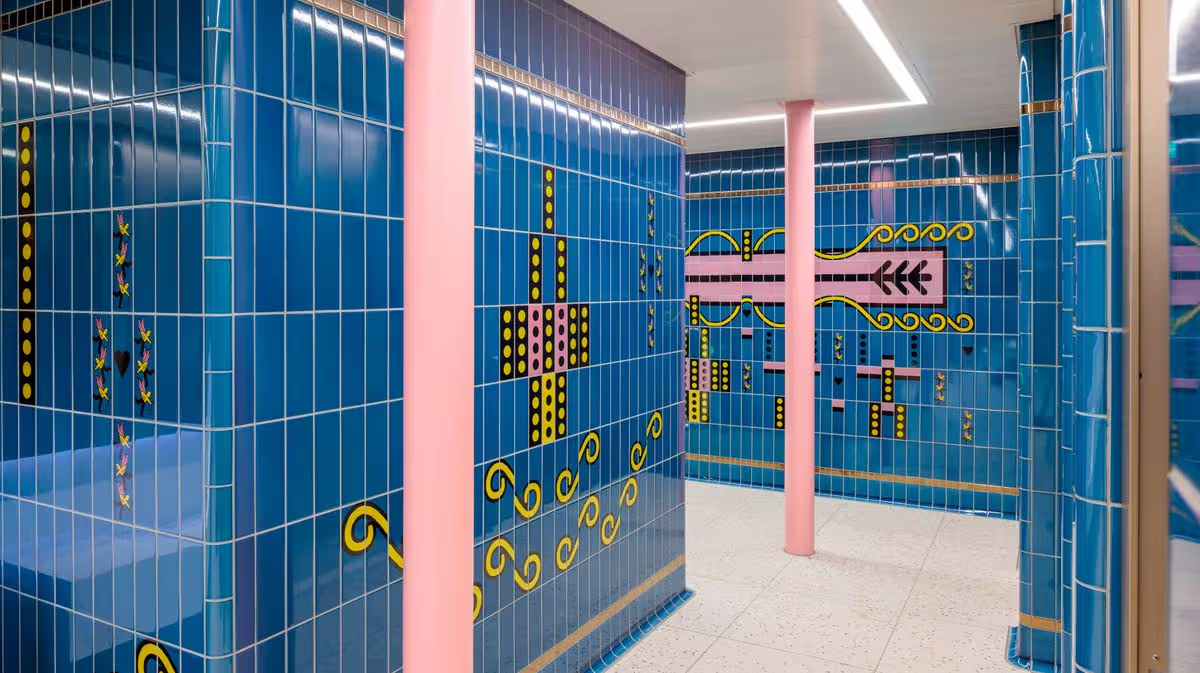
Piccadilly Circus Underground Station has unveiled a stunning and unexpected transformation that challenges every preconceived notion of public conveniences. Gone are the dim, utilitarian spaces often associated with train station facilities; in their place is a vibrant, art-infused sanctuary that feels more like a contemporary gallery than a public toilet. This remarkable makeover, completed in March as part of Westminster City Council’s ambitious £12.7 million West End refurbishment programme, has turned heads not for mere functionality, but for its bold aesthetic vision. Featuring stunning sea-blue tiles accented with dynamic yellow, pink, and black designs, and punctuated by striking pink structural pillars, the facility is a world away from the standard institutional design. The council describes it as “a vibrant, immersive space that reflects the creativity and cultural energy of the area,” marking it as the third of eight such public facilities slated for upgrade. This project signifies a conscious shift in urban planning, where essential public infrastructure is being reimagined to enhance the civic experience and celebrate local culture.
The artistic soul of the space is the work of London-based artist James Lambert, whose bold tiled artwork draws inspiration from the mythological Greek god Anteros, a figure associated with requited love. The design, featuring winged figures and a vibrant palette, is intentionally crafted to echo the dynamic energy, theatrical history, and iconic neon lights of Piccadilly Circus itself. This integration of public art into a highly functional, everyday space elevates the act of using a public convenience from a purely transactional necessity to a small moment of cultural engagement. As highlighted by the popular Instagram account Exploring London, which brought the toilets to wider attention, these facilities are now arguably “the best toilets on the network.” The decision to invest in such high-quality design and artwork demonstrates a commitment to treating public infrastructure with respect and ambition, suggesting that beauty and practicality can, and should, coexist in our shared urban environments.
However, the conversation surrounding this chic renovation has been overwhelmingly dominated by a single, contentious detail: the £1 charge for use. While the price was increased from 80p in April to help fund the maintenance and upkeep of the newly luxurious facilities, it has sparked a heated debate about the very nature of public amenities. Many observers express frustration, arguing that access to toilets is a basic human necessity and should be freely provided, especially in major transport hubs where passengers are already paying high fares. Comments like, “Public toilets should be free! Especially at train stations,” and lamentations that “spend a penny has become spend a pound,” capture a widespread sentiment that monetizing this essential service places an undue burden on individuals and families enjoying a day out in the city.
Conversely, a robust counter-argument defends the nominal fee as a practical tool for ensuring quality. Proponents point out that a user-pays model directly funds the cleaning, maintenance, and staffing required to keep such high-traffic facilities in pristine condition, contrasting them with the often “atrocious” state of some free public toilets. One pragmatic commenter noted, “I’d pay more as long as they stay clean,” while others drew comparisons to common practices in other European countries like Germany, where paid public toilets are the norm and often cost more. This perspective frames the £1 not as a barrier, but as an investment in dignity, hygiene, and a sustained high standard, suggesting that a small fee is a reasonable trade-off for a guaranteed clean, safe, and aesthetically pleasing environment.
Westminster City Council has stood by its approach, with a spokesman clarifying that the fee increase directly reflects the significant investment in the refurbishment and is crucial for its ongoing care. Cabinet member Cllr Sara Hassan emphasized the broader civic value, stating that providing “clean and accessible public toilets makes a real difference to people’s experience of our city.” The council views these projects as integral to improving essential infrastructure while honoring the cultural heritage of the West End for both residents and millions of annual visitors. The programme is set to continue, with Green Park Station next in line for a transformation, followed by locations at Carnaby Street, Westminster Bridge, Covent Garden, and Leicester Square, indicating a sustained policy of elevating public facility standards across central London.
Ultimately, the refurbished toilets at Piccadilly Circus serve as a fascinating microcosm of modern urban dilemmas. They brilliantly showcase how design and art can be harnessed to improve public spaces, challenge expectations, and add moments of unexpected joy to the daily routine. Yet, they also vividly highlight the persistent tension between public good and private cost, between universal access and sustainable quality. Whether seen as a luxurious upgrade worth a pound or a problematic commodification of a basic need, these facilities have undoubtedly succeeded in making people stop and think. They prove that even the most humble aspects of city life can become catalysts for broader conversations about value, care, and what kind of public realm we wish to build and share together.