



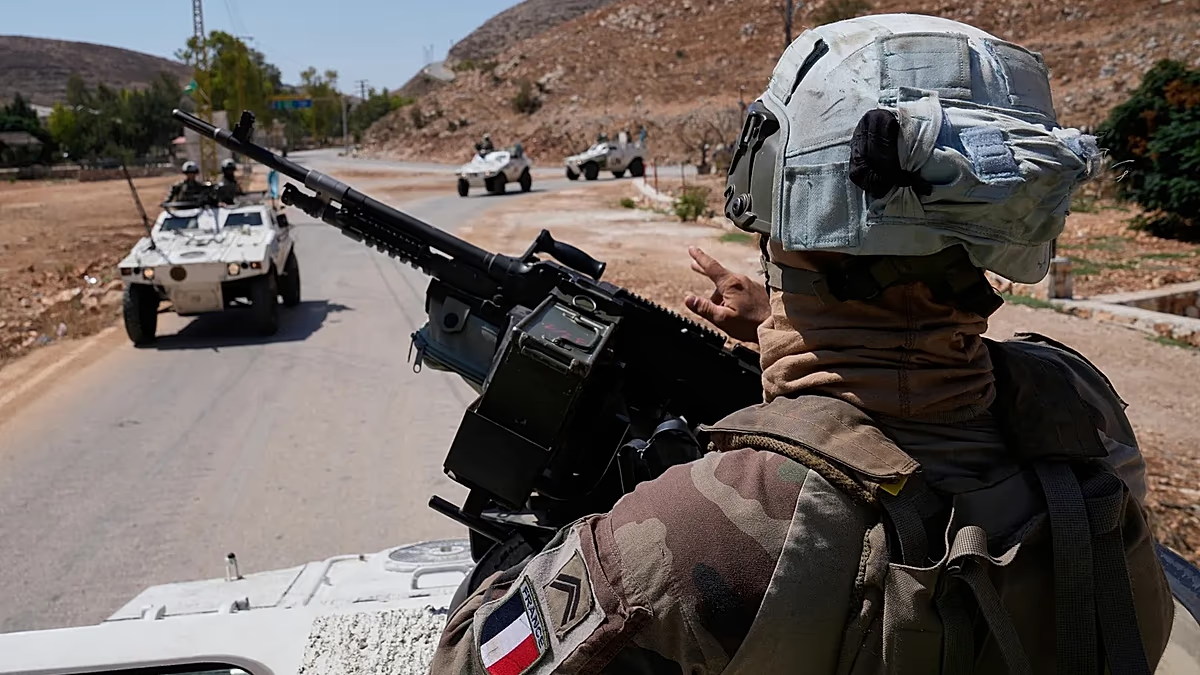
In a stark reminder of the perils faced by international peacekeepers in a region perpetually on the brink, France has been forced to mourn the loss of a second soldier within days. Corporal Anicet Girardin, a specialist in a canine unit, succumbed to wounds sustained in a brutal ambush in Lebanon this past weekend. His death follows that of Staff Sergeant Florian Montorio, who was killed in the same attack, an assault French President Emmanuel Macron has directly attributed to the Iran-backed militant group Hezbollah. This tragic event underscores the fragile and increasingly violent environment in which the United Nations Interim Force in Lebanon (UNIFIL) operates, a mission established in 1978 to oversee the tense border between Lebanon and Israel. The loss of these soldiers casts a long shadow, highlighting the human cost of maintaining a fragile peace and the growing challenges faced by those wearing the blue helmets.
The circumstances of the ambush, as detailed by French Armed Forces Minister Catherine Vautrin, speak to the courage and camaraderie of the soldiers involved. Corporal Girardin was part of a unit working to clear a route suspected of being booby-trapped with an improvised explosive device—a dangerous and meticulous task often aided by specially trained dogs. The mission was suddenly shattered by sustained, close-range fire from concealed Hezbollah fighters. In a selfless act emblematic of military brotherhood, Girardin moved to aid his fallen section leader, Staff Sergeant Montorio, only to be seriously wounded himself. This narrative is not merely one of casualty reports, but of individuals performing their duty with immense bravery. Girardin’s actions in his final moments reflect the profound commitment of these peacekeepers, who work daily in a complex landscape where diplomatic mandates intersect with live combat zones.
President Macron and UN Secretary-General António Guterres have been unequivocal in assigning blame for the attack to Hezbollah, which has denied responsibility. This incident is not an isolated one; it represents a disturbing escalation. Girardin becomes the third French soldier killed in the region in recent weeks, following the death of Arnaud Frion last month in Iraqi Kurdistan from an Iranian drone strike. These successive losses paint a picture of a broadening arc of conflict where international forces, even under a UN banner, are becoming targets. The attacks signal a dangerous testing of boundaries by Iran-aligned factions, challenging the authority and safety of multinational missions. For France, a nation deeply invested in Middle Eastern stability and a major contributor to UNIFIL, these deaths are a painful blow and a serious geopolitical provocation.
The UNIFIL mission itself exists in a state of profound paradox. Comprising over 10,000 personnel from 50 nations, its mandate is to patrol the UN-drawn “Blue Line,” monitor hostilities, and actively work to de-escalate tensions between Lebanon and Israel. For decades, its presence has been a critical buffer, preventing localized skirmishes from spiraling into wider war. Yet, its future is now uncertain. In a significant decision last August, the UN Security Council—bowing to pressure from the United States and Israel—voted unanimously to terminate the mission at the end of 2026. This planned withdrawal casts the current violence in an even more grim light, raising questions about the sustainability of peacekeeping in an environment where the force is targeted by local actors and its long-term commitment is being wound down by the international community.
In the wake of this tragedy, the official responses have blended grief with a reaffirmation of purpose. President Macron honored Corporal Girardin and Staff Sergeant Montorio, extending condolences to their families and emphasizing that French soldiers in UNIFIL “are working bravely and determinedly in service of France and peace in Lebanon.” This sentiment underscores the dual identity of these service members: they are national soldiers serving under their country’s flag while simultaneously embodying an international ideal of peacekeeping. Their sacrifice is felt both as a national loss for France and a collective loss for the UN’s peacekeeping endeavor. The deaths force a moment of reckoning, demanding that the world not look away from the sacrifices made in the name of stabilizing one of the globe’s most volatile frontiers.
Ultimately, the ambush that took the lives of Anicet Girardin and Florian Montorio is more than a statistic in a distant conflict. It is a human story of service, sacrifice, and the escalating dangers faced by those asked to stand in the way of chaos. As UNIFIL continues its work under the shadow of its impending termination and amid increasing hostility, the bravery of its personnel stands in stark contrast to the complex political and militant forces that surround them. The legacy of these fallen soldiers now becomes intertwined with the urgent, unresolved question of how peace can be maintained in Lebanon and the wider Middle East when the guardians of that peace are themselves under fire. Their deaths are a solemn call to remember the human cost of diplomatic missions and the fragile line walked by those who serve in the world’s most troubled regions.