




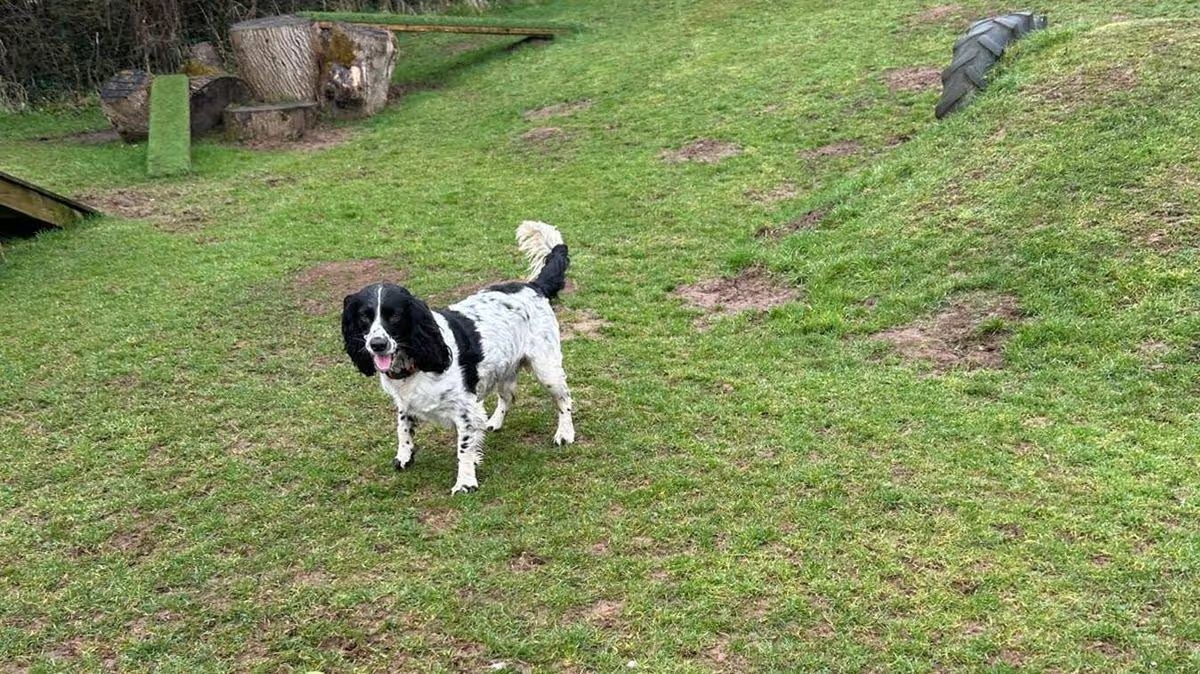
The Death of Baxter: A Grieving Owner's Warning Amidst Nature's Hidden Dangers
In a quiet corner of Anglesey, a simple morning walk along a familiar coastal path ended in heartbreak for Jo Bowen-Jones. The Rhosneigr grandmother and her energetic five-year-old Springer-Cocker spaniel, Baxter, set out on what should have been a routine stroll across common land near RAF Valley. Crossing a wooden bridge over the Afon Crigyll, their peaceful outing was shattered in an instant when Baxter suddenly stopped, lifting his front paw in evident discomfort. While the dog did not cry out, his ability to walk deteriorated rapidly, forcing Jo to half-carry him back toward the bridge. In those first confusing minutes, the cause was a mystery—a thorn, perhaps, or a twisted paw. The true and far more sinister culprit, an adder lying dormant in the spring grass, would only reveal itself through the devastating chain of events that followed, transforming a personal tragedy into a public cautionary tale.
The situation escalated with alarming speed. Unable to transport Baxter alone, Jo enlisted the help of a passerby in a campervan, who stayed with the dog while she dashed to fetch her car. In the mere five minutes she was gone, Baxter’s condition worsened dramatically; he had vomited and lost control of his bowels. Upon her return, Jo noticed a faint, tiny mark on his paw, the only outward sign of what was happening internally. With growing dread, she rushed him to Bodrwnsiwn Vets in Mona, a journey she completed within thirty minutes of the initial incident. By the time they arrived, Baxter was completely incapacitated, carried in on a rug, his breathing ragged, his stomach taut, and his eyes glazed. The veterinary team, suspecting an adder bite—the only venomous snake native to the UK—acted swiftly, administering antihistamines and pain relief and placing him on a drip to combat shock and dehydration.
A critical and agonizing decision then had to be made: whether to administer anti-venom. This specialised treatment, while a potential antidote, carries significant risks, including triggering severe allergic reactions or anaphylactic shock. Given Baxter’s already laboured breathing and rapidly declining state, the veterinarians concluded that the treatment was too hazardous. Stabilisation was the immediate goal, with plans made to transfer Baxter to an overnight care facility in Colwyn Bay later that evening, as no such service exists on Anglesey itself. Tragically, this move would never happen. At 5 p.m., Jo received the call every pet owner fears: Baxter had taken a turn for the worse. By the time she reached the clinic, his heart had stopped. The fit and lively dog, her companion on countless walks, was gone, leaving his owner grappling with a loss that felt both shocking and surreal.
In the raw aftermath, Jo Bowen-Jones was left with the grim certainty—around 80%, by her estimate—that an adder’s venom had killed her beloved pet. The absence of the severe swelling often associated with such bites did little to shake her conviction, especially after learning that another adder had been spotted in the same area around the same time. Baxter’s intense and rapid reaction suggested either a particularly severe envenomation or a possible, previously unknown, underlying health condition. Determined that Baxter’s death should not be in vain, Jo turned to social media, posting a heartfelt and detailed warning on Facebook. She aimed to shatter a common misconception, noting that while adders are often associated with sand dunes, her dog was bitten on open grassland. Her message was clear: these reptiles can inhabit any sunny, open habitat, and with spring’s early arrival, they may be particularly lethargic and less likely to retreat from passing dogs or people.
This poignant story, while deeply personal, touches on broader truths about a rare but present danger in the British countryside. Statistically, adder bites on dogs are uncommon, and fatalities are exceptionally rare, with studies suggesting over 95% of bitten dogs recover with prompt veterinary intervention. Deaths are more frequent in smaller breeds and typically occur only when bites go untreated. However, Baxter’s case underscores that statistics offer little comfort when tragedy strikes an individual family. It highlights a concerning gap in local veterinary services—the lack of overnight emergency care on Anglesey—which, while not the direct cause of death in this instance, adds a layer of complexity and risk for pet owners in remote areas facing critical emergencies.
Ultimately, Jo Bowen-Jones’s experience stands as a sombre reminder of the delicate balance between enjoying the UK’s natural landscapes and respecting their hidden perils. Her grief is compounded by the suddenness and the rarity of the event, a perfect storm of bad luck on a beautiful spring morning. Her decision to publicise Baxter’s story is an act of communal care, a warning born of love to encourage other dog walkers to be vigilant not just on dunes, but on heaths, moors, and grasslands, especially during the early spring when adders first emerge. It is a call to cherish every walk with our pets while recognizing that even in familiar places, nature holds its own quiet, and sometimes deadly, sovereignty.