



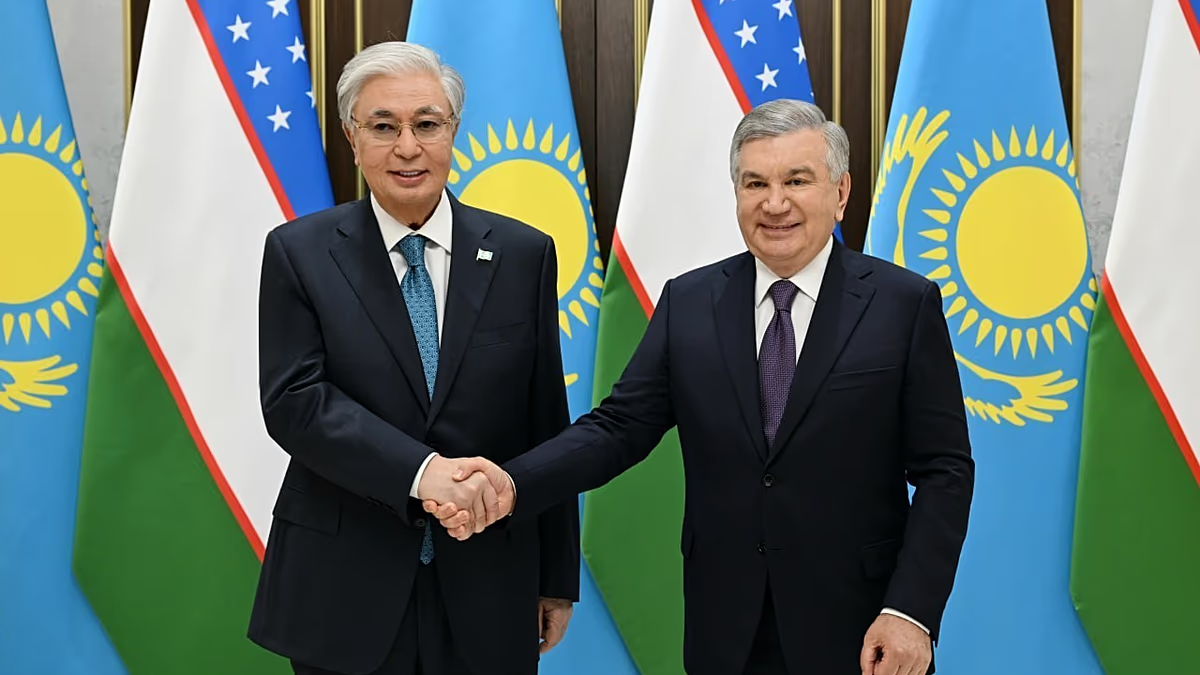
In the ancient, sun-drenched city of Bukhara, a powerful symbol of Central Asia’s rich intellectual and commercial history, the modern leaders of Kazakhstan and Uzbekistan convened a summit that underscores a transformative chapter for the region. President Kassym-Jomart Tokayev of Kazakhstan and President Shavkat Mirziyoyev of Uzbekistan met not merely as neighbors, but as strategic partners steering their nations toward a future of unprecedented integration. This meeting, far from a routine diplomatic engagement, highlighted a profound and pragmatic alliance that is rapidly moving from high-level agreements to tangible, on-the-ground projects. The choice of Bukhara itself was telling—a city that once thrived as a hub of the Silk Road now serves as the backdrop for forging new pathways of connectivity, trade, and shared prosperity in the 21st century.
The foundation of this burgeoning partnership is undeniably economic, built on a remarkable and swiftly growing commercial relationship. Last year, bilateral trade approached the $5 billion mark, a figure both presidents view not as a ceiling, but as a foundation. Their ambitious goal is to double this trade in the coming years, and the blueprint for achieving this is already being drafted through concrete joint ventures. Collaboration is flourishing across diverse sectors including automotive manufacturing, logistics, electrical engineering, and construction materials. Beyond traditional industries, the leaders are deliberately planting seeds for future growth in digital technologies and green innovation. Significantly, President Mirziyoyev championed a joint “Clean Air” initiative, a direct and collaborative response to the environmental challenges faced by major cross-border cities like Tashkent, Almaty, and Shymkent, demonstrating that cooperation now extends to the very air their citizens breathe.
For this economic vision to become reality, both leaders astutely recognize that the physical arteries connecting their countries must be modernized and expanded. A central theme of their discussions was enhancing regional connectivity by dismantling logistical bottlenecks and streamlining border procedures. A key milestone in this effort will be the launch of the high-capacity “Jibek Joli” border checkpoint in September, designed to smoothly process thousands of people and vehicles daily. Furthermore, strategic infrastructure projects like the Darboza–Makhtaaral railway are set to dramatically increase annual cargo capacity by millions of tonnes. In the energy sector, collaboration is equally robust, with mutual support for major projects like the Kambarata hydropower plant and broader ambitions to facilitate the export of Central Asian green energy to European markets. This focus on tangible infrastructure underscores a shared understanding that prosperity is built on reliable roads, efficient borders, and sustainable power.
Yet, the summit in Bukhara revealed that the partnership’s ambitions stretch far beyond steel, concrete, and trade balances. A significant portion of the agenda was dedicated to the parallel transformation of state and society through digitalization and administrative reform. The presidents visited the Bukhara regional Situation Centre, which operates on a new public administration model designed to improve inter-agency coordination and accelerate decision-making—a model of potential interest to both nations. Even more forward-looking was their participation in a National AI Hackathon, where they reviewed digital solutions for e-government, customs, healthcare, and transportation. This shared focus on tech-driven governance indicates a desire to build not just interconnected economies, but smarter, more responsive states that can meet the demands of the modern world.
Perhaps the most human element of the visit was woven through its cultural and industrial threads. The leaders took time to tour a modern textile enterprise in Bukhara, a facility emblematic of Uzbekistan’s economic reforms and the region’s export potential. With significant investment and advanced technology from Europe and Japan, the factory employs hundreds and sends high-quality garments to markets like Italy and Germany. This visit highlighted a commitment to industrial cooperation that creates jobs, develops skills, and integrates Central Asia into global value chains. Alongside this, the carefully planned cultural programme—visiting the majestic Ark Fortress, the serene Lyabi-Hauz complex, and the revered Bahauddin Naqshband Mausoleum—served as a powerful reminder of the deep historical and cultural bonds that underpin the political relationship. These moments of shared heritage reinforce trust and provide a common identity that strengthens diplomatic ties.
In essence, the Bukhara summit between Presidents Tokayev and Mirziyoyev presented a comprehensive vision for a Central Asian future that is integrated, innovative, and intentionally constructed. It is a partnership that deftly balances the immediate pragmatism of building railways and clearing customs with the long-term strategies of digital transformation and environmental stewardship. By combining economic ambition with infrastructural pragmatism, technological aspiration with cultural solidarity, Kazakhstan and Uzbekistan are demonstrating that regional cooperation is the most viable path to stability and growth. Their ongoing dialogue, increasingly characterized by open and constructive trust, is quietly reshaping Central Asia’s geopolitical and economic landscape, proving that the spirit of cooperation can build a new Silk Road for a new era.