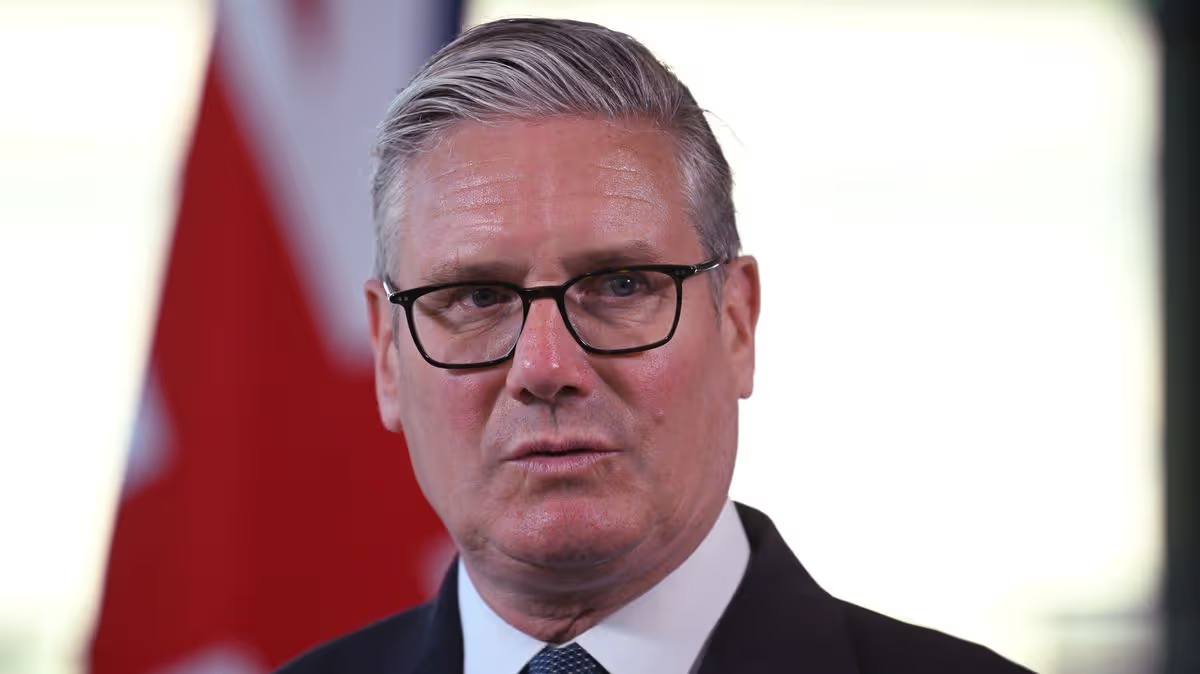


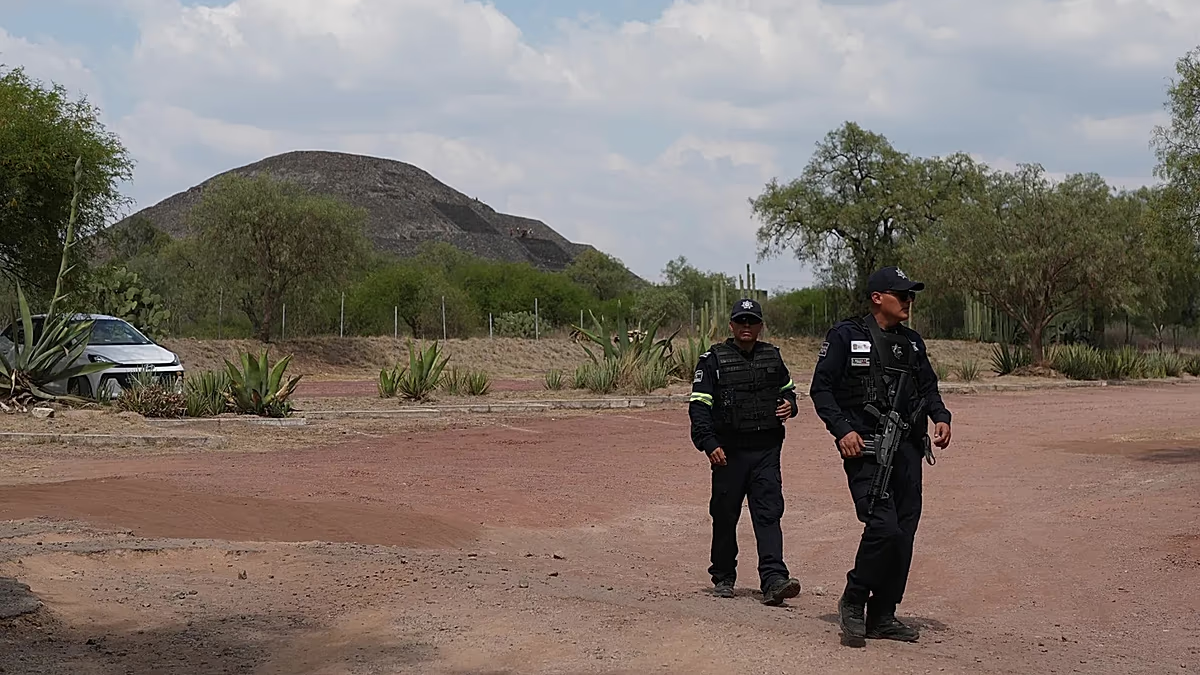
In the shadow of ancient pyramids, a place where history whispers from stone, a modern tragedy has erupted, prompting a national reckoning on security just as Mexico prepares to welcome the world. On a Tuesday morning, President Claudia Sheinbaum addressed the nation, her words carrying the weight of a deadly shooting that occurred the previous day at the iconic Teotihuacan archaeological site. With the FIFA World Cup just weeks away and set to bring a global spotlight to cities like Mexico City, the president called for an urgent tightening of gun controls at tourist destinations. “Evidently, we need to tighten security,” she stated firmly in her morning press conference. She emphasized the fundamental need to ensure that no individual can enter a cherished archaeological or tourist site armed with a firearm, framing the incident not just as a crime, but as a breach in the sanctity of Mexico’s cultural heritage and the safety promised to its visitors.
The violence unfolded not as a random act, but as a chillingly premeditated assault, according to security officials. Mexico State Prosecutor José Luis Cervantes Martínez revealed that the shooter, identified as 27-year-old Julio César Jasso Ramírez, had meticulously planned his attack. He had made multiple preliminary visits to the sprawling site and had lodged in nearby hotels in the days leading up to the shooting, studying the rhythms of the location. This detail transforms the incident from a shocking anomaly into a calculated event, raising profound questions about surveillance and preventative measures at even the most revered public spaces. The attack commenced shortly after 11:30 AM local time, a peak hour when dozens of tourists were atop the Pyramid of the Moon, taking in the majestic Avenue of the Dead below.
What followed was a scene of pure terror, captured in shaky videos and firsthand accounts that circulated through local media. The footage showed a lone figure standing with a gun on the ancient stone structure, while below, visitors scrambled and ducked for cover as the sharp cracks of gunfire echoed off the millennia-old pyramids. A tour guide described a panicked descent, with some people throwing themselves prone on the ground while others fled down the steep steps. “There were thousands of people there and there were a lot of gunshots that just kept coming,” recounted Brenda Lee, a Canadian tourist, her words painting a picture of escalating chaos as the crowd surged in a desperate bid for safety. The sacred silence of the ancient city was shattered by fear and confusion.
The human toll of this violence was both international and heartbreakingly broad. Local authorities reported that the shooting left one person dead and thirteen others wounded from across the globe. Those rushed to hospitals included six citizens from the United States, three Colombians, two Brazilians, one Russian, and one Canadian, underscoring Teotihuacan’s status as a magnet for global tourism. Perhaps most poignant was the age range of the victims: the youngest a child of just six years old, the oldest 61. This span of humanity, from young families to retirees, all seeking wonder in a historic place, found themselves caught in a nightmare. The aftermath revealed the shooter’s fate, as officials confirmed Julio César Jasso Ramírez died from a self-inflicted gunshot wound, a gun, knife, and ammunition found on his person.
This tragedy strikes at the heart of one of Mexico’s most profound cultural and economic landmarks. The Teotihuacan pyramids, a UNESCO World Heritage Site built by successive ancient civilizations, are more than just ruins; they are a testament to human achievement, drawing over 1.8 million international pilgrims of history and culture each year. The site represents a bridge between Mexico’s majestic past and its vibrant present. The violation of this space with such violence creates a dual wound: one of immediate physical harm and another of symbolic damage to the nation’s identity and its promise of safe passage to explorers from every corner of the earth. The timing, on the eve of the World Cup, amplifies the stakes, forcing a confrontation with security protocols on an international stage.
President Sheinbaum’s call for action is now set against this complex backdrop of grief, investigation, and impending global scrutiny. The path forward involves balancing the open, welcoming nature of world-class tourist sites with the imperative for rigorous, intelligent security that can deter premeditated attacks. As Mexico mourns the victims and tends to the injured, the incident at Teotihuacan serves as a stark reminder that the preservation of history is inextricably linked to the protection of the living. The world will be watching not only the beautiful game in the coming weeks but also how a nation responds to a crisis, seeking to heal and fortify the spaces where its soul and its future intersect.