



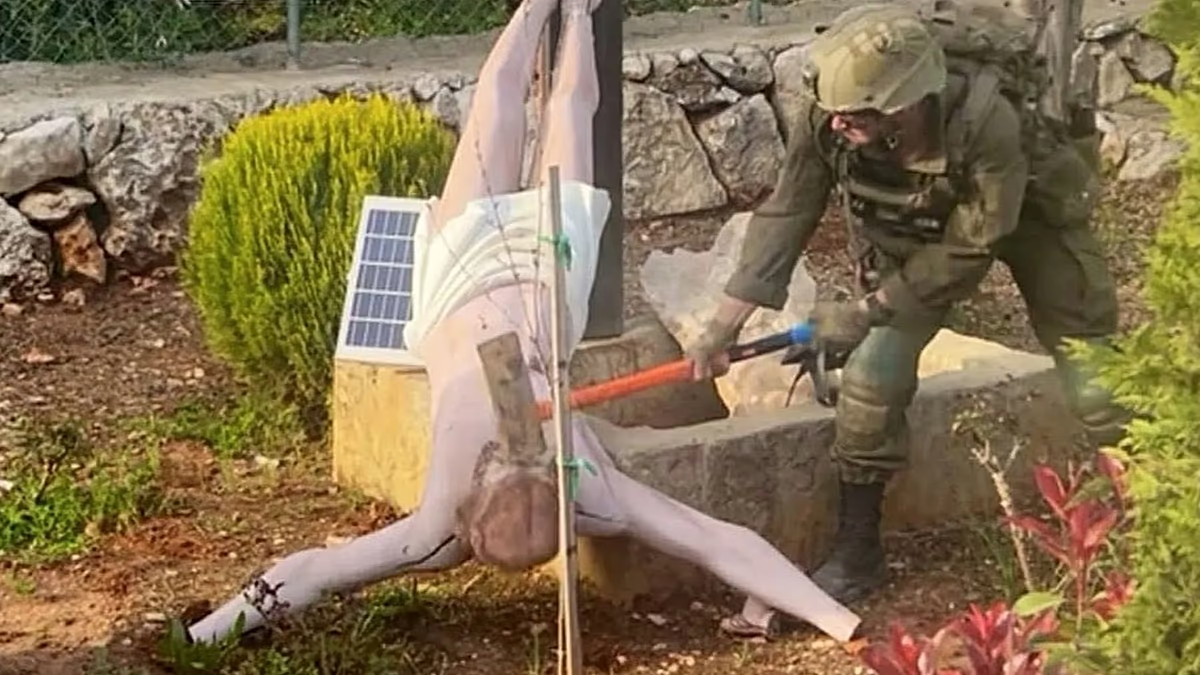
The Israeli military announced on Tuesday, April 21, 2026, that two soldiers involved in the destruction of a statue of Jesus in a southern Lebanese village will face significant disciplinary action. Following an internal inquiry, the soldier who used a sledgehammer to strike the fallen head of a crucifix statue and the soldier who photographed the act will each receive thirty days of military detention and be removed from combat duty. The incident, which occurred in the Christian village of Debl near the Israeli border, sparked widespread condemnation after the image circulated online. The military’s statement emphasized that the soldiers’ conduct “completely deviated from IDF orders and values.” Furthermore, six additional soldiers present at the scene who failed to intervene or report the act have been summoned for disciplinary clarification discussions. This swift response underscores the military’s attempt to address a clear breach of protocol and respect for civilian property and symbols.
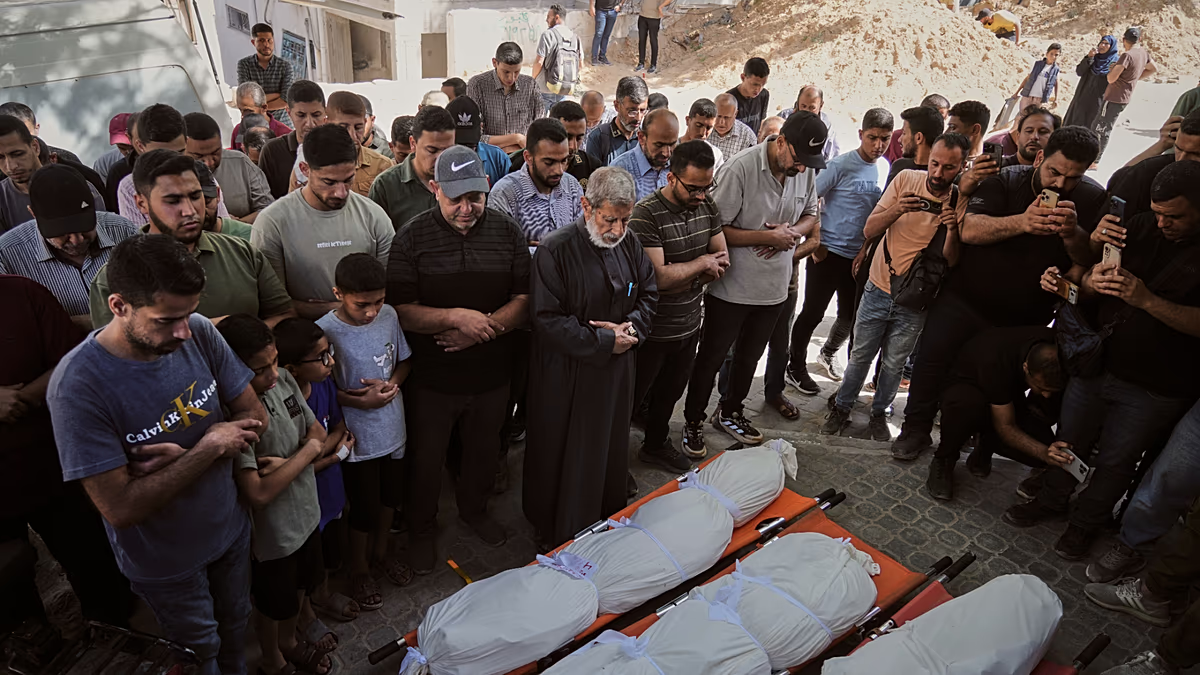
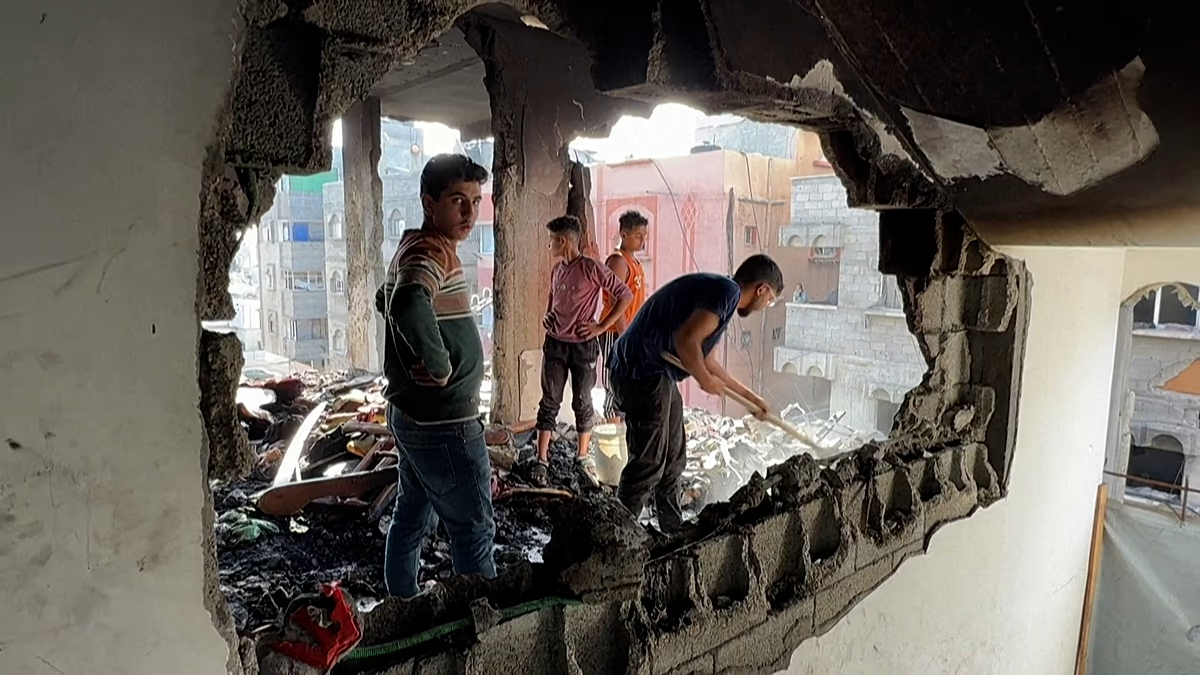
The destruction of the religious icon occurred within a broader and devastating context of conflict. Since early March, Israel has conducted extensive air strikes and a ground invasion into southern Lebanon following Hezbollah’s entry into the regional war in support of Iran. The fighting has resulted in profound human tragedy, with over 2,400 people killed and more than one million displaced. Even after a ceasefire took effect, the death toll continues to rise as bodies are recovered from the rubble. The Israeli military has itself suffered losses, with fifteen soldiers killed in the fighting. In its statement regarding the statue, the military sought to delineate a clear boundary, stating that its operations in Lebanon “are directed solely against the Hezbollah terrorist organisation and other terrorist groups and not against Lebanese civilians.” The vandalism incident presented a stark contradiction to this declared principle, threatening to blur that line and inflame tensions with the local civilian population.
The response from Israeli leadership was immediate and unequivocal. Prime Minister Benjamin Netanyahu publicly stated on Monday that he was “stunned and saddened” by the soldier’s actions and vowed “harsh disciplinary action.” The military’s subsequent announcement of specific punishments aligned with this promise. Perhaps more significantly, in an effort to make amends with the local community, the Israeli military took restorative steps. In a post on the social media platform X, the military shared that the damaged sculpture in Debl had been replaced by troops “in full coordination with the local community,” accompanied by a photo of the new crucifix statue. This gesture of reparations highlights an awareness of the incident’s symbolic weight and its potential to damage community relations, representing an attempt to demonstrate respect and rebuild trust amidst the horrors of war.
This episode reveals the complex challenges of maintaining discipline and upholding stated values in the chaotic and morally fraught environment of warfare. Even a military with clear rules and a professional command structure can see individual actions deviate wildly from its codes, especially when soldiers operate under immense stress, fatigue, and the visceral emotions of conflict. The act of vandalizing a deeply revered religious symbol is not merely a property crime; it is an assault on cultural and spiritual identity, an action that can feel profoundly personal to a community. Such acts risk painting an entire military campaign with the brush of disrespect or religious intolerance, undermining strategic objectives and worsening the human landscape of the conflict. The IDF’s decisive disciplinary and restorative measures were therefore not just about internal justice, but also a crucial public relations and ethical necessity.
Beyond the immediate disciplinary fallout, the incident forces a reflection on the human dimension of war. The statue of a crucified Jesus, a universal symbol of suffering and sacrifice, was destroyed by a soldier wielding a sledgehammer—an image evoking brute force against vulnerability. This visual paradox speaks to a deeper tension: how does a military engaged in a lethal fight against a militant group like Hezbollah also navigate the delicate terrain of civilian life, culture, and faith in the areas where it operates? Every broken window, every defaced symbol, becomes a story that travels far beyond the battlefield, shaping perceptions, fueling resentments, and complicating any future peace. The replacement of the statue is a positive step, but it cannot erase the initial act or the underlying conditions that allowed it to happen. It serves as a reminder that the metrics of war extend beyond tactical gains and casualty counts to include the preservation of human dignity and cultural respect.
In conclusion, the Israeli military’s handling of this incident—from Prime Minister Netanyahu’s condemnation, to the specific punishments for the involved soldiers, to the coordinated replacement of the statue—forms a coherent narrative of accountability and reconciliation. It demonstrates an institutional attempt to correct a wrong, reinforce its values, and mend a specific rift with a civilian community. However, it exists within the overwhelming shadow of a larger conflict that has caused thousands of deaths and widespread displacement. The story of the shattered and restored statue in Debl is a microcosm of the wider war: a tale of destruction and a cautious, fragile attempt at repair. It underscores the perpetual struggle in warfare to not only defeat an enemy but also to safeguard the humanity of all those caught in its path, a task as difficult and essential as any military objective.